




















1.945 million. That number for the Bristol Motor Speedway Cup race NASCAR viewership might seem huge! But it pales in comparison to the 5.1 million who tuned in back in 2015. And this comes right after NASCAR rolled out its massive $7.7 billion media deal with FOX Sports, NBC Sports, Amazon Prime Video, and TNT Sports. While many blamed TV shifts, the deeper issue might not be where fans watch, but who they’re watching.
The media deal debate
On paper, NASCAR’s latest media deal is a business masterclass. By splitting its inventory across multiple partners, the sport maximized value, ensuring long-term financial stability through 2031. But that came with a visible shift: fewer races on traditional broadcast TV and more on cable channels like FS1 and streaming platforms.
Recent Spring Bristol viewership numbers:
2026 – 1.945M
2025 – 2.054M
2024 – 3.809M
2023 – 3.450M
2022 – 4.007M
2021 – 3.114M (delayed)
2020 – 2.932M
2019 – 2.806M
2018 – 3.686M (delayed)
2017 – 2.200M (delayed)
2016 – 5.456M
2015 – 5.100M
2014 – 7.300M
2013 – 7.519M— RaceDay Report (@RaceDay_Report) April 14, 2026
Previously, fans could rely on a steady presence on FOX and NBC. Now, with fewer races on those main networks, accessibility has taken a hit. Casual viewers, those who stumble upon a race rather than actively seek it, are less likely to tune in.
Still, the move wasn’t random. Cable networks depend heavily on live sports to justify their carriage fees. NASCAR, with its consistent schedule and loyal base, is valuable programming. In that sense, FOX and NBC weren’t just buying races but buying survival for their cable arms.
The result? A financial win for NASCAR, but a tougher viewing experience for fans. Yet even that doesn’t fully explain the decline.
The cable problem
Here’s the uncomfortable truth: cable itself is fading. According to Nielsen data, cable now accounts for roughly 20% of TV viewing, compared to nearly 48% for streaming and over 21% for broadcast. That means even if NASCAR stayed exactly the same, its audience would likely shrink simply because fewer people are watching cable in the first place.
In that context, 1.9 million viewers might not be as alarming as it seems. What used to be considered average may now be relatively strong. Live sports, including NASCAR, are among the few things keeping cable afloat. But there’s a catch. While the platform explains part of the drop, it doesn’t explain the scale of it. Because NASCAR’s decline didn’t start in 2025, but years earlier.
The real shift
To understand the bigger issue, you have to look at who left the sport. When Dale Earnhardt Jr. and Jeff Gordon retired, NASCAR lost cultural icons. These were drivers who transcended the sport, pulling in casual viewers who might not have cared about lap times or pit strategies. Fans tuned in because of them.
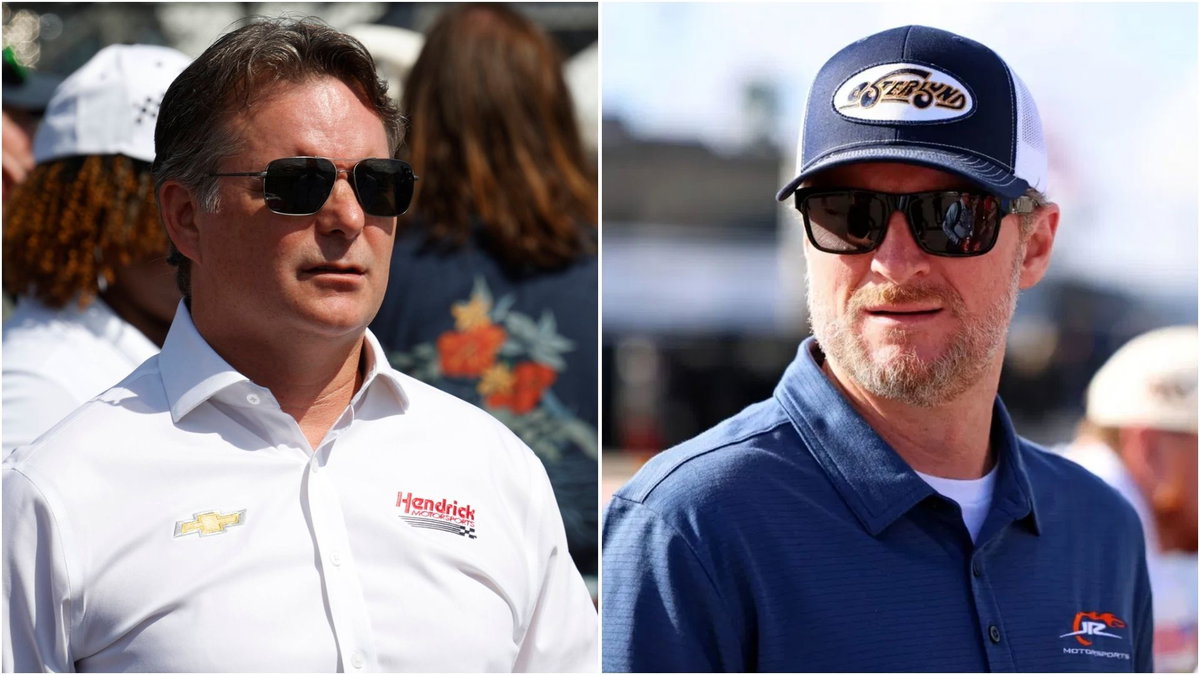
Since their departures, NASCAR has had no shortage of talent. The competition is arguably tighter than ever. But what it lacks is a singular, magnetic personality who can anchor the sport in the mainstream. NASCAR Viewership didn’t suddenly fall because of a TV deal. It gradually declined as those larger-than-life figures exited the stage.
Today’s drivers: Competitive, but not must-watch
Modern NASCAR drivers are incredibly skilled, but they operate in a different landscape. Media exposure is fragmented, attention spans are shorter, and building a national profile is harder than ever. Unlike other leagues that have clear faces, think global superstars in basketball like LeBron or Hamilton in Formula 1, NASCAR’s identity feels more distributed.
There’s no single driver that casual fans feel they have to watch. And no, we are not talking about a Denny Hamlin or a Kyle Larson, or even a Joey Logano, for that matter. We are talking about the next batch of NASCAR drivers like Carson Hocevar, Ty Gibbs, and others.
That’s not entirely the drivers’ fault. It’s also about how the sport markets them. In focusing on parity and competition, NASCAR may have unintentionally downplayed individual star power. The result is a field full of contenders but fewer household names.
Streaming isn’t the enemy
If anything, NASCAR’s move into streaming could be part of the solution. Platforms like Amazon Prime Video are designed to reach younger audiences who have already moved away from cable. Early indicators suggest that these efforts are working. Just not in traditional metrics. New viewers are discovering the sport through digital content, even if they’re not immediately reflected in race-day ratings.
The challenge is timing. NASCAR is currently stuck between two worlds: an aging cable audience and a younger, streaming-first generation that hasn’t fully converted into regular viewers. That gap creates the illusion of decline, even as the audience evolves.
Revenue vs. reach
There’s no denying that NASCAR maximized its media rights value. The $7.7 billion deal is a massive financial success. But it also raises a difficult question: at what cost? By spreading races across multiple platforms, NASCAR increased revenue but potentially reduced reach. Fans now need multiple subscriptions or channels to follow the full season, which creates friction.
It’s the classic trade-off between profit and accessibility. And right now, the balance is being tested.
Wrapping up
Blaming NASCAR’s viewership decline solely on its media deal is convenient but incomplete. Yes, cable is shrinking. Yes, platform fragmentation makes access harder. But the deeper issue is simpler. The sport hasn’t fully replaced the stars who once made it must-watch television. Until NASCAR creates or elevates its next generation of crossover icons, no amount of media strategy will fully reverse the trend. Because in the end, fans don’t just tune in for races. They tune in for people.