























Todd Monken has long shown a clear preference for mobile quarterbacks. He spent three seasons working with Lamar Jackson on the Baltimore Ravens. This year, though, he steps into a new role as head coach of the Cleveland Browns. While Cleveland does have a young quarterback room, it still lacks a true elite dual-threat presence. With that context, Monken didn’t hold back when assessing Shedeur Sanders’ mobility.
“I said this morning that 15 or 20 years ago, they would have said that Shedeur Sanders was athletic,” Monken said while talking to ESPN’s Kevin Clark. “They would have said he could escape. Well, the game’s changed so much to now he’s not a mobile quarterback. No, he’s mobile. He’s not as mobile as what we’ve come to where Lamar Jackson or the quickness that these players have. Their escape ability is completely changed from when it was.”
Todd Monken to @bykevinclark on Shedeur Sanders: “I think you see playmaking ability. I think you see a player that is confident in his skillset. So when you see that playmaking ability and inner confidence, you say, ‘Okay, there’s something to work with there.’” pic.twitter.com/wadxCEavoH
— Daniel Oyefusi (@DanielOyefusi) April 16, 2026
Before entering the NFL, Sanders had already established himself as a playmaker. During the 2024 season at Colorado, he threw for 4,134 yards and 37 touchdowns while posting an NCAA-leading 74% completion rate, pointing to both efficiency and control. At the same time, however, his rushing production tells the other side of the story.
With just four rushing touchdowns that season, it explains why he isn’t typically labeled a dual-threat quarterback. Earlier in his career at Jackson State, he operated in an RPO-heavy, quick-game offense where reads were simplified, often limited to one or two options.
That structure shifted once he transferred to Colorado and worked under Pat Shurmur. While Shurmur introduced more NFL-style elements, it still wasn’t a full pro-style system. The offense leaned heavily on screens and quick passes, often using alignment and pre-snap motion to expose defensive coverages. Plays were designed with answers on both sides of the field, leaving Sanders to diagnose and choose correctly.
On paper, that highlighted his decision-making and passing ability. But the lack of on-the-ground impact remained noticeable. That carried into his rookie year with Cleveland, where he finished the 2025 season with 1,400 passing yards, 7 touchdowns, and 10 interceptions, along with 169 rushing yards and a single rushing score.
So while the ability to escape exists, it doesn’t quite match the level seen in others from his draft class or among established dual-threat quarterbacks. But Monken has also acknowledged that a young quarterback not coming up in a pro-style system isn’t on the player. If anything, he made it clear that the responsibility shifts to the coaching staff to guide that development properly.
“Now, it’s going to be our fault if we can’t develop them,” Monken added. “Then it’s our fault. Our job is to develop all the players that show up in the building and try to get the best out of all of them, create the best version of them.”
That becomes relevant as Sanders heads into his second season, now under Monken.
He’ll be competing for the starting role alongside Deshaun Watson and Dillon Gabriel. And even if he’s expected to push for QB1, the path isn’t straightforward. Especially when the head coach has been consistent about valuing mobility at the position, something Sanders only partially brings to the table.
Todd Monken addresses the benefits of mobile quarterbacks
Todd Monken will oversee the quarterback competition in his first year as head coach of the Browns. Cleveland currently has Deshaun Watson, Dillon Gabriel, and Shedeur Sanders on the roster. And it’s still possible the Browns look to add another signal-caller in the 2026 NFL Draft. And earlier this month, Monken also outlined what he values at the position.
“Most coaches would have an affinity for quarterbacks that are mobile, but they also have an affinity for quarterbacks that can complete passes and are really good on third down and in two minute,” he said. “And so that’s a big part of it as well. So certainly with the league and the way it’s gone, and the multiple looks you get defensively and the elite rushers that you get, it’s certainly beneficial to have a quarterback that can escape, especially considering the No. 1 pass play you’re going to have in the NFL is scramble drill.
“So it certainly benefits you to have a mobile quarterback, but ultimately that’s just a piece of it. It’d a big piece of it, but it’s also, you’re not seeing nearly as many statues at quarterback.”
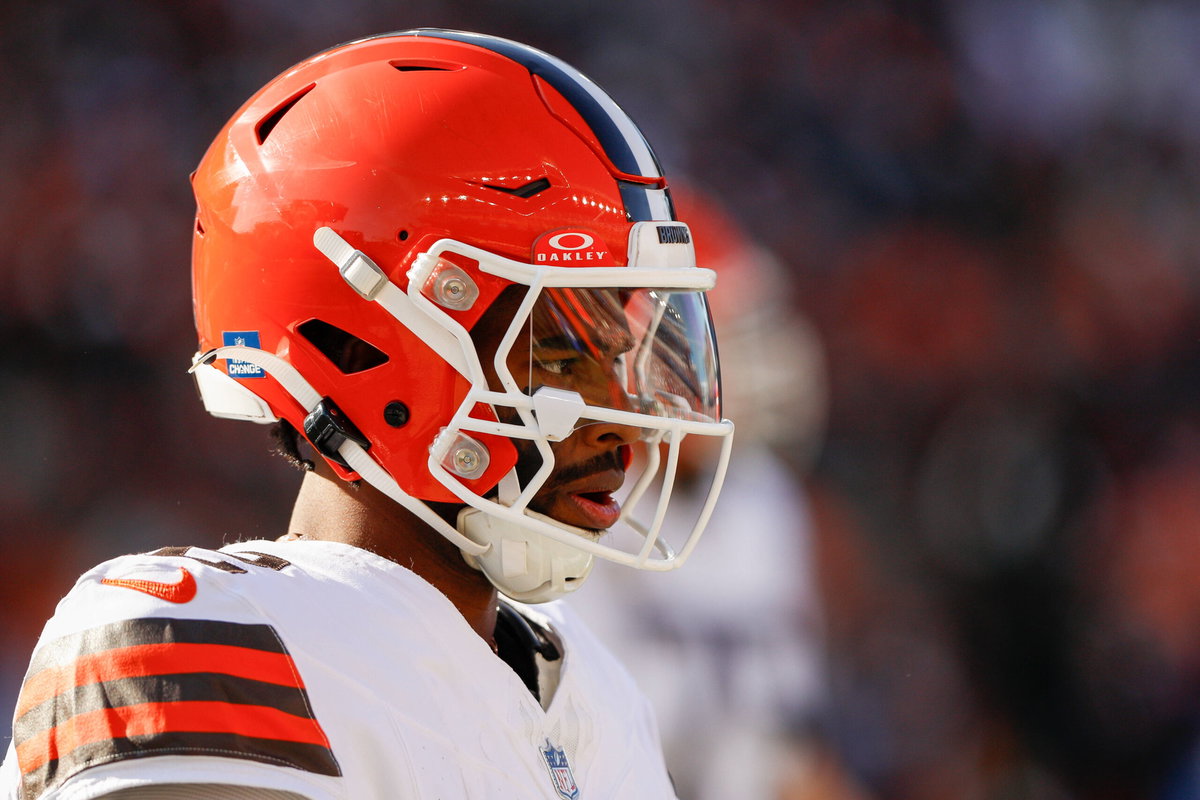
As things stand, Watson is still viewed as the most mobile option in Cleveland, followed by Gabriel and then Sanders. Before his swing-and-miss tenure with the Browns, Watson put up 551, 413, and 444 rushing yards in his final three seasons with the Houston Texans.
Gabriel, meanwhile, spent six seasons at the college level and accumulated over 1,200 rushing yards along with 33 rushing touchdowns. Shedeur Sanders, on the other hand, sits at the bottom of that group in terms of mobility. He finished his college career with limited rushing production and 17 touchdowns on the ground.
That said, mobility alone won’t decide who wins the starting job. But it could still play a role in Monken’s evaluation as he looks to develop the young quarterbacks. How that ultimately shapes the depth chart is something that will become clearer in the months ahead.