


































History has a funny way of teaching lessons, and Wimbledon 1973 is a prime example.
That year, 81 players staged a boycott, and the eventual champion was Jan Kodeš, a clay-court specialist who had two majors under his belt but had never dominated grass. Kodeš’s win, sandwiched between a 1972 semifinal and a 1974 quarterfinal, shows just how a boycott can open doors for unexpected contenders. The protest was in solidarity with Nikola Pilić, barred from competing for refusing to play a Davis Cup match for Yugoslavia.
I think this incident proves that boycotts can reshape the narrative of a tournament, but not without irony. Even in today’s game, tennis players “eat what they kill.” Prize money and ranking points are powerful magnets, and lower-ranked competitors would jump at the chance to fill a depleted draw.
Any meaningful modern boycott would need a critical mass of stars. A solo stand is more symbolic than practical. Coco Gauff joked at the Italian Open about the thought of being the only one sitting out. I can’t help but agree; it highlights the complexity of collective action in tennis.
The mere talk of boycotts raises questions: Is it hype, or could the unthinkable actually happen?
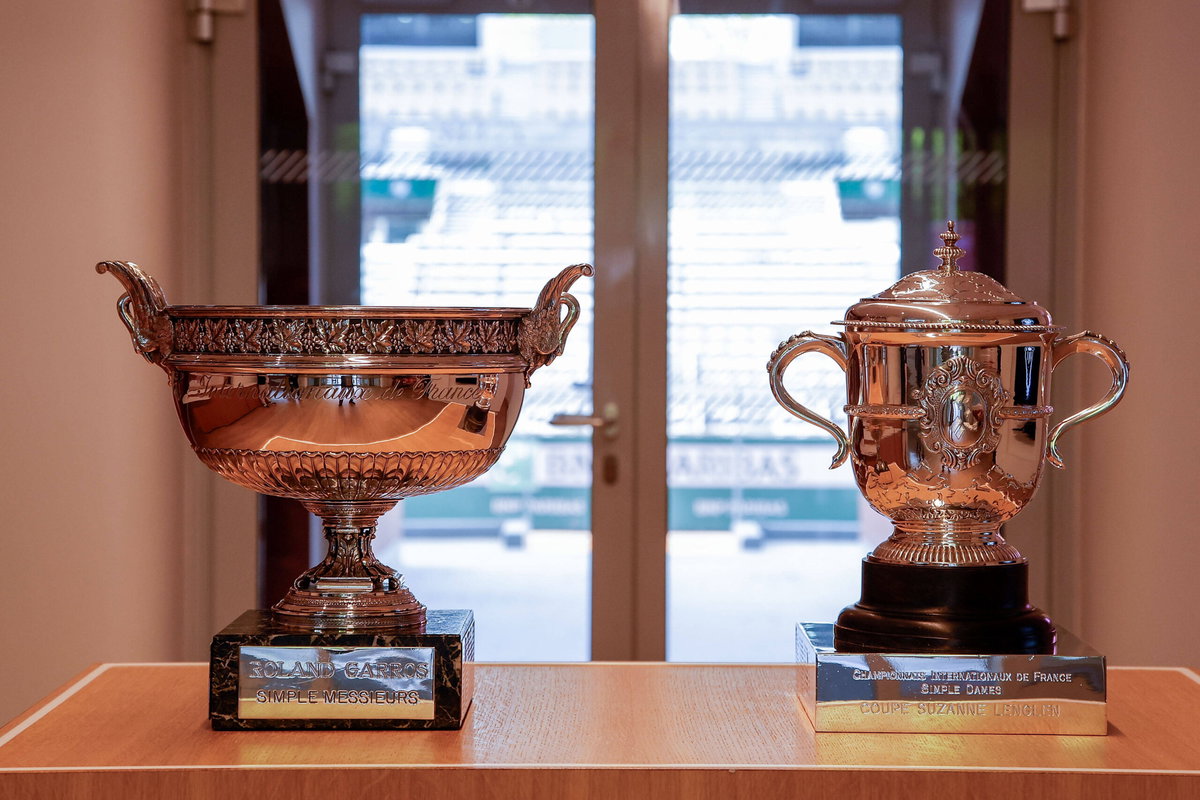
The French Open’s recent prize increase feels more like a token gesture than a meaningful reward
The 13–15% revenue share that top stars take home from the Grand Slams is undeniably low, especially when stacked against the billions these tournaments generate.
Roland Garros’s recent prize money announcement, which brushed past the players’ concerns, was a punch in the gut for many. Despite claims from the tournament that prize money has risen 45% since 2019, adjusted for inflation, the actual increase barely reaches 14%.
The continued silence from the Grand Slams on meaningful reforms only adds salt to the wound. It’s a classic case of talking a good game without following through.
From the perspective of the tournaments, players are important, but not as critical as they may perceive themselves. The Grand Slams are institutions that transcend individual competitors, built over decades of branding, history, and careful financial management. Much of the money generated is reinvested into the sport itself, whether upgrading stadiums, modernizing facilities, or channeling funds into national federations.
Take Wimbledon, for example. 90% of its surplus funnels directly to the Lawn Tennis Association, the governing body for tennis in Britain, amounting to a hefty $65.1 million last year alone.
These arguments might sound reasonable in boardrooms, but to players, they’re a dime a dozen. The athletes remain the engine driving the show, the workers without whom the spectacle collapses.
Infrastructure improvements may benefit the tournaments, but they don’t pay the bills for players who come from countries with minimal federation support. Players from Belarus or Bulgaria, for instance, are unlikely to be moved by Grand Slams acting as glorified fundraisers for wealthy Western federations.
Contrast that with the Australian Open, which, in January, rolled out a prize hike that players welcomed with open arms.
Twelve months ago, the total prize pool at Melbourne stood at $64.81 million. In 2026, that jumped to $74.9 million, a 16% surge, marking the largest payout in the tournament’s history.
The champions didn’t just get a bonus; they got a statement. Men’s and women’s singles winners pocketed $2.79 million, up 19% from the previous year. For players like Aryna Sabalenka and Carlos Alcaraz, vocal advocates for fairer prize distribution, the raise was more than money. It felt like recognition.
Yet, not everyone is buying into the players’ narrative. Former Roland-Garros director Guy Forget shrugged off the complaints with a tone dripping in nonchalance.
Speaking to Tennis Actu, Forget argued bluntly that tennis is an individual sport. “There is no one more selfish than a tennis player. They think only of themselves,” he said, adding that everyone around them, agents, coaches, trainers, press officers, profits from their success, giving players every incentive to chase bigger earnings.
He went further, highlighting the sheer scale of player compensation: losing in the second round could still net $176,531.
Forget questioned whether players consider the broader picture. The French Tennis Federation (FFT), for instance, invested $41.18 million of its own funds into Roland-Garros and is still servicing loans.
“Over the last ten years, prize money has more than doubled. That’s extraordinary. A 15% rise every year? How many jobs offer that?” While he makes a valid point on consistency, it sidesteps the heart of the matter.
Which brings us to the thorny question: if the boycott ever materializes, who has the players’ backs beyond themselves?
How realistic is a boycott under the current structure of professional tennis?
Just over two weeks out from the French Open, Aryna Sabalenka, the world’s No. 1 woman, made the boldest statement yet in what is shaping up to be one of the most intriguing pay disputes in tennis history.
Speaking at the Italian Open in Rome, she did not mince her words: “At some point we will boycott.”
While the comment was measured, it signaled a potential shift in the ongoing tension between tennis’s top stars and the four Grand Slam tournaments over prize money, player welfare, and the governance of the sport.
Joining Sabalenka in echoing these concerns were defending French Open champion Coco Gauff and Australian Open winner Elena Rybakina. Their words came just days after the elite collective of ATP and WTA top-10 players greeted the annual prize money increase at Roland Garros with what can only be described as “collective disappointment.”
The phrase itself is telling, a polite veneer masking growing frustration with the slow pace of change.
For now, any boycott remains hypothetical. None of the players involved suggested immediate action. The French Tennis Federation (FFT), for its part, reassured stakeholders that it remains committed to dialogue, but words alone will not quell a group growing impatient with incremental adjustments.
So, let’s get to the crux of the matter: which aspects of the Grand Slam ecosystem would feel the pinch if the top stars walked away? And which would continue humming along, relatively unscathed?
To be blunt, the tournaments themselves would survive. The machinery of media rights, sponsors, and ticketing is vast, but the spectacle would be hollow. Tennis thrives on its marquee names. Fans come to witness greatness, and without the sport’s elite, the energy, the drama, and frankly, the headlines would dim considerably.
This conflict has been simmering for over a year. In March 2025, the players collectively sent a letter to the Grand Slam Board, requesting a greater revenue share, contributions to player welfare initiatives such as pension funds, and the establishment of a Grand Slam player council to ensure their voices were included in decisions affecting their livelihoods.
The lack of substantive response, particularly regarding the first two points, has only fanned the flames of frustration.
I think Sabalenka’s public turn on this issue is especially striking. For much of the past year, she had been a reluctant participant in these discussions, often deflecting questions or visibly disengaging.
At the Australian Open earlier this year, she stared blankly at her agent and said, almost sheepishly, “Well, can I pass?” Contrast that with players like Jessica Pegula, who consistently articulate the players’ concerns with clarity, or Iga Swiatek, who has spoken unambiguously about dissatisfaction with the current revenue distribution.
The shift from passive observer to vocal advocate from Sabalenka signals that the players’ patience is fraying, and I believe it may indicate that the next phase in this saga will be far more direct.
Other top names have been mixed in their engagement. Carlos Alcaraz, for example, publicly shrugged off the initiative in Miami, preferring to focus on personal goals. While Jannik Sinner, despite prior support for the cause, sidestepped questions on the topic with a shrug and a laugh, saying, “I don’t want to comment.”
Yet this week, we’ve seen something different, a rare display of unity among the top players. Coco Gauff emphasized how the collective voice of elite players can champion the interests of lower-ranked peers. Swiatek didn’t hold back on revenue concerns, and Sinner forcefully criticized the Grand Slams for failing to treat players with the ‘respect’ their contributions merit.
I think this growing solidarity is the most compelling development here, as it’s no longer just about money, it’s about principles, recognition, and influence. Still, let’s not kid ourselves: an actual boycott is unlikely. The players at the heart of this debate are hardly starving for cash.
Sabalenka is on track to become only the second female player in history to earn $50 million in prize money, trailing only Serena Williams. The top men and women earn life-changing sums every time they step onto the court at these events.
They are driven by ambition, personal goals, and the lure of Grand Slam glory. I believe their wealth and success paradoxically weaken their negotiating power in the public eye: it’s difficult to cast multimillionaires as aggrieved underdogs.
Yet the counterargument is equally compelling. The majors themselves are multibillion-dollar enterprises, and lucrative business does not automatically equate to fairness or empathy.
The PTPA Lawsuit has given players the backbone to stand up for themselves
Unlike most professional sports, where athletes sign contracts, draw steady salaries, and have their expenses covered by teams, tennis operates on a different playing field entirely.
In this world, players are essentially independent contractors, footing their own bills and relying on prize money just to stay afloat.
The discrepancy has long been glaring, and that’s where the Professional Tennis Players Association (PTPA) stepped in. I feel the PTPA has given players a backbone, a platform to finally push back against a system stacked against them.
Last year, the PTPA, alongside 22 prominent players filed lawsuits against tennis’ governing bodies. They took legal action against the ATP, WTA, International Tennis Federation (ITF), and the International Tennis Integrity Agency (ITIA), accusing them of operating like a monopoly.
“Tennis is broken,” Ahmad Nassar, executive director of the PTPA, declared. “Players are trapped in an unfair system that exploits their talent, suppresses their earnings, and jeopardizes their health and safety.”
I think Nassar’s statement hits the nail on the head. The sport looks polished from the outside, but beneath the shine, the players carry the weight of an unfair, exhausting system.
The PTPA’s lawsuit also had tangible effects on prize money decisions. When the AO raised its payout, the organization’s push meant that players saw a meaningful increase. Meanwhile, Roland Garros’s latest prize hike looked like a slap in the face, signaling that not all tournaments are playing ball.
The narrative that top players fight for lower-ranked athletes is compelling, but I find it somewhat convenient. There’s no denying that elite players like Sabalenka are already cashing in on massive off-court deals.
In 2025, Sabalenka’s off-court earnings are projected to hit $15 million, thanks to partnerships with Nike, Emirates, Audemars Piguet, and Gucci. She is also an investor and brand ambassador for the IM8 supplement company.
These endorsements dwarf the income of most lower-ranked players, who struggle to cover travel, coaching, and tournament costs. The contrast makes the altruistic argument feel a little like smoke and mirrors.
Don’t get me wrong, top players genuinely care about the sport and the ecosystem. But it’s hard to ignore that some of the calls for greater compensation also align neatly with their own bank accounts.
The tension is clear: on one hand, players advocate for fairness; on the other, it occasionally reads like a push for more money in their pockets. Yet, the reality is that a boycott remains purely hypothetical. There is no concrete plan, and agreement on its possibility does not mean action is imminent.
I feel this is a classic case of posturing, players flexing their collective muscle while keeping their options open.
The question that lingers is simple: will the stars follow through? Only time will tell if this is the start of a seismic shift in tennis or just another headline that fades with the season.
In my view, the PTPA has already changed the conversation. Even without a boycott, it has forced the sport to confront uncomfortable truths about fairness, player welfare, and the distribution of wealth.
For now, the top players continue to compete, endorse, and dominate the headlines, while the rest of the tennis world watches and waits. One thing is certain: the status quo is under pressure, and it’s anyone’s guess where the balance will settle.