



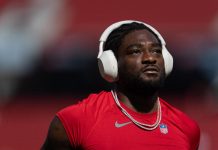
































A four-minute court hearing may have just defined the next chapter of Tiger Woods’ career. A Florida judge denied his ‘privacy plea,’ granting prosecutors access to his prescription records and dramatically escalating his ongoing DUI case following his March 27 Land Rover accident in Jupiter Island. The ruling sounds like an immediate warning bell for Woods’ legal team and could have major personal and professional implications.
Woods was arrested on suspicion of driving under the influence when he tried to go around a pickup truck pulling a trailer. His vehicle hit the trailer, lost control, and flipped over. The golfer crawled out of the vehicle with neither he nor the truck driver injured. Four days later, he pleaded not guilty, but the police saw “several signs of impairment” when they arrived at the scene.
Per the affidavit, Woods was “sweating profusely,” his movement was “lethargic and slow,” and he was “extremely alert during the investigation.” He agreed to perform field sobriety tests, but he was limping. When asked to remove his sunglasses, the report described his eyes as “bloodshot and glassy.” Woods’ test to follow the tip of the pen saw the deputy note a “lack of smooth pursuit in both eyes.”
Woods’ replies to questions regarding consumption of alcohol and prescription medication were “none” and “I take a few” respectively. He also claimed that he hadn’t taken any illegal substances. Although his breathalyzer test came up 0.000, doubts started growing when he refused to provide a urination test during questioning.
Their reports also claimed that Woods had two hydrocodone pills (a painkiller, but a strong one), and he was limping during the sobriety test after the crash. Together, these signs built a case for impairment despite the clean breath test, and prosecutors then subpoenaed Woods’ prescriptions just to be sure about his medications.
Woods’ lawyer, though, tried to block the request. Doug Duncan cited that his client had the right to privacy with respect to his medical records. At the time, Judge Darren Steele already warned him that things might go against them. And that’s what happened.
The judge allowed prosecutors to review Woods’ pharmacy records from earlier this year. They want to check the medications he was taking, the dosages, and whether the prescriptions included warnings about driving while using the drugs. The records will remain sealed under a protective order, accessible only to the prosecutors, police officers, and Woods’ legal team.
Tiger Woods’ lawyers can still try a few things to slow down or limit the case, even after the judge allowed prosecutors to see his prescription records. They could appeal the decision to a higher court, argue that some of the medical records are not important to the DUI case, or try to stop certain private details from being shown during the trial. They can also challenge how prosecutors use the records later in court.
How far can things go if records go against Tiger Woods?
In DUI cases involving medication, judges often allow prosecutors to review prescription records if they believe the medication may have affected the driver. That is what happened in Woods’ case.
As per alcohol-related DUI cases in Florida, if a driver’s blood-alcohol level is 0.08% or higher, the law considers that person impaired. However, cases involving prescription drugs or other medicines are more complicated, as there is no exact number or test that automatically proves someone was impaired. Because of that, prosecutors in Woods’ case need his prescriptions.
Now, if prosecutors find important details in Tiger Woods’ prescription records, it could have a big impact on his DUI case.
The records may help prosecutors argue that Woods was impaired by medication while driving during the March crash. If the records show Tiger Woods had medicines that were not prescribed to him legally, the case could become much more serious.
Tiger Woods’ problems with painkillers started back in 2017 after police found him asleep inside his car near his Florida home while the engine was still running. That became a turning point in his life — after the incident, Woods entered rehab and admitted he had struggled to deal with constant pain and sleeping problems caused by years of injuries and surgeries.
Prosecutors may then question where the medications came from and whether he was allowed to have them. That could lead to possible trouble for illegal possession of prescription medicine.
As Woods does not have a prior DUI conviction (his 2017 arrest was reduced to reckless driving), the new charges are being treated as first-time misdemeanor offenses under Florida law.
The case is not being treated as a felony because Woods does not have multiple DUI convictions on his record, and the crash did not involve serious injuries or deaths. Under Florida law, felony DUI charges usually happen when a driver has several prior DUI convictions or when a crash causes serious bodily harm or death to another person.
According to former Florida prosecutor and defense attorney David Haenel, a first-time DUI conviction in Florida carries mandatory consequences. These include:
- Up to 12 months of probation
- Mandatory DUI school
- 50 hours of community service
- A fine that can reach $1,000
- Suspension or revocation of a driver’s license for six months to one year
The maximum potential jail sentence for this type of misdemeanor is six months.
After his latest car crash in 2026, Woods once again decided to step away from golf and focus on his health. He said he wanted treatment and recovery so he could improve both physically and personally before returning to normal life.
At 50, Woods is running out of time to reclaim his place in the sport. A conviction would make that fight significantly harder.