



The year is 1994. Roger Penske has already established himself as one of the biggest names in the motorsports business. While he was still decades away from purchasing the Indianapolis Speedway, which he did in late 2019 – early 2020, he already owned the Michigan International Speedway. But he decided to construct his own track, which would soon be called the California Speedway. But just a few decades later, the track is in shambles.
The history of Roger Penske’s California Speedway
The Penske Speedway Inc. and Kaiser Resources Inc. joined hands to give California yet another taste of racing with the construction of the California Speedway. The deal was finalized on the 20th of April, 1994, and by the following day, the people of Fontana had already become aware of the construction. This received a huge positive reaction from the people, owing to the racing experience and the increase in land prices. The latter, however, would become one of the reasons for the track’s end.
The track was so much anticipated that NASCAR agreed to host a Cup Series race on it. This was the first time in the sport’s history that it signed a deal with a track that was yet to be constructed.
The construction began soon, and the track was opened on the 20th of June, 1997, with the NASCAR West Series (now called the ARCA West) kicking off racing action just a day later. The Cup Series then filled the seats to mark the California 500 the following day. There was massive success around the track, considering the racing it provided and the audience it attracted. But a change was soon to come.
The initial sale
In 1999, Roger Penske sold the track to the International Speedway Corporation in a massive $600 million deal. This, however, began the very slow and gradual downfall of NASCAR’s main event. By the time the California Speedway had become home to many races, including several sports cars and motorcycle series, IndyCar, and all three of NASCAR’s national-level series.
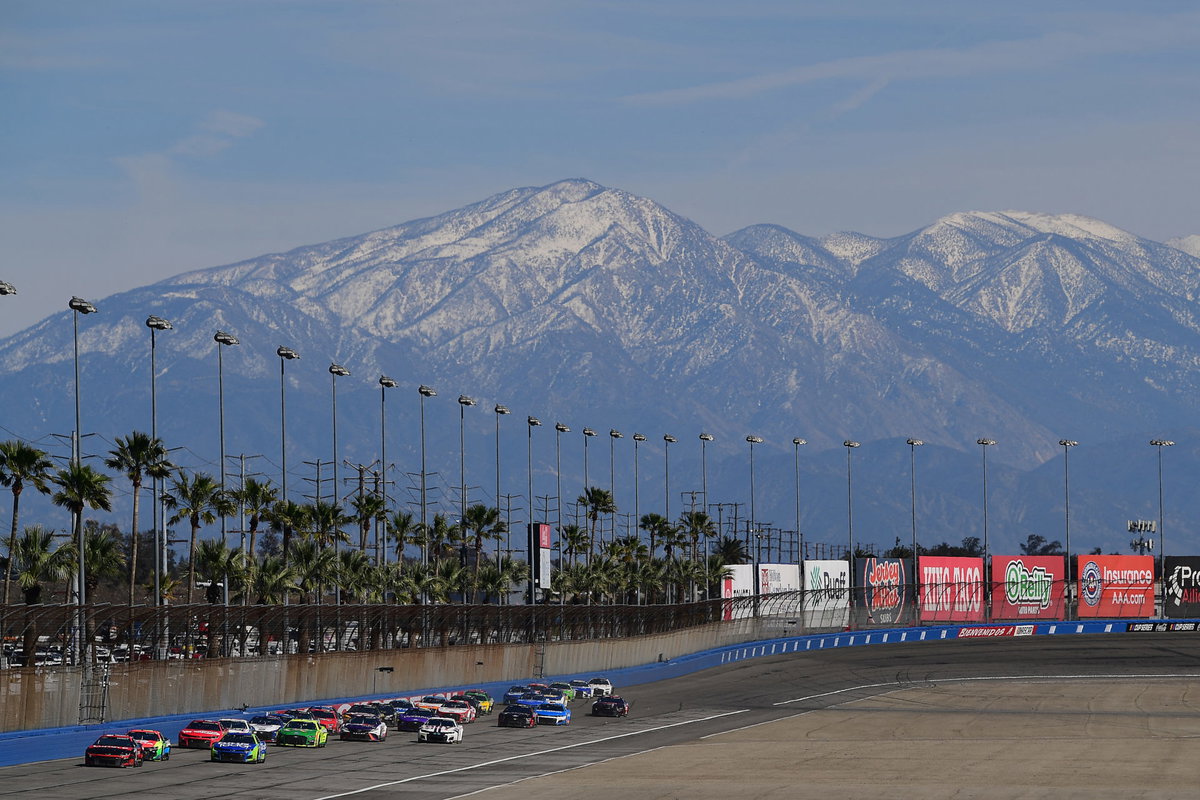
However, when NASCAR switched to a two-race event in 2004, there was a massive 20,000 drop in the overall attendance. Roger Penske noted that the track might only be suitable for a single-race event. Later in 2011, the sport made the change. By then, the California Speedway was renamed the Auto Club Speedway, following the Automobile Club of Southern California’s title sponsorship in 2008. In 2014, the grandstand capacity was massively reduced with some changes in the overall infrastructure of the track. While it remained popular and was also the shooting location for some films (including James Mangold’s Ford V. Ferrari), NASCAR made a huge decision in 2019.
NASCAR’s purchase of the ISC
That year, NASCAR purchased the International Speedway Corporation, indirectly purchasing all the tracks that they owned, including the Auto Club Speedway. While this didn’t seem to impact the overall race there, NASCAR did announce the following season that they were considering the construction of a 0.5-mile oval around the region of the track.
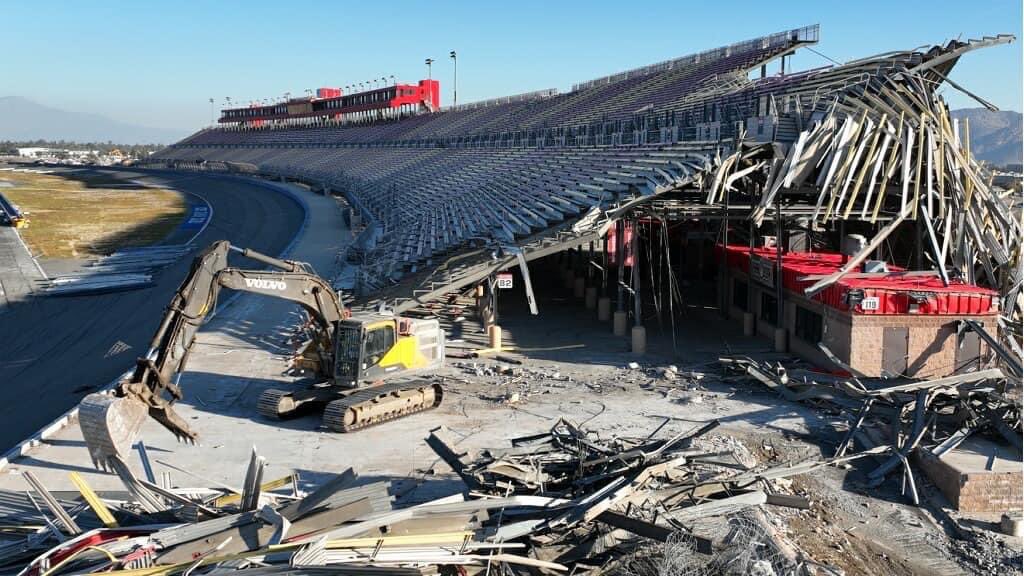
In 2023, NASCAR hosted its final Cup Series race on the iconic track, but soon after, a deal was made, and the authorities sold most of the track’s land. This was a massive disappointment for the average racing fan. Over the years, there has been a visible demolition of the track, and nothing seems to stop it. The worst part was that this was done because the land revenue was more profitable to the sport rather than the racing revenue.
Ways to make a racing fan cry. Demolition of the Auto Club Speedway through the years pic.twitter.com/qLhXxP7kQ6
— Gunaditya Tripathi
(@Guni1202) March 20, 2026
The future of the speedway
As mentioned, there were plans to construct a 0.5-mile short track where the massive track once stood. But there have been no movements on the same. The track, which served as one of the best racing venues in the state, had a slow downfall, which accelerated massively after NASCAR’s purchase in 2019.
This, however, also raises concerns for some of the other tracks that the sport owns, including the likes of the Homestead-Miami Speedway, Iowa, and Darlington. While NASCAR doesn’t seem to be planning to sell any of these iconic tracks, it is quite understandable why the fans have been so worried about the same.
Ultimately, the track no longer exists: neither on NASCAR’s calendar nor in real life. While one might think that it would have been somewhat emotional for Roger Penske, if there is anyone who understands the business of motorsports, it is he. This was a massive deal that the sport made, and the fans had to, emotionally, pay for it.