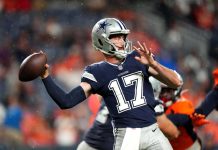

















“It has always baffled me how vastly different NFL game jerseys are from what is being sold to the public,” wrote former Cowboys QB Ben DiNucci on X. “Is it really that hard to give the fans a legit, authentic jersey experience? These don’t look/ feel even remotely close to the real thing. Fanatics sent me a Cowboys jersey of mine after my rookie year. I opened it, laughed at it, and haven’t looked at it since.”
It has always baffled me how vastly different NFL game jerseys are from what is being sold to the public.
Is it really that hard to give the fans a legit authentic jersey experience ?
These don’t look / feel even remotely close to the real thing.
Fanatics sent me a cowboys… https://t.co/DS3yTvXzeH
— Ben DiNucci (@B_DiNucci6) April 19, 2026
Ben was a 7th-round pick by the Cowboys in the 2020 NFL Draft. The same year, the Fanatics sent him a jersey. However, the merchandise he got was noticeably poorer in quality than the original one, which he brought up, calling out the $31 billion company.
In connection with his tweet, he also added that the company charges the players about $250 to keep the real jerseys that are worn during the game, which have the finest quality. He insisted that the Fanatics shouldn’t be charging fans of similar or higher amounts for merchandise, which are nowhere near the professional level of quality.
While Ben remains one of the NFL stars to speak out against the company, MLB star Taylor Ward also voiced his opinion regarding the issue.
The former Los Angeles Angels left fielder publicly criticized the jerseys manufactured by the Fanatics in February, 2024. He felt that Nike’s Vapor Premium jerseys were more like a replica, not authentic high-end gear.
“It looks like a replica,” stated Taylor. “It feels kind of like papery.”
Besides the athletes, Fanatics’ jersey quality came under the radar during Super Bowl LX week.
Fanatics was criticized over poor-quality jerseys during the Super Bowl rush
Michael Rubin’s billion-dollar company was called out for failing to maintain the quality during that big week. Following a sky-high demand for the New England Patriots and the Seattle Seahawks’ jerseys, the Fanatics faced criticism after several fans received substandard fashion-colored merchandise that had a price tag of over $160.
Wow they really cheapest out on the white jerseys. Its basically a jersey shirt and they are charging $160. Very dissapointing pic.twitter.com/MLpMyElxTN
— SugarShane (@smsugar40) January 31, 2026
Due to the surge in demand, the company ran out of official team colors, which made them sell merchandise made from poor fabrics. The company, however, apologized for the delayed rollout, and the 400% increase in sales created mounting challenges. Additionally, they offered free returns to the dissatisfied consumers through their app.