




































A year can change the direction of your whole life. On 18 April 2025, manager Omar Riza first apologised for calling Cardiff City supporters clueless and was then sacked after a defeat that effectively relegated the club to the third tier.
On 18 April 2026, Cardiff City confirmed their promotion back to the Championship. So much of this club’s recent existence has felt fated by its own incompetence. A little jolt of positive serendipity is to be welcomed. What is this weird feeling? Is it excitement?

When I came here in December 2024, a 2-0 home defeat to Preston North End devoid of any modicum of seasonal cheer, it was one of the most depressing live football experiences I could remember: half-empty stadium, fully empty bank of goodwill.
The Vincent Tan experience had reached its nadir. Cardiff fell into the bottom three and would end the season as the third best team in Wales.
It could easily have got worse still; League One offered no guarantees. In that context, promotion at a canter – Cardiff have been in the top two since the start of December and scored three or more in 14 league games – has become an unlikely cleansing detox.
If this is any one person’s triumph, it is Brian Barry-Murphy’s. Cardiff don’t do well with managers: you have to go back to Neil Warnock in 2016 for the last time they appointed one that reached 70 matches in charge.
For all that the hierarchy here is rightly scrutinised, they took an educated gamble on a man with no first-team management experience bar at Rochdale for two years until 2021. It has paid off double.
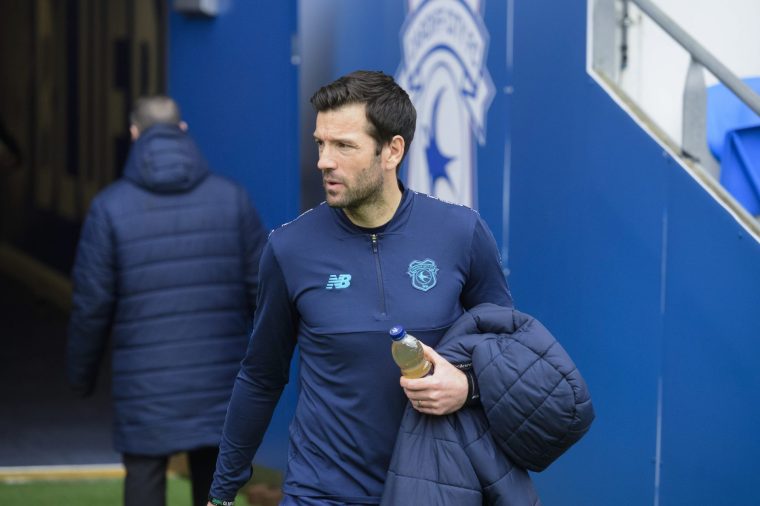
Barry-Murphy has done everything right. His man-management has been exemplary, his tactics relatively simple and effective, his use of substitutes improved all season and his sense to buy into the fan culture smart given the obvious disconnect between supporters and club when he arrived.
But his greatest trick was to understand that there was a USP within the fabric of this club that had been abandoned far too readily by his predecessors. The most basic geography lesson: this is the only professional club in a capital city with a wider population of almost 500,000 people.
It wasn’t being utilised. Last season, only two of Cardiff’s 24 most regular starters were Welsh. Of all the wastage here then and before, it was the degradation of that connection between place and club that made the least sense.
Inevitably, many players left after relegation. But rather than replacing with like-for-like on a sliding scale of quality, Cardiff chose to sign only three players (two of them on loan). Barry-Murphy, with his history of youth development, was happy to promote from within.
This season, 26 players have appeared for Cardiff in the league. Nine of them are Welsh and none of those are older than 24. In the four latest Wales squads from Under-17 to senior, Cardiff had 19 players. No wonder that Craig Bellamy says that Barry-Murphy’s management is “like a dream to me”.
In doing so, Barry-Murphy has overhauled the squad without demanding investment. The ninth oldest team in the Championship last season has become the second youngest in the EFL in 2025-26. It is a remarkable turnaround to combine with consistent performance.
Newsflash: football supporters like this stuff and like it even more when the team is winning. Most of it is subconscious, but not all: you see a young man score a winner who grew up around the corner; your kid sees a role model and a pathway every time that badge gets kissed. How can they not inspire you to want more of the same and want to see it happen? Cardiff’s attendances have gone up in the third tier.
It doesn’t take much to fall back in love. Supporters don’t want to fight with each other, whatever social media tells you. They don’t want to walk down Leckwith Road full of fear for what they might see or full of dread because they already know. They don’t want to live on the edge of mutiny about how the club is being run.
Read more
But when your club has been mistreated and allowed to rot before, trust eternally remains fragile as a means of emotional self-preservation and an early warning system. Cardiff City supporters aren’t necessarily waiting for things to go wrong, but they understandably require a drip feed of reasons to believe that things are still going right.
So here’s the thing: this has to be only the start. Barry-Murphy has to get his way, to continue this project as he sees fit, to play an active role in recruitment that avoids the magpie-style shopping of previous years that got Cardiff into their mess.
Get that right, and this can absolutely be a new era in which the club is representative of its location and its people, is helping the national team and is standing on its own two feet rather than being forced to its knees by self-inflicted blows. Cardiff can stand for something again beyond Tan’s misguided broken dream.