















A new year and a new problem to address?
The past few years in NASCAR have been all about experimentation and constant adaptation. First, it was the short-track package; then came a race at a naval base, and the latest is the All-Star Race. For the first time in the history of the sport, NASCAR is going to run this event at the Dover Motor Speedway.
The All-Star Race has always been controversial due to its format. At first, it used to be restricted to the previous winners of the race and one last chance for the other drivers to fill in the remaining grid. The seeding slowly expanded to previous champions, current champions, previous season winners, and so much more. So eventually, the NASCAR All-Star Race ended up becoming yet another showdown between the current grid.
The stars will shine with $1,000,000 on the line. #AllStarRace pic.twitter.com/ocOxXDboaP
— NASCAR (@NASCAR) May 12, 2026
To address these concerns, NASCAR had the brilliant idea to introduce a change to the race format for 2026. The race will be divided into three segments. The first two segments will be 75 laps each. After these two segments, the top 26 drivers are going to compete in a final 200-lap dash. They will be joined by the previous champions and race winners.
The catch is that NASCAR has added a new rule for the seeding of the final segment. The top 26 finishers after the first segment will run a reversed grid race for the second 75-lap segment. So essentially, NASCAR is going to try to switch things up by asking the best drivers to repeat their results from the back of the grid. In theory, it sounds brilliant: force the top teams to reclaim their lead from the back of the grid.
But in reality, it poses a host of different troubles. The first one is inherently due to the nature of the track this race is going to take place at. Dover Motor Speedway is not exactly a track that promotes overtakes. It is a long stretch of a racetrack that hosts high-speed, green-flag runs. It is extremely difficult to overtake at Dover Motor Speedway, and drivers have to rely on strategy more than racecraft.
Why is the new format a double-edged sword?
The Next-Gen NASCAR has undeniably reduced the overtaking opportunity for the drivers. Most of all, they are afraid that one wrong move can send them barreling down the straight due to a slight aerodynamic disturbance while following another car for an overtake. This is the condition of the regular races. So imagine what would happen when drivers go for a reverse grid race.
The best cars of the pack will be stuck behind with no way to overtake the backmarkers in front, who will be trying their level best to slow down the pack and secure the lead. Since it is Dover Motor Speedway, caution flags are going to be rare, and there will be hardly any shake-ups in the pack. So in a way, NASCAR is trying to create artificial competition.
The biggest factor at play throughout this race is going to be the strategy that drivers use. There is a high probability that many teams will try to ‘sandbag’ their cars, running slowly in the first segment to purposely get a better starting position for the second segment. The top teams will eventually try to do everything in order to save their fuel and tires to gain a significant advantage in the second segment.
But this inversion also gives a second chance to the backmarker teams like Spire Motorsports and Trackhouse Racing. They have to rely on wrecks and chaos in the pack to get past the front-runners, usually. With the inversion hitting the top finishers in the second segment, such teams can secure a better finish in the second segment and try to hold on to the lead. With Dover Motor Speedway being difficult to overtake as it is, these teams will likely end up in the top spots with a good run in the second segment.
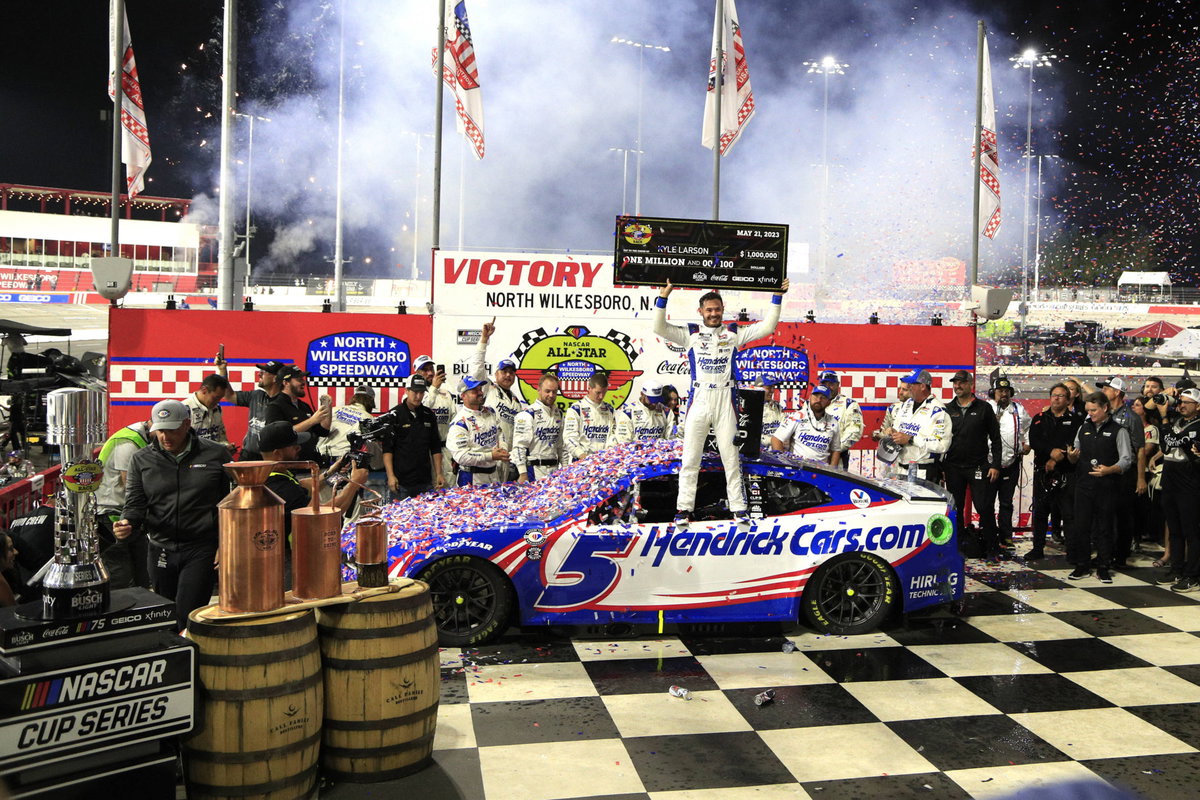
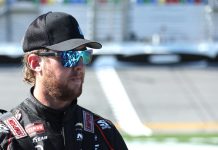
But NASCAR’s artificial competition system does not really sit well with its drivers. Brad Keselowski knows how difficult it is to commit to a race in Dover. And running a 200-lap stage is not exactly going to be easy this year.
“Dover is one of those tracks that when you strap in … you know you gotta go hard on that very first lap,” Brad Keselowski said. “You have to get in the car, and you have to commit to a long-ass day at a track that’s fairly unforgiving and really fast, and it’s a big challenge.
“It’s one of the most mentally challenging things that you have to do as a race-car driver. I respect that so much about this track. I actually enjoy it. It feels a little masochistic to enjoy that. I know I’m going to have to suck it up. But the reward for that, after those first few laps, is, ‘Man, that was pretty badass.’”
So the entire argument revolves around one core question. Will this new format lead to a photo finish with drivers going three-wide across the finish line? Will it make Dover Motor Speedway exciting again? If the new format does end up addressing these questions in favor of the audience, then maybe switching to Dover Motor Speedway with this new format is not going to be a total failure.
Or else the fans are going to tear apart NASCAR for ‘wasting their time’ once again. In the end, it will lead to another change in the schedule and another experiment.