




























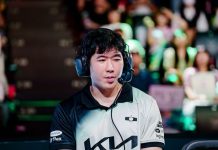

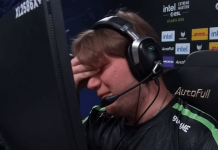


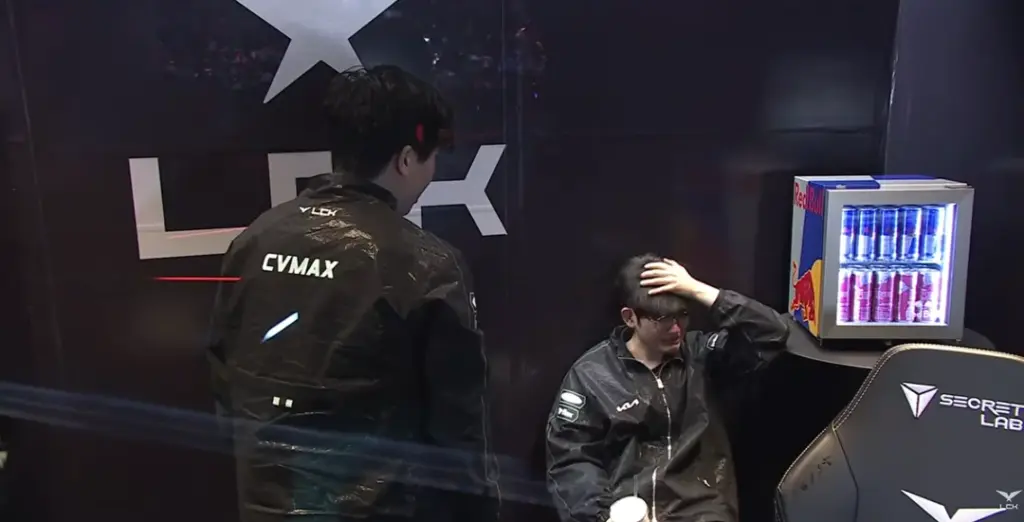
When Dplus KIA’s behind-the-scenes footage of head coach Kim “cvMax” Dae-ho reviewing his team’s 2-0 loss to KT Rolster began circulating, much of the initial reaction focused on discomfort.
But while most members of the community are criticizing the head coach’s ways and manners, the attention should be on whether those actually have a positive influence and lead to improvement in the long run.
If harsh words create clarity, accountability, and urgency, they can be part of a successful environment. If they leave a player feeling humiliated, then the same approach can be counterproductive.
cvMax calls out Siwoo
In Jeon “Siwoo” Si-woo‘s case, that line is especially important. The head coach called out the top laner, claiming he’s “next level bad” and called him “the ace of making the team lose the game.”
Several members of the community called out the abusive behavior: “To the surprise of absolutely no one, cvMax strikes again,” said a user on X.
This is not the first time cvMax has been that harsh towards his players. Back when he was on Griffin, players Choi “Sword” Sung-won, Lee “Tarzan” Seung-yong and Shin “Rather” Hyeong-seop all stated that they were subject to or witnessed verbal or physical abuse by the head coach.
While it’s undeniable that physical abuse should be punished, verbal abuse is a much more delicate discourse in a competitive environment, especially after losses, where emotions are still high.
Harsh feedback is part of elite competition
In a game like League of Legends, execution is key. With so many little nuances and details, players need to perform near-perfectly to increase their chances of victory, and every single mistake can be fatal.
This is where a coach’s responsibility and value come into play: acknowledging the mistakes and fixing them is what turns great players into great teams.
If a top laner mismanages a wave or if a bot lane loses priority at a critical time, players must know exactly what went wrong, why it happened, and what should change before the next match. In that sense, a coach being direct is not only acceptable, but essential.
This is especially true in the LCK, considered the most competitive league in the world, where the standards are brutal. Also, Dplus Kia is a team with great expectations, having gathered some of the most talented youngsters in the scene, led by former world champion Heo “ShowMaker” Su.
In that environment, heated discussions are not a sign of dysfunction. Quite the opposite.
The problem is not the attitude; it is the wording
That is where the cvMax debate becomes more complicated. The issue is not simply that he sounded angry or that he held players accountable, especially after such a bad performance. Emotions will not always be polished, and it’s not easy to always keep them in check.
But the biggest concern is the wording. The way the coach communicates to its players can make a major difference in how the other side takes the message.
There is a major difference between telling a player how they should’ve played the game and telling them that they are the reason the team loses. The first statement identifies a problem. The second is an attack on the player himself.
And while CVMax does point out some gameplay elements for players to improve, the issue is that the player still received a belittling message that can severely harm their self-confidence.
Telling a player they are the problem in such a way can be much harder to process, and shift the attention away from making the corrections. That is where harsh coaching can stop being productive.
Another user on Reddit wrote: “I don’t agree with cvMax’s method at all, and I don’t think this kind of harsh treatment should be normalized or tolerated just because fans are frustrated. There’s a difference between holding players accountable and creating an environment built on humiliation or excessive pressure.”
This does not mean coaches need to soften every sentence. Players at the top level should not expect every mistake to be wrapped in comforting language. But the words still have to lead somewhere.
Movistar KOI’s League of Legends head coach Tomás “Melzhet” Campelos Fernández is also known for his harsh words, especially this year, when the expectations from the team are higher.
In a post-match interview, Melzhet had stated that top laner Alex “Myrwn” Pastor Villarejo and ADC David “Supa” Martínez García didn’t deserve to be renewed based on the recent performances. Despite the seemingly negative words, the MKOI head coach is always specific in his feedback and is often looking out for his players, praising them on the right occasions.
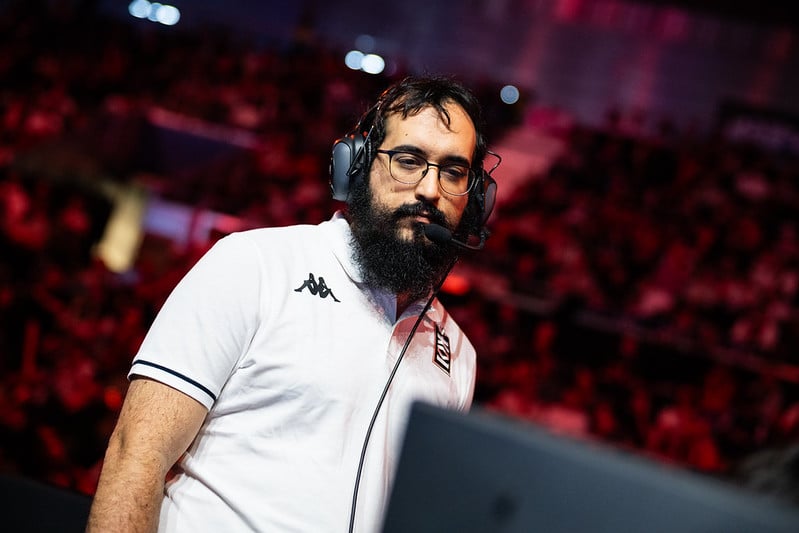
MKOI support Álvaro “Alvaro” Amo has also been criticized by his head coach, yet the player has shown great respect towards his leader.
“I would prefer him to be like this than many coaches that are NPCs,” he said previously in an interview. “He really is passionate about what he does, and he really wants us to improve because he has seen the potential and how good we are in other moments.”
A strong coach can be harsh but must choose his words wisely. If the head coach is frustrated, he must also realise how his emotions can negatively affect his wording, and therefore the team.
Different players hear criticism differently
Another important part of the debate is that not every player reacts to criticism in the same way.
Some players thrive when challenged directly. They enjoy responding to confrontation and can use those moments as fuel to get better.
But not everyone acts that way, especially when it comes to League of Legends players. Back in 2021, LCS squad TeamSoloMid (TSM)’s majority owner,Andy Dinh, was accused of using an aggressive and harsh tone towards his players and staff members.
While he wasn’t a coach, Dinh was the leader of the organisation and therefore responsible for setting a workplace culture that allowed such behaviour to occur.
That year, the team faced enormous pressure, having just signed Worlds 2020 runner-up support Hu “SwordArT” Shuo-chieh for $6 million and the expectations of fighting for internationals. Despite being one of the top teams in both regular splits, TSM ultimately failed to qualify for the year-end world championship, marking a disastrous season given the result compared to the investments.
This is why the discussion shouldn’t be framed around whether cvMax’s approach is right or wrong in absolute terms. The better question is whether he actually recognises how each individual player will receive his message.
The same review style and feedback can have completely different effects depending on who’s on the receiving end.
The best coaches adapt
cvMax has long been seen as one of League of Legends’ most intense coaching figures. He has been able to nurture and develop world-class players, especially when he was on Griffin, with a perfectionist mindset and an exceptional level of demand.
But the great coaches know how to read the room. They not only identify mistakes but also turn them into improvements. And if using harsh words and belittling players has the opposite effect, then it’s counterproductive and should be stopped.
This is where communication is key. The emotional intelligence to choose the right words and communicate constructively. In Siwoo’s case, the concern is not that cvMax criticised the player, but rather the concern that the young top laner might have negative consequences on his confidence. In a game like League of Legends, where it’s directly tied to a player’s execution, it can break him.
cvMax is walking on an extremely fine line. If he wants to get the best out of his team, he must prove that his methods can evolve without losing the qualities that made the players reach this point in the first place.