













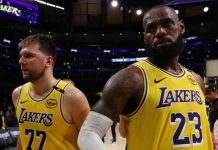










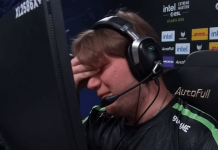

With just 12.2 seconds left and the Lakers trailing by three, JJ Redick pulled his hottest shooter from the floor, and the cameras caught exactly what Luka Doncic thought about it. Despite Rui Hachimura’s offensive brilliance throughout the night, the power forward was replaced by Maxi Kleber in the closing seconds, a decision that left Doncic visibly stunned on the sideline. He squeezed his face in disbelief, unable to process what he was watching.
Hachimura had earned his place on the court. Pouring in 21 of his 25 points in the second half while shooting 60% from the floor and 50% from deep, he had been the Lakers’ most reliable offensive weapon all night. Removing him with a three-point deficit and time still on the clock – time enough for one more shot – baffled not just Doncic but teammates across the bench.
View this post on Instagram
The Thunder’s defense, no longer anchored to Hachimura’s threat, shifted its focus to LeBron James and Austin Reaves. Reaves got the look Redick had designed the play around and missed the three.
OKC scored two more to close it out, 115-110, and with that, the sweep was complete: 108-90, 125-107, 131-108, 115-110. That outcome only deepened the scrutiny surrounding Redick’s call, and in the hours that followed, the reasoning behind it began to surface.
The Lakers prioritized spacing and screening over Rui’s hot shooting hand
Redick, it turns out, was never drawing up a play for Hachimura. The intent was to manufacture the right spacing and movement to free up James or Reaves for a scoring opportunity. Kleber was brought in as the screener; Kennard as a decoy.
“The explanation I’ve heard is Kleber was in as a screener. Kennard a decoy (third option),” noted ESPN senior writer Ramona Shelburne on X. “AR or Bron was getting the shot. Smart was the passer. Kleber is a good screener and good with execution. Hence, he was in there over Rui. Neither was getting the ball. Kennard in there over Rui because of the gravity he creates.”
Kennard never touched the ball, but his presence as a floor spacer was enough to pull Thunder defenders out of position – or so the plan intended. Redick prioritized James and Reaves over Hachimura’s hot hand, a calculated gamble that ultimately backfired when the shot didn’t fall.
It was not the first time Redick’s substitution instincts drew fire. Just last year, against the Minnesota Timberwolves in Game 4 of the first round, the Lakers became the first team since tracking began in 1997 to make no substitutions in the second half of a playoff game. The no-sub gamble cost them the game and put them on the brink of elimination, drawing public criticism from Magic Johnson himself.
Redick pushed back on the backlash, insisting that fatigue was not to blame for the fourth-quarter collapse. The Hachimura benching was simply the next chapter in a season-long debate about whether Redick’s instincts, bold as they are, can be trusted when the margin for error disappears.
Redick has yet to address the substitution directly. In the aftermath of the loss, he focused instead on the team’s competitive spirit – a generous read of a night that ended not just in defeat, but in a sweep.