

































Some P4 coaches feel the current college football calendar is an endurance test. Late August kickoffs bleeding into mid-to-late January title games. Five months for twelve regular-season games, conference title games, and the expanded playoffs. Travel and media. Sometimes we forget these players are still students trying to manage everything together. So, on Thursday, the NCAA officially recommended a proposal that could ease the schedule.
“Under the proposal, future FBS regular seasons would be standardized to 14 weeks, during which teams could schedule 12 games,” the FBS Oversight Committee wrote in an April 16 statement. “The season would begin on the Thursday of what is now designated Week 0 and end on the Saturday after Thanksgiving.”
Moving the starting line provides some breathing room because right now, the structure is too tight. Teams only get two bye weeks if the calendar aligns and the first Saturday falls late in August. Otherwise, it’s a week-to-week sprint with very little time for recovery. But under this new model with a consistent 14-week schedule guarantees two bye weeks every year.
Take recent examples. Miami played 16 games in 2025 and Ohio State did the same in 2024. That’s NFL-level workload for players who are, in most cases, still teenagers managing studies and physical wear-and-tear from one of the most violent sports. So if you think about it, an extra bye week is a necessity and the NCAA gets it.
The FBS Oversight has proposed a move to starting the regular season on Week 0.
“Future FBS regular seasons would be standardized to 14 weeks, during which teams could schedule 12 games. The season would begin on the Thursday of what is now designated Week 0 and end on the… pic.twitter.com/mgzw2io6B8
— Pete Nakos (@PeteNakos) April 16, 2026
By shifting the season earlier, potentially as soon as August 26 in 2027, August 24 in 2028, and August 23 in 2029, the sport creates space without sacrificing any games. Under the current system, Week 0 games require waivers or special exemptions. That’s why those early matchups, often international showcases like North Carolina vs. TCU in Dublin, feel like outliers. But this new proposal normalizes that.
It makes sense because December is getting crowded with conference championships, the Army-Navy showcase, expanded playoff rounds, and bowl games. This proposal may not fix everything but it buys time and preserves standalone weekends for conference title games and the Army-Navy rivalry, both of which have been under pressure.
SEC commissioner circles have floated the idea of eliminating the conference championship altogether while Army coach Jeff Monken has suggested moving the rivalry game to Thanksgiving. Now this change could fix P4 coaches’ woes.
Oregon and Texas have been waiting for this change
One of the most honest feedback of the current system came from Oregon head coach Dan Lanning. Ahead of last season’s Orange Bowl, he didn’t sugarcoat it.
“Ultimately, in my mind, the vision for this should be every playoff game should be played every single weekend until you finish the season,” he said. “Ideally the season – even if it means we start Week 0 or you eliminate a bye – the season ends Jan. 1. This should be the last game. This should be the championship game.”
That’s the dream scenario for a lot of coaches. They want to wrap it up early and give players and staff a clean transition into recruiting cycles, transfer portal movement, and offseason planning. Right now, everything overlaps as the portal opens while teams are still playing big games and coaches are juggling playoff prep with roster management. And then high school recruiting calendars clash with postseason responsibilities. It’s exhausting.
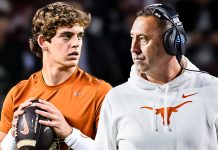
Texas head coach Steve Sarkisian felt it enough to cancel the Longhorns’ spring game altogether last year because he felt the system is asking too much.
“I just don’t know if rolling the ball out, playing the game, when we only get 15 practices, is the best for us to maximize the opportunities that we get,” he said.
This proposal is a calculated step. The FBS Oversight Committee’s recommendation now heads to the Division I Council in June. If approved, it would take effect in 2027 giving schedules some flexibility while players get one extra week to recover.