

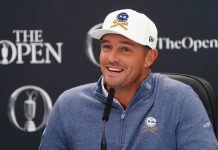
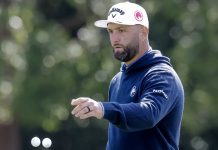


The PGA Tour knows what it wants and is willing to do whatever it takes. How else would you describe the new media policy changes? The Tour is aware of what 2x US Open winner Bryson DeChambeau would bring to the Tour if he were to return, and they knew they needed to relax their media policies.
The PGA Tour has presented the updated policy at a Player Advisory Committee subcommittee meeting at the Truist Championship in Charlotte this week, with formal rollout to members expected later this month. The new policy allows the following:
- Pros are now able to post broadcast footage of 6 shots per round, up from a single shot previously
- Players can post 120 minutes of player highlights on YouTube (up from 60 mins), 72 hours after an event concludes
- Players can now receive ad revenue for any content captured during practice rounds and pro-ams
- Players no longer need to transfer ownership of their YouTube channel to the PGA Tour to use archive footage
- There is no limit on how much on-site player-created content can be published during non-competition days.
“The PGA Tour strives to provide the most athlete-friendly social media guidelines in professional sports,” a PGA Tour spokesperson told FOS in a statement, “to equip our players as they engage and grow their individual brands—and the PGA Tour’s fanbase—while protecting the tour’s commercial business for the benefit of the entire membership.”
The announcement has come promptly after DeChambeau, earlier this week at LIV Golf Virginia, publicly listed content freedom as one of his conditions for a potential return.
JUST IN — Only days after Bryson DeChambeau expressed continued concern, the PGA Tour is overhauling and relaxing guidelines surrounding player content creation, social media and YouTube (via @FOS / @_DavidRumsey).
The changes, coming later this month, were shared at a… pic.twitter.com/O9MoiSg3P6
— NUCLR GOLF (@NUCLRGOLF) May 8, 2026


However, players are still not allowed to commercialize the content they create on-site at an event or the broadcast highlights they post from tournaments, and this may be a trouble for Bryson DeChambeau’s YouTube channel, which has 2.7 million subscribers.
Sponsors like Bucked Up and Swag Golf are embedded throughout his content, but if he films a Break 50 video during a PGA Tour practice round, he could not sell ads against those videos. Collaborating with or tagging non-tour commercial partners in tournament week content is also still off the table.
DeChambeau has not confirmed whether the updated policy changes his thinking. What he has mentioned before is that he could see himself playing only the majors and running YouTube full-time if the conditions on the tours were not right. And perhaps that remains a viable option.
The PGA Tour gains popularity from Bryson DeChambeau and others’ social media
The Tour’s own YouTube channel sits at 1.7 million subscribers, fewer than what some individual LIV players have built independently. Its Sunday telecasts in 2024 averaged 2.2 million viewers, down 19% year over year, while Saturday broadcasts dropped 17%.
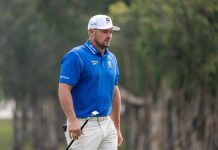
The updated content policy, however, finally gives current members a meaningful tool. The subcommittee includes Rickie Fowler, Justin Thomas, Max Homa, and Harris English. Players like Jason Day and Tommy Fleetwood already have 207,000 and 134,000 YouTube subscribers, respectively, despite operating under older restrictions.
With more freedom to film and use tournament-week content, those numbers could grow far faster. The policy gives the PGA Tour broader visibility, and more player-run channels create more entry points into Tour events for casual fans, which naturally builds more interest and momentum around tournaments.
LIV Golf has already benefited from this model. The league leaned heavily into player monetization and encouraged franchises to build original content, giving players a level of media freedom the PGA Tour had long restricted. LIV Golf has built a content-first culture early. This policy shift is perhaps the clearest acknowledgment yet that the PGA Tour recognizes that gap, and now the question is how effectively it can catch up.