












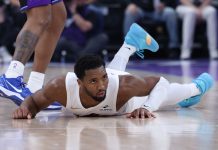





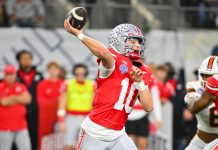







For decades, the NFL has continued to utilize AstroTurf. However, those fields have also been tied to a growing number of player injuries, especially in the 21st century. Take the 2025 season, for instance, when multiple quarterbacks went down with a non-contact injury, including Lamar Jackson, Joe Burrow, Brock Purdy, and Jayden Daniels on artificial turf.
That’s exactly why the debate between the NFL and the NFLPA over player safety and artificial turf has continued for years. The league has largely remained committed to turf fields, while the union has consistently pushed back against them. The one caveat for the Union, however, is that AstroTurf’s systems have now met the standards set by the NFL-NFLPA Joint Field Surface Safety and Performance Committee.
This week, AstroTurf announced that all three of its football systems successfully passed the required testing directed by the joint professional field-surface safety and performance committee. The testing, developed and executed by Biocore LLC, was conducted during the official field-surface screening from March 15–18.
The company’s 3D system with underlayment pad, 3D system without underlayment pad, and Rhino system all passed the three required benchmarks: the BEAST test, the STRIKE test, and infill depth requirements.
For context, the BEAST test is a traction-testing device designed to replicate the movements of an NFL player. The test requires a peak torque of 180 Nm or lower in rotational traction. The STRIKE test, meanwhile, is an impact test used to determine field firmness and ensure surface hardness stays within a safe range for NFL play, with a required measurement between 45 g and 90 g.
Lastly, infill is the material placed between synthetic turf fibers, usually made up of sand and crumb rubber. The infill helps absorb impact energy and provides cushioning on the field. According to AstroTurf, the “company’s RootZone approach is designed to help control infill movement, limit splash, and maintain a more consistent playing surface over time.”
“This is an important result for our company and for the customers who trust our systems,” said Rob Mithcell, Vice President of Development & Strategy. “We have invested heavily in independent testing, system design, and on-field performance because we believe surfaces at the highest level should be held to the highest standard. Seeing all three of our systems meet these requirements is a strong reflection of that work.”
Per the company, all three systems officially passed the NFL-NFLPA criteria. The joint testing process was designed to evaluate whether field systems meet the required performance standards for use in NFL stadiums. According to the criteria, the goal is to create a surface that limits excessive traction loads in a way similar to natural grass, helping improve player safety without affecting playability.
And that’s where the core issue has always been for the NFLPA when it comes to the league’s continued commitment to artificial turf over grass fields. To put it simply, when a player plants or digs their foot, hand, head, or any other part of the body into a natural grass field, the grass and underlying dirt can give way to a certain extent.
That movement can help reduce the stress placed on the body and potentially lower the risk of major injuries like ACL tears or Achilles ruptures. The reasoning is fairly straightforward because grass and dirt naturally shift, loosen, and even fly up during movement.
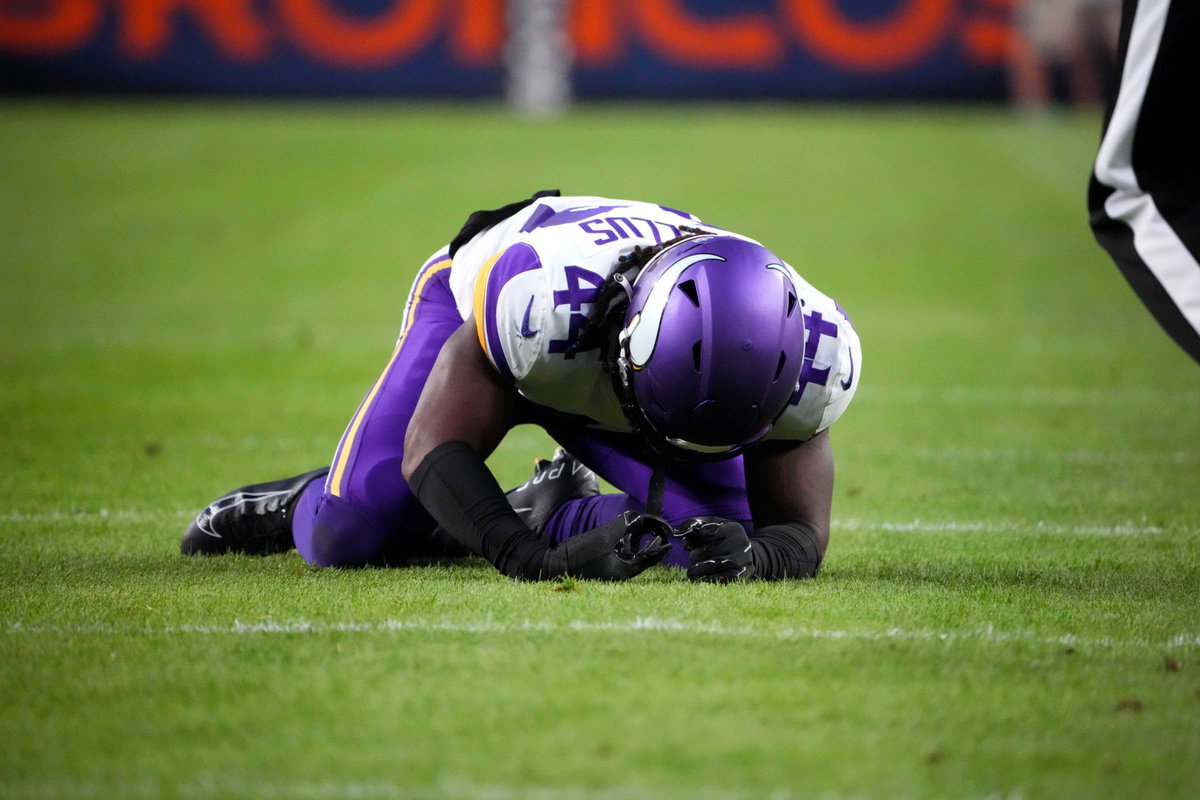
Artificial turf, on the other hand, doesn’t move nearly as much. It can also feel firmer and less forgiving when a player plants their foot. That lack of give is one reason why players often suffer knee injuries or Achilles tears while cutting, planting, or changing direction at high speed.
So while AstroTurf meeting the required criteria is significant, it also raises a much bigger question. Will these updated systems actually reduce player injuries during practices and games? Or will the concerns around artificial turf continue? NFLPA executive director JC Tretter has already been vocal about why NFL teams should move toward grass fields instead of artificial turf.
Why does JC Tretter want the NFL to use the grass fields?
Before becoming the executive director of the NFLPA, JC Tretter spent years in the NFL as a center. He experiences firsthand what it’s like to play on turf, whether during indoor practices or actual games. Over the years, he also heard plenty of teammates complain about practicing on artificial surfaces. In an article written by Tretter, he explained why artificial turf can negatively affect a player’s body.
“First, a bit of physics: Professional football players put extremely high levels of force and rotation onto the playing surface,” Tretter writes. “Grass will eventually give, which often releases the cleat prior to reaching an injurious load. On synthetic surfaces, there is less give, meaning our feet, ankles and knees absorb the force, which makes injury more likely to follow.”
Tretter didn’t make that argument without data backing it up. To put things into perspective, the NFL collected injury data from 2012 through 2018. And the numbers showed that non-contact injuries on artificial turf were significantly higher during both practices and games.
More specifically, players experienced a 28% higher rate of non-contact lower-extremity injuries on artificial turf. Within that category, there was a 32% higher rate of non-contact knee injuries and a staggering 69% higher rate of non-contact foot and ankle injuries compared to natural grass fields.
Tretter also argued that climate and weather shouldn’t be used as excuses against natural grass. He pointed to cold-weather franchises like the Green Bay Packers, Pittsburgh Steelers, and Cleveland Browns. All of them have successfully maintained natural grass fields.
That’s exactly why Tretter has consistently pushed for NFL teams to proactively transition all field surfaces to natural grass. Whether the league eventually moves in that direction remains uncertain. What will stay under the spotlight, though, is whether AstroTurf’s updated systems actually reduce injuries moving forward now that they’ve officially met the NFL-NFLPA standards across all three testing categories.