

































The top players vs the Grand Slams prize money feud has been simmering for weeks, and now Jannik Sinner has thrown his hat into the ring with a clear and convincing voice. At a press conference, the world No.1 was directly asked if he would boycott the Grand Slams if the current wrangle over prize money was not resolved. His response was measured, but the message behind it was anything but.
“First of all, I think the Grand Slams are the best and most important tournaments we have in our schedule,” Sinner said. He had no hostility towards the institutions per se, but his battle was towards a different issue. “It’s more about respect because I think we give much more than what we are getting back. It’s not only for the top players, but it’s also for all of us players,” he said.
The dispute did not begin this week. A group of top 20 ATP and WTA players demanded more prize money and better representation in decisions that affect the sport, such as player welfare, pensions, and representation, in a letter to the leaders of all four Grand Slams, sent in March 2025. The players say those offers have been ignored. A second letter was sent in July 2025. When the 2026 Roland Garros prize money was announced, the group’s patience had clearly worn off.
Sinner with STRONG words about the Grand Slam prize money and the possible boycott.
“It’s all about respect. We give much more than we are getting from them” pic.twitter.com/arYNv5LWUo
— José Morgado (@josemorgado) May 7, 2026
Sinner referenced that directly. “The top ten men, top ten women, we wrote a letter, and it’s not nice that after one year we are not even close to a conclusion of what we would like to have,” he said.
He pointed out that if the top athletes in any other sport sent a letter of that magnitude, they would have a response and a meeting in 48 hours. In his view, the silence from the Grand Slams speaks for itself.
When you look at the numbers, that comparison holds up. The 22% of all ATP and WTA revenue is already shared with players, and the major U.S. sports leagues like the NFL, NBA, and MLB have revenue-sharing models closer to 50%. The Grand Slams are being challenged to match that 22% mark by the players.
The numbers at Roland Garros tell a very different story. The share of the players has dropped from 15.5 percent of the tournament’s revenues in 2024 to 14.9 percent in 2026. While the French Open announced a headline prize money increase of 9.5 percent for 2026, the players’ group noted that the French Open had €395 million ($464 million dollars) in revenue in 2025, a 14 percent year-on-year increase, but prize money increased by only 5.4%. The prize pool for 2026 is €61.7 million ($72.5 million dollars), with the singles champions taking home €2.8 million ($3.3 million) and the first round losers taking home €87,000 ($102k).
Sinner said players were “a bit disappointed with the outcome of Roland Garros.” On the boycott question specifically, he was careful not to go further than the facts warranted. He did not endorse one, but he did not close the door either. “I do understand players are not talking about a boycott because it’s somewhere we also need to start,” he said. “It has been a very long time with this, and then we’ll see in the future.”
He said the players already know what Wimbledon’s prize money will look like, and they were hoping that it would be better than what they got at Roland Garros, saying the US Open was next in line. “We truly hope it’s going to be better,” he said. Through it all, he kept returning to the same point, making clear this was not purely a financial argument. “Then of course we talk about money, but the most important thing is respect, and we just don’t feel it,” he said.
Aryna Sabalenka has already raised the stakes
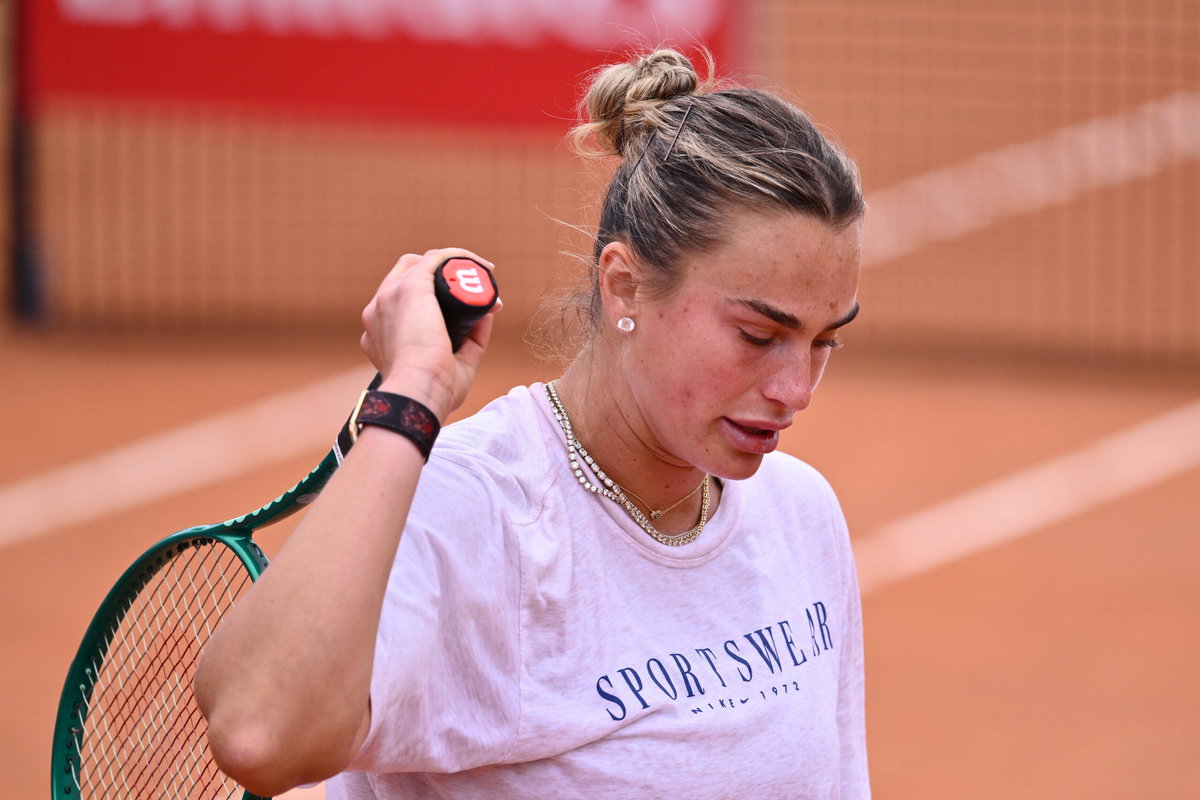
This was a major step-up in tone from the player group’s statement released only days ago. The signatories included leading names from both tours, with the women’s side represented by Sabalenka, Coco Gauff, Iga Swiatek, Jessica Pegula, Madison Keys, Jasmine Paolini, Emma Navarro, Zheng Qinwen, Paula Badosa, and Mirra Andreeva, while the men’s side was led by Sinner, Carlos Alcaraz, Alexander Zverev, Taylor Fritz, Alex De Minaur, Casper Ruud, Daniil Medvedev, Andrey Rublev, and Stefanos Tsitsipas. The range of names is such that it is hard for the Grand Slams to make this a fringe issue.
Sabalenka also went beyond the prize money figures to address the broader principle at stake. “When you see the figures generated by the Grand Slams and what players receive, I think it’s us who put on the show. I feel like without us, there would be no tournament, no entertainment. I believe we undoubtedly deserve a larger share of the revenues,” she said. It is a sentiment that Sinner echoed, though in more restrained language.
Sinner and Sabalenka both reiterated the same point: it was about respect, it was about rights. The Grand Slams are in a race against time to provide something that meets the needs of a group that has been waiting for more than a year now.