




































As the Sunshine Double concluded last month, expectations grew for a thrilling transition to the clay-court stretch of the season. However, this year has taken a different turn, with Carlos Alcaraz and Novak Djokovic opting for a recovery phase instead, both making difficult decisions in the wake of their respective injury setbacks.
The Spaniard picked up an injury during his R32 match at the Barcelona Open, forcing him to withdraw mid-tournament, while the Serbian has been sidelined since Indian Wells Open due to a shoulder issue. Now, the final call has been made for the upcoming Madrid Masters 1000.
Within hours of each other on Friday, both players confirmed they will miss the Madrid Open, the biggest clay-court tournament in Spain, as well as one of the most prestigious stops on the calendar. These were far from easy decisions, and their absence carries implications that extend well beyond just this week.
Djokovic was the first to withdraw. The three-time Madrid champion posted a short, direct message on his social media channels. “Madrid, unfortunately I won’t be able to compete at the Mutua Madrid Open this year. I’m continuing my recovery in order to be back soon. Hasta pronto (see you soon)!”
The 38-year-old has been dealing with a physical problem since he lost in the round of 16 at Indian Wells in March. It seems to have been worsened by an existing forearm injury that had him wearing a compression sleeve during the tournament, and which has now caused him to miss Miami, Monte Carlo, and Madrid in quick succession.
Madrid, unfortunately I won’t be able to compete @MutuaMadridOpen this year. I’m continuing my recovery in order to be back soon. Hasta pronto!
— Novak Djokovic (@DjokerNole) April 17, 2026
Alcaraz followed with a statement that reflected just how much this setback meant to him. After a tough loss in Monte Carlo to Jannik Sinner, the Spaniard arrived at the Barcelona Open determined to make amends for last year’s disappointment. However, that intent was quickly derailed, as he began experiencing discomfort in his wrist shortly after his opening match, cutting short what had promised to be a redemption run.
“There are some news that are incredibly hard to share,” he wrote in Spanish. “Madrid is home, one of the most special places on my calendar, and that’s why it hurts so much not to be able to play here for the second year in a row. It hurts especially not to be in front of my people, in a tournament that means so much. Thank you for the unwavering affection, and I hope we see each other soon.”
The injury that has sidelined him started in his first-round game at the Barcelona Open on Tuesday. A 6-4, 6-2 victory over Otto Virtanen revealed something more alarming. The Spaniard requested the physio to examine him at 5-4 in the first set, during which he complained that he had developed a sharp pain in his right arm and forearm, and was feeling sore on his forehands. He pressed on and won the game. Initially, he downplayed the matter, but the next day, medical tests proved otherwise.
“As you all saw yesterday in the match, after a return, my wrist gave way. I started to feel discomfort, which gradually got worse during the match. I saw today’s tests and it’s an injury a bit more serious than everyone expected. I have to listen to my body and do what’s best for me, so it doesn’t impact me in the future,” Alcaraz said at his Barcelona press conference.
He withdrew prior to his second-round match against Tomas Machac and went back home to start recovering. Less than 72 hours later, Madrid was out of the picture.
The repercussions extend beyond emotion. The 22-year-old is the defending champion in Rome and Paris. He now has a tight deadline: rehabilitate the wrist, regain match fitness, and get to Paris with much less clay-court tennis behind him than his competitors. Rome becomes critical, and the final destination remains Roland Garros, where he saved championship points and won the title last year in situations that no man could rationally have done. The way to get there has just become much more difficult.
The Madrid Open, in the meantime, has its draw opening in a state that it desperately needed to avoid, with the absence of Alcaraz and Djokovic, and with the presence of Jannik Sinner yet to be confirmed. Alexander Zverev, who is currently in the Munich semi-finals, now leads the visible line-up.
The draw will be different. But to both players, who are now in recovery, the only tournament that really counts starts in Paris on May 24, and all decisions between now and then are made with that in view.
Alcaraz and Djokovic are already out, and the question of whether Jannik Sinner will play or not is now crucial to the draw at Madrid.
Jannik Sinner’s Madrid Dilemma
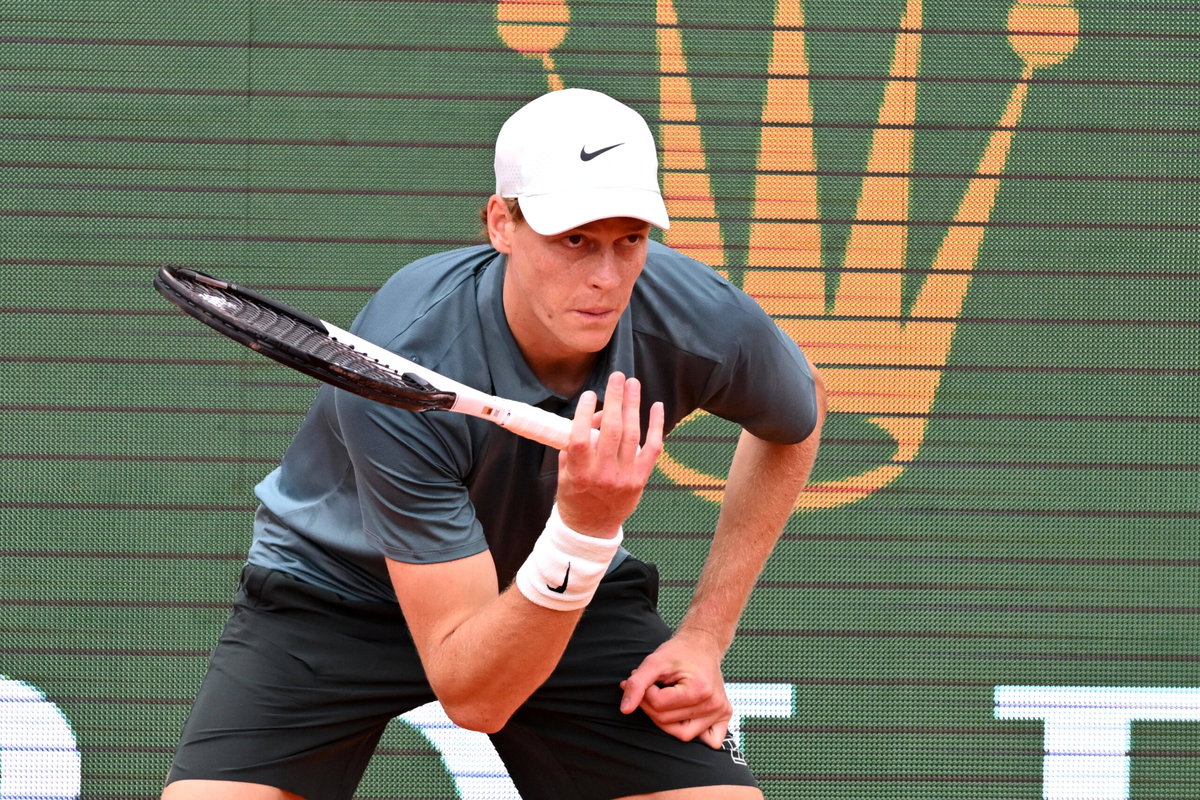
Madrid is an obligatory Masters 1000 tournament. In case Sinner misses it without a documented medical excuse, the ATP regulations are clear-cut: he gets no ranking points in the tournament, forfeits the annual bonus pool, and gets a fine on top of it. He is not defending any points in Madrid, as he missed the tournament last year as well due to a serving suspension.
In order to withdraw penalty-free, he will have to produce a report that will prove that he is injured. The question hovering over the Caja Mágica this week is whether that report exists, and whether Sinner is indeed dealing with physical discomfort, or merely making a tactical decision concerning his schedule.
The argument in support of Sinner playing is very strong. He comes in flawless shape after winning four Masters 1000s in a row, rested after a full week off at Monte Carlo behind him, and without having to deal with his two biggest competitors. Madrid is also one of the few big titles that he has never won; his best performance in three visits was a quarter-final, and this year he could easily make a title run. Every victory would also widen the gap between him and Alcaraz in the rankings, a gap that is already 390 points wide and will continue to widen as the Spaniard is recovering.
The circumstantial evidence is also quite obvious. Sinner is a player who gives a lot of thought to his schedule. He gave up the Davis Cup last year in order to initiate a process of transformation, which, in a retrospective manner, has resulted in one of the great seasons in modern men’s tennis.
Madrid is contested at altitude, which has a subtle effect in changing the conditions of clay-courts, which might not be favourable to the tactical patterns that he has been perfecting. And with Rome, the Foro Italico, which is a clay-based tournament nearer to Roland Garros, available as a more pertinent tune-up to Paris, the logic of avoiding Madrid and arriving fresh in Italy is not difficult to construct.
To an event that has struggled to make a name as a true gem on the clay-court calendar, the thought of not opening with Alcaraz, Djokovic, and Sinner is a situation that the organisers are hoping to evade.
The decision, Sinner has indicated, will be made in Madrid itself. The draw begins next week. The wait goes on.