

















When Gregg Popovich finally retired in May 2025, ending a legendary 29-year run with the San Antonio Spurs, the announcement landed with the quiet finality of something long overdue. He had suffered a mild stroke in November 2024, not coached a game since, and the people who loved him had to show him the door, as gently as they could. One of those people was Steve Kerr. He watched every step of what Popovich went through. And when Wright Thompson of ESPN sat down with Kerr for lunch a year later, the first thing the Golden State Warriors coach reached for, before he’d even decided what to order, was the cautionary tale his mentor had just lived.
“For the past few years, I’ve watched my mentor struggle through this same decision,” Kerr told Thompson. The story he told was specific and human: Popovich called him once to say he’d finally decided to retire. Kerr congratulated him on a Hall of Fame career. A week later, Pop signed an extension with San Antonio. The pattern repeated, the inability to fully close the door, until the door was closed for him. “I realized he couldn’t do it,” Kerr said. “He couldn’t walk away.” Kerr had once told Popovich he was the finest man he’d ever known and thanked him for everything. Pop smiled and said his feet were made of clay like everyone else’s. “Steve didn’t believe it then,” Thompson wrote. “Now he does.”
Thompson pressed the obvious follow-up: what do you do the first morning? Kerr paused. “You ever see The Hurt Locker? You remember when the guy goes into the grocery store?” He was describing the scene where a soldier who has spent a year defusing bombs in Iraq returns home and stands paralyzed in the cereal aisle, overwhelmed by the absence of purpose where chaos used to be. It was the most precise thing Kerr could have said about the exit problem. And he said it without naming himself directly.
The lunch itself ended with the kind of detail that says more than the quotes. The waiter arrived. Kerr ordered a patty melt. The waiter turned away. Kerr caught his eye and switched to a fried chicken sandwich. “I changed my mind,” he said. Thompson left that in because it earned its place, a small portrait of a man still in the habit of recalibrating, still unable to fully commit to a choice, even about lunch.
The Mentor Who Couldn’t Leave and the Student Who Now Has Two More Years
Gregg Popovich finished with 1,422 regular-season wins, the most in NBA history, and five championships across 29 seasons as Spurs head coach, before transitioning to the role of team president. He had been hospitalized after fainting at a San Antonio restaurant in April 2025, the latest episode in a health decline that had kept him off the sideline for nearly six months.
His retirement statement, “While my love and passion for the game remain, I’ve decided it’s time to step away as head coach,” read like a man making peace with a decision that had already been made for him by his body. The transition was handled with typical Spurs efficiency: Mitch Johnson, the long-time assistant who had filled in for Popovich during his absence, was immediately named the permanent replacement.
Kerr, watching all of it unfold, re-signed with the Warriors on a two-year extension this week, becoming the fourth-fastest coach in NBA history to reach 600 wins in the process, needing only 943 games against Phil Jackson’s 805, Pat Riley’s 832, and Popovich’s 887. The extension was framed publicly as an expression of confidence in the Golden State’s offseason ambitions.
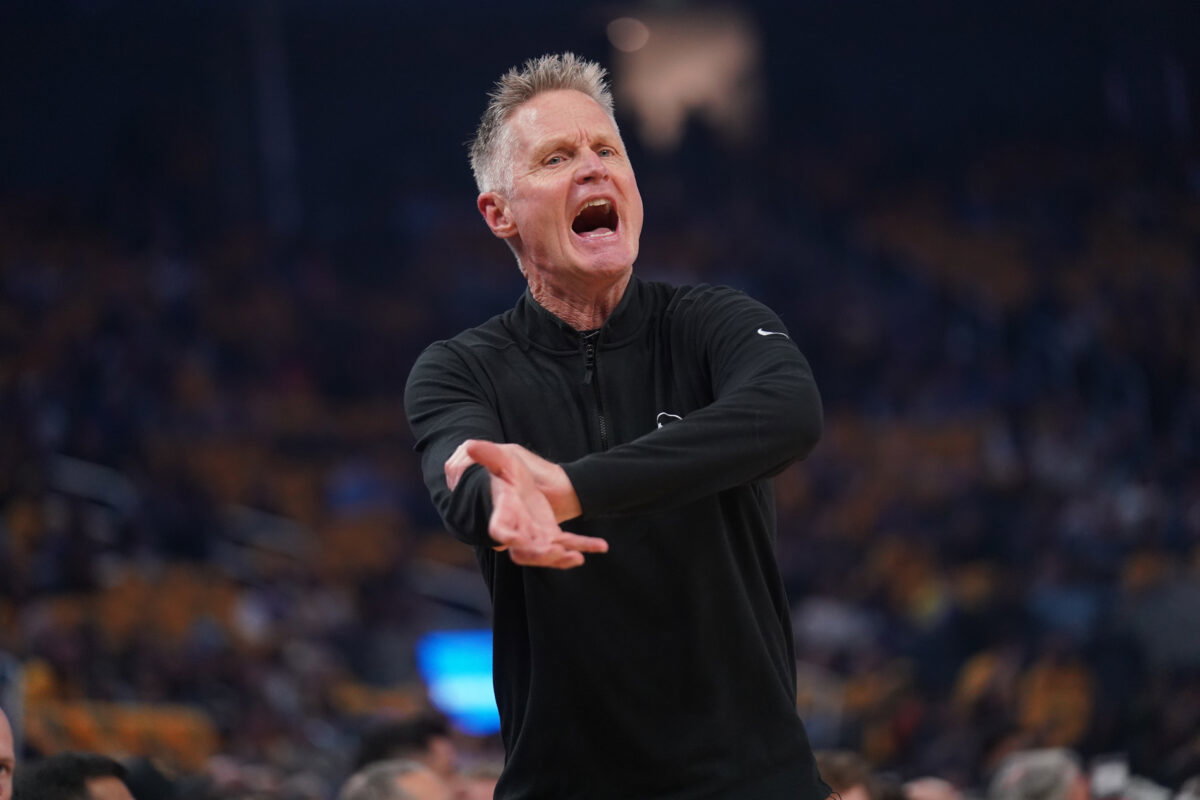
Privately, it was also a commitment to not making the mistake he watched his mentor make: staying too long, letting the job outlive the moment. The new deal keeps Kerr as the highest-paid coach in the NBA annually, a man who still loves coaching, who said so plainly at lunch with Thompson, and who changed his sandwich order at the last second because the decision still felt live. He has two more years to figure out exactly when to let go. He hopes to be better at it than his mentor was. He is not yet certain he will be.