


































The NFL is a billion-dollar business that keeps growing every season. Since the arrival of the internet and the rise of streaming platforms, the game has gone global, with over 200 countries broadcasting the league, all thanks to Netflix. While NFL stars and team owners are preparing for the season to start, the league is busy with the preparation for the biggest announcement – the season schedule, which is set to be released on May 14. Ahead of the event, let’s take a look at the details and all that goes into planning the schedule release.
The AWS system that helps with the schedule
Every season, the league organizes 272 games across 18 weeks while balancing travel, stadium availability, television ratings, rivalry games, international matchups, bye weeks, and competitive fairness. This tough process starts right after the Super Bowl when NFL executives and broadcast planners begin working months before the schedule is released in May.
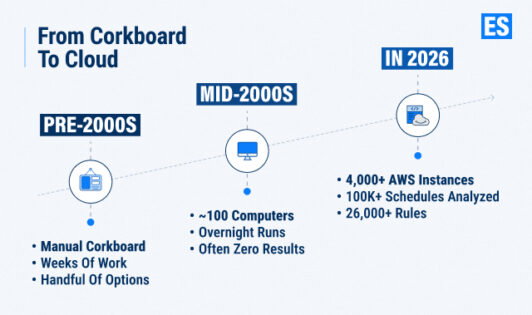
The NFL utilizes AWS cloud computing to analyze more than 100,000 possible schedules before choosing the final one. In AWS, 4,000 cloud computers run every night for almost three months while testing thousands of different scheduling options. Additionally, the algorithm evaluates over 26,000 factors, such as team bye weeks, divisional rivalries, and broadcast requirements.
However, in the end, humans make the final decision. Director of Broadcasting Charlotte Carey, VP Mike North, and other broadcast planners study the computer-generated schedules, give in their editorial insights, and decide which games deserve primetime spots, holiday games, and important late-season windows.
Despite technology being able to do a lot to help with the schedule, the schedule is not official until Commissioner Roger Goodell approves it. Once approved, the NFL locks the schedule, informs teams and TV partners, and prepares for the public release.
The Media Event to announce the schedule
The release is set to happen on Thursday, May 14th, at 8 pm ET in New York. The 3-hour live show is broadcast across NFL Network, ESPN2, NFL+, and free streaming apps like Pluto, Tubi, and Roku. Millions of fans tune in at the same time to see the full schedule.
After this, different networks like NBC, FOX, Prime Video, ESPN, and CBS each reveal special games on different days. This gives every channel its own spotlight.
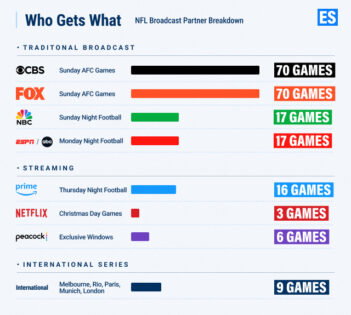
When a big game is placed on a certain channel, it can increase that channel’s ratings and value. Even ownership links exist, like ESPN has NFL Network and RedZone, and the NFL owns 10% of ESPN.
Several high-profile matchups are announced early to build up hype for the event.
So, now it’s not just a simple schedule release but an outline of how much media outlets are going to make.
The Money factor
The NFL schedule release is directly proportional to major earnings. Ticket sales rise immediately because fans finally know exact game dates, opponents, holiday matchups, and primetime games. Now, teams start taking advantage of this, like the Atlanta Falcons, who use the release to promote luxury suites, premium seating, and group packages. So that they can tempt fans.
Companies like Sportsbooks and DraftKings quickly update betting odds, futures, spreads, and win totals as soon as the schedule is announced. Betting companies closely study “strength of schedule” because difficult travel, short rest periods, and tough opponents can affect betting markets worth billions of dollars.
The travel industry also makes a lot of money from the NFL schedule release. For example, Marriott Bonvoy has an NFL Travel Hub where fans can quickly book hotels near stadiums. At the same time, airlines, hotels, and Airbnb hosts often see a big rise in bookings, especially for rivalry games.
And let’s not forget sponsors also use this moment to launch big campaigns. Just like Little Caesars, who push promo codes, NFL credit card offers go live, and Ticketmaster during this period.
The Content Arms Race
Every year, all 32 teams release creative videos on the same night, turning a simple schedule announcement into a huge fan engagement. Including them, sponsors, media companies, and rival teams all wait to see which franchise creates the most viral video.
The Los Angeles Chargers became one of the biggest examples after their anime-themed videos went viral in 2022 and 2023. Then their 2025 Minecraft-themed video generated more than 18 million views on X, which is a massive number. Even the Tennessee Titans’ 2024 video hit 30M views on X. So, it’s pretty clear that the more views you get, the more successful your first impression before entering into the season is.
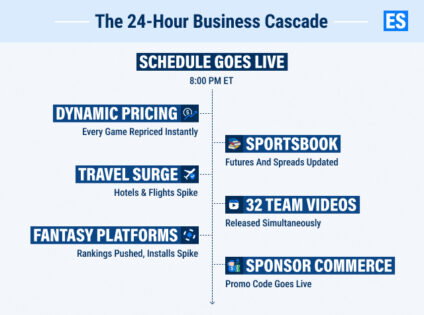
But these videos are not just for entertainment. The NFL teams use them to promote ticket sales, merchandise, sponsors, apps, CRM capture, and fan sign-ups. Just take the Green Bay Packers, for example, who included Ticketmaster branding directly inside their video to promote ticket sales.
Now comes the tricky part – the backlash. Last year, the Indianapolis Colts released a Minecraft-themed schedule video, but later deleted it after facing criticism and possible licensing problems. Meanwhile, the Los Angeles Chargers used a similar Minecraft-style concept but received praise from fans and media.
How Streaming Platforms benefit from the schedule release
The schedule release is anticipated by everyone, as it gives fans the first taste of what the NFL is going to look like. Rivalries and stars going against each other are often days fans circle, which is why it is interesting.
From the Combine to Free Agency events, then drafts, with schedule release, offseason OTAs, and players’ rookie training camp, every stage creates constant news, keeping fans watching and advertisers active all year. Because of this, sponsorship money is growing fast. NFL team sponsorship revenue reached $2.7 billion in 2025, rising 8% year over year.
Then, media deals remain the biggest foundation of the earnings, like Netflix paying $150 million for the last two seasons to broadcast Christmas games as part of their three-year deal. On top of that, the top games attract millions of viewers for the league. Remember how last year, the Bears vs Packers rivalry game received 31.6 million views on Amazon Prime, pulling up a massive crowd.
Teams also earn huge money before the season starts, with about $432 million per team in shared revenue from media, sponsorships, and licensing. In the end, what started as a spreadsheet ended up generating millions of revenue for the league.