







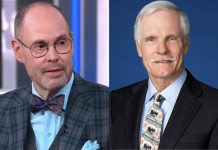










In 1977, he bought the Atlanta Hawks and turned a franchise that was drawing fewer than 4,000 fans per night into a TV property beamed across the country via satellite, a move so counterintuitive, so ahead of its time, that the league had no rulebook for it. That was Ted Turner. The man who did things nobody expected, who trusted his gut when every accountant in the room said otherwise, died peacefully on Wednesday, surrounded by his family. He was 87. And in Atlanta, where his fingerprints are on virtually everything, the weather seemed to know.
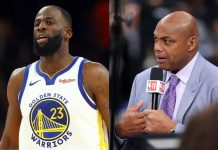
“It’s kind of a melancholy kind of day here,” said the voice of TNT’s Inside the NBA, speaking from the city where Turner built his empire. “It’s grey. The skies have turned grey here in Atlanta, and it’s a day of reflection, really, for me.” Ernie Johnson, who walked onto Turner Studios property for the first time in 1989 and never really left, sat down to share what the man meant to him and was careful to frame it correctly. “I don’t want to give you the impression, oh yeah, Ted and I were tight, we hung out all the time,” he said. “No. But deep down in here, I’ll always be Turner.”
Ernie Johnson joined CNN to discuss Ted Turner’s legacy
(h/t @TVSportsUpdates)pic.twitter.com/Yon2Uillj4
— Awful Announcing (@awfulannouncing) May 6, 2026

The personal inventory Johnson offered was quiet and specific in the way only someone who was actually there could make it. Braves playoff games, sitting a few rows behind Ted Turner and Jimmy Carter. A beach in Australia in 2001, doing a segment with Turner about what the Goodwill Games meant to him. Ordinary cars leaving the ballpark in Atlanta traffic.
Turner and Jane Fonda are walking through the CNN Center atrium like anybody else. “He was an everyman to me,” Johnson said, “but a guy who had this intense drive. I always considered him an underdog, that he was going to do these things nobody expected, and he would do it with this gut feeling that it was the right thing to do.”
The baseball story Johnson told carried something of the man’s whole personality in miniature. Turner had literally installed himself as manager of the Atlanta Braves for a single game in 1977, putting on a uniform and stepping into the dugout before Major League Baseball stepped in and told him owners could not manage their own teams.
Ernie Johnson remembered another episode from those early Braves days, a contest to roll a baseball up the first baseline, Turner competing alongside the players, arriving at the finish line with scrapes all over his nose.
“He won the race,” Johnson said. “And that was the kind of guy Ted was.” The Goodwill Games. The America’s Cup. The bison. The nuclear threat nonprofit. A man who entered every arena he cared about and refused to lose, not out of ego, but out of what Johnson called a gut-level certainty that the right thing and the winning thing were usually the same.
The Pioneer Who Put Sports on the Map, Literally
Johnson’s broader point, that Turner set the standard for how live sports are consumed today, is not nostalgia. It is a structural argument.
“It was his vision to say, hey, let’s use the satellite to beam them all over the country,” Johnson explained, tracing the Braves’ unlikely transformation into America’s team.
“My dad, as one of the announcers, became known from coast to coast because folks would just watch the Braves, even if the team wasn’t that good. It was like, wow, we get to watch somebody else’s team.”
Turner had bought the Braves in 1976, not out of any profound love for baseball, but because he needed programming for his superstation. This calculation accidentally made a mid-market franchise into a national institution.
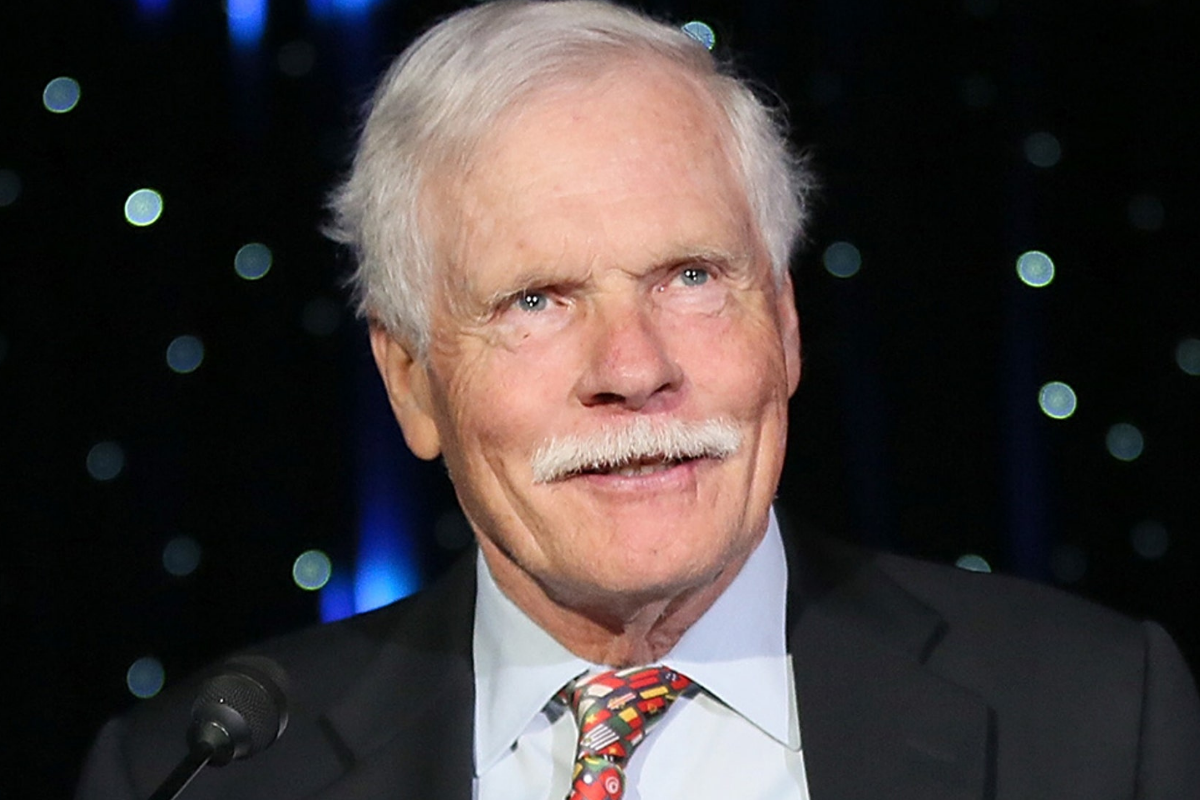
NBA Commissioner Adam Silver’s statement made the league’s debt to that vision explicit. “Through the creation and development of Turner Broadcasting, Ted changed the way fans experience live sports and brought leagues like the NBA to a broader national and global audience,” Silver said.
“He was a passionate steward of our game for decades, both as a longtime owner of the Atlanta Hawks and as a devoted partner who played an integral role in advancing the league’s growth.”
In his final years, Turner had retreated almost entirely from public life after publicly disclosing a diagnosis of Lewy body dementia in 2018. Johnson ended his tribute the only way it could end, with dinner plans. “Before we go on the air tonight,” he said, “my dinner will be a bison burger from Ted’s Montana Grill.”
Turner had founded the chain specifically to rescue the bison from the brink of extinction, another cause he had decided to win, on his own terms. Tonight, at least one table in Atlanta will eat in his honor.