






The last time it was this specific leg, this specific tendon area, and this specific playoff context, the story ended in a hospital bed and an entire lost season. That was 2019. This time the injury is different in kind, no structural damage per imaging, but the circumstances around it carry their own weight: the fifth-leading scorer in NBA history, in the first postseason of his Houston tenure, sidelined not by the demands of an 82-game regular season but by a practice drill a week before the series began.
ESPN’s Shams Charania on Monday provided the clearest picture yet of what is keeping Kevin Durant out of the Houston Rockets’ first-round series against the Los Angeles Lakers.
“My understanding is Kevin Durant is dealing with a deep bruise in his right patellar tendon that he suffered last Wednesday during a practice drill when he was chasing after a loose ball and collided that knee with a teammate,” Charania said on ESPN.
“And that has since caused swelling and pain. It’s impacted his range of motion in the leg as well. And for Kevin Durant to miss a playoff game, that speaks to the severity of the injury in and of itself. The Rockets are optimistic that Kevin Durant is going to be able to return as soon as Game 2, but it remains to be seen just depending on how that knee, that leg responds to this deep bruise in the patellar tendon.”
Reporting for NBA Today on status updates on Houston star Kevin Durant’s deep patellar tendon bruise and Minnesota star Anthony Edwards’ runner’s knee: pic.twitter.com/SJ8pdxdKV6
— Shams Charania (@ShamsCharania) April 20, 2026
Shortly after, Will Guillory of The Athletic reported on Durant’s status ahead of Game 2, noting that Rockets head coach Ime Udoka confirmed Durant went through approximately half of Monday’s practice. Udoka listed Durant as a game-time decision for Tuesday’s game.
Udoka offered his own read on the injury in the days following Game 1, describing the location as the specific factor separating this from a manageable bump. “Right above the knee, the patellar tendon area, it’s just very tender and sore,” Udoka said. “Pain tolerance is one thing, but limited movement is more the cause.”
He had confirmed that imaging of the area showed “nothing major,” framing the obstacle as tissue sensitivity and range-of-motion restriction rather than structural damage. This distinction matters both medically and for the return timeline.
Independent medical context added depth to that framing. Dr. Evan Jeffries noted on X that direct contact with the patellar tendon from a collision can produce either a straightforward bruise or what he described as “acute tendonitis,” an inflammation of the tendon itself rather than just surrounding tissue. Either outcome, he noted, can produce pain, swelling, and exactly the kind of restricted range of motion Udoka and Charania both flagged.
The Kevin Durant Durability Backdrop
The timing is particularly sharp given what Durant produced across the regular season. He played 2,840 minutes in 2025-26, the most since his 2013-14 MVP campaign with Oklahoma City, missing only four of 82 games. His 26.0 points per game led the Rockets and represented the first full, uninterrupted regular season he had managed in years. The injury did not come from the accumulated wear of that workload. It came from a practice collision days before the postseason.
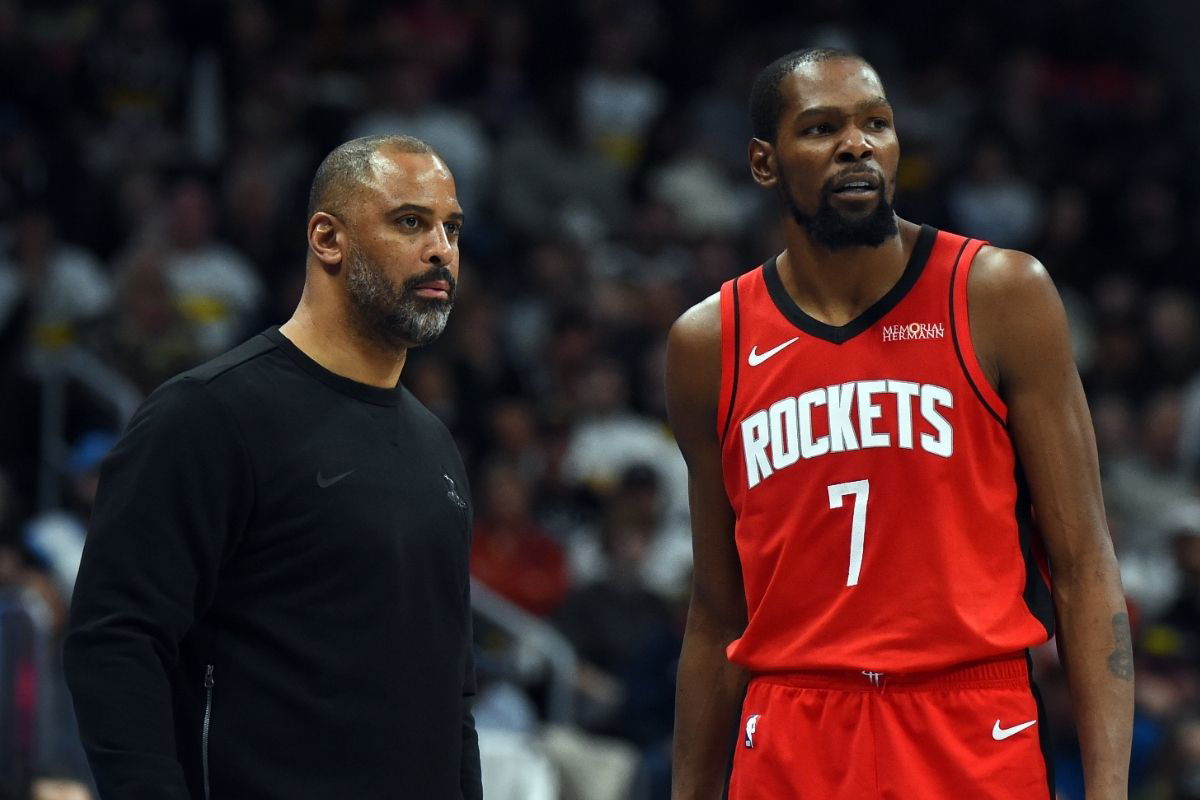
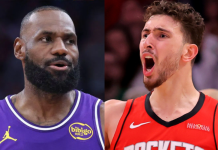
Houston lost Game 1 to the Lakers 107-98 without Durant, starting Reed Sheppard in his place. The Rockets finished the regular season with nine wins in their last 10 games and entered the series as the fifth seed. The Lakers were simultaneously without Luka Doncic and Austin Reaves, giving Houston a structural advantage that evaporated the moment Durant went down. The Rockets went 4-0 without him during the regular season, and Udoka noted comfort with his rotation depth. Game 2 tip-off will determine whether that confidence gets tested further, or whether Charania’s optimism about a quick return proves correct.