



































A massive reduction in playing time has put one of the Chicago Cubs’ brightest young infielders on the trade block. A crowded roster and growing deadline pressure mean his future with the organization is in doubt. He was a cornerstone last year. Now he might be reduced to a bench role or be traded. Journalist Bob Nightengale discussed growing uncertainty around a Chicago youngster.
“The Chicago Cubs, who are seeking a front-line starter at the trade deadline, may have no choice but to move infielder Matt Shaw, who’s blocked at third base by Alex Bregman and second base by Nico Hoerner,” he said.
The Cubs are sitting atop the NL Central with a 29-18 record. They had 10- and 9-game win streaks this season. But as it turns out, Chicago has seven players fighting for four spots across the diamond. The biggest odd-man out is Matt Shaw.
For now, he is serving as a utility player, splitting time among shortstop, second, and third base. Unfortunately, Dansby Swanson is in his fourth season holding down his premium position at SS. Michael Busch is coming off a hot 2025 season with 34 HRs playing at first base. Hoerner is a gold-glove caliber second baseman and is a huge part of the Cubs’ core. And lastly, they have Bregman, the crown jewel of their offseason investment.
Last year, Shaw started 114 of 126 games. However, this year, he has started just 22 of 34. He was the third baseman before Bregman arrived. Shaw was the standout rookie, who became the NL Gold Glove finalist with +19 DRS. And he had a massive power surge in the second half of the season with a .258/.317/.522 slash line and 11 HRs.
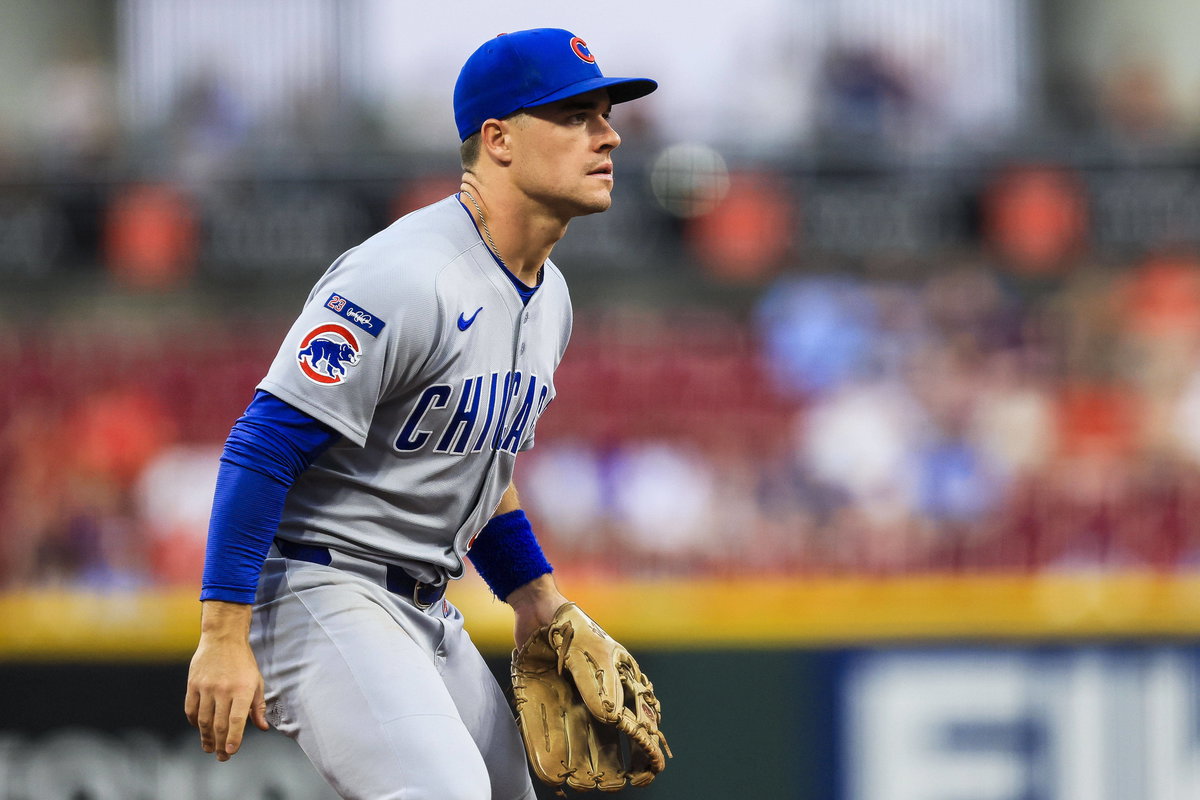
That’s why the 24-year-old will certainly attract many contenders if the Cubs decide to sell. And they are likely to opt for a trade given the current injury situation with their starting arms.
2025 NL Rookie of the Year runner-up Cade Horton is out for the season due to a TJ. Justin Steele and Matthew Boyd are sidelined for a significant time. Jordan Wicks is expected to return to the roster soon, but there is no fixed date.
The Cubs have done this exact type of trade before. Back in 2016, they had too many infielders, so they traded top prospect Gleyber Torres to the Yankees for star closer Aroldis Chapman. That move paid off perfectly and helped them win the World Series.
With six years of team control still on the board for Matt Shaw, he can be an attractive asset at the deadline. They might trade him for a frontline starter. Teams like the Seattle Mariners are in desperate need of infielders and have a pitching depth that might interest the Cubs.
But the Cubs have a tough decision to make between a long-term upside and immediate contention needs.
The Cubs’ win-now approach is leaving little room for Matt Shaw
Shaw was one of the central pieces for the Cubs’ roster, which has now translated into a stop-start usage. He doesn’t even have enough reps to keep sharpening his tools. But a year ago, the whole situation was different.
Matt was happy with his team. The former top-100 prospect didn’t just become a part of the team. He rapidly grew into an MLB-ready player.
“The atmosphere that our team brings is pretty electric,” Shaw expressed after a road win in June 2025. “But you know, it’s the same game no matter what. I don’t think the atmosphere really changes how we feel and how we play, but obviously it’s really exciting and really cool to play in front of crowds like that.”
This shows how naturally he blended into the Cubs’ environment and embraced the fanbase. Now, in less than a year, he is fighting for consistent reps. He doesn’t even have a steady spot. But he is still showing up whenever he is needed. Matt Shaw has managed 12 RBIs and three homers already. And he is effective in defense as well.
The NL Central is the most competitive region this season, with all the teams having an above .500 record. The Brewers and the Cardinals are practically breathing down Chicago’s neck. Pittsburgh and Cincinnati aren’t too far either. The Cubs’ win-now strategy might ultimately work against him.
First, Chicago has to decide where Shaw fits in the long-term picture.