



































In the blink of an eye, you gaze up to discover 90 points on the scoreboard that weren’t there a minute ago. On the other end of the court, time seemingly stands still.
Michigan and UConn will put those starkly different styles on display when the No. 1 Wolverines and No. 2 Huskies tip-off Monday night in Indianapolis.
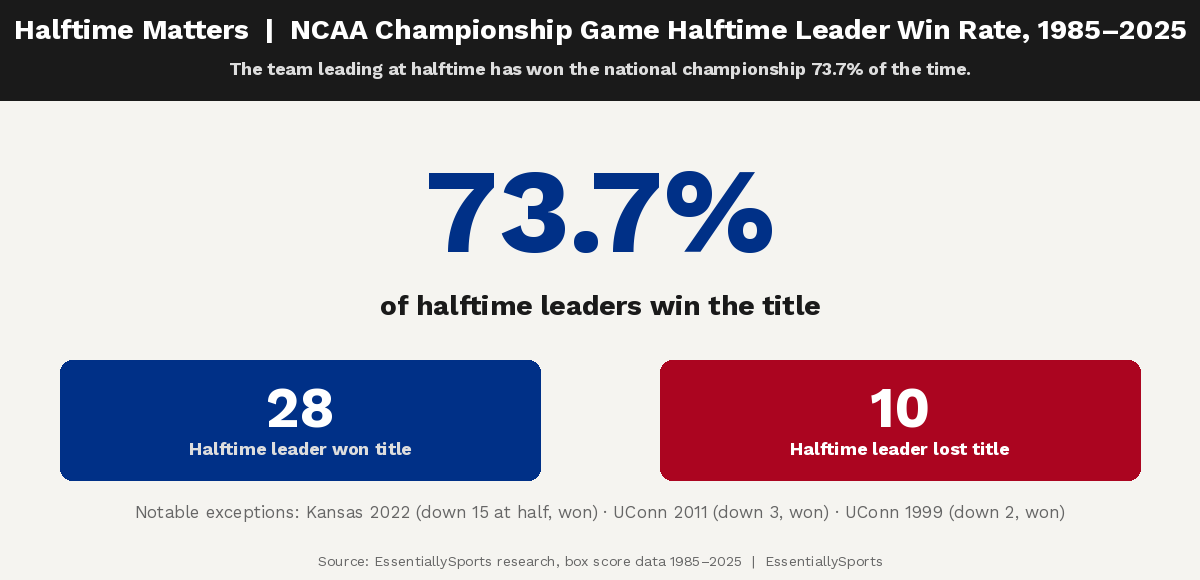
History tells us that controlling the pace early pays championship dividends later. Since the NCAA tournament field expanded in 1985, teams that have taken the lead going into halftime of the Finals have gone on to win the title 73.7 percent of the time.
The numbers explain why both teams enter the March Madness finale believing their style will win out.
HALFTIME HOOLIGANS
History still leaves room for chaos, and a handful of teams have flipped the script after halftime when it mattered most.
Kansas became just the second team to erase a 15-point halftime deficit when the Jayhawks stormed back in the 2022 Finals to defeat North Carolina.
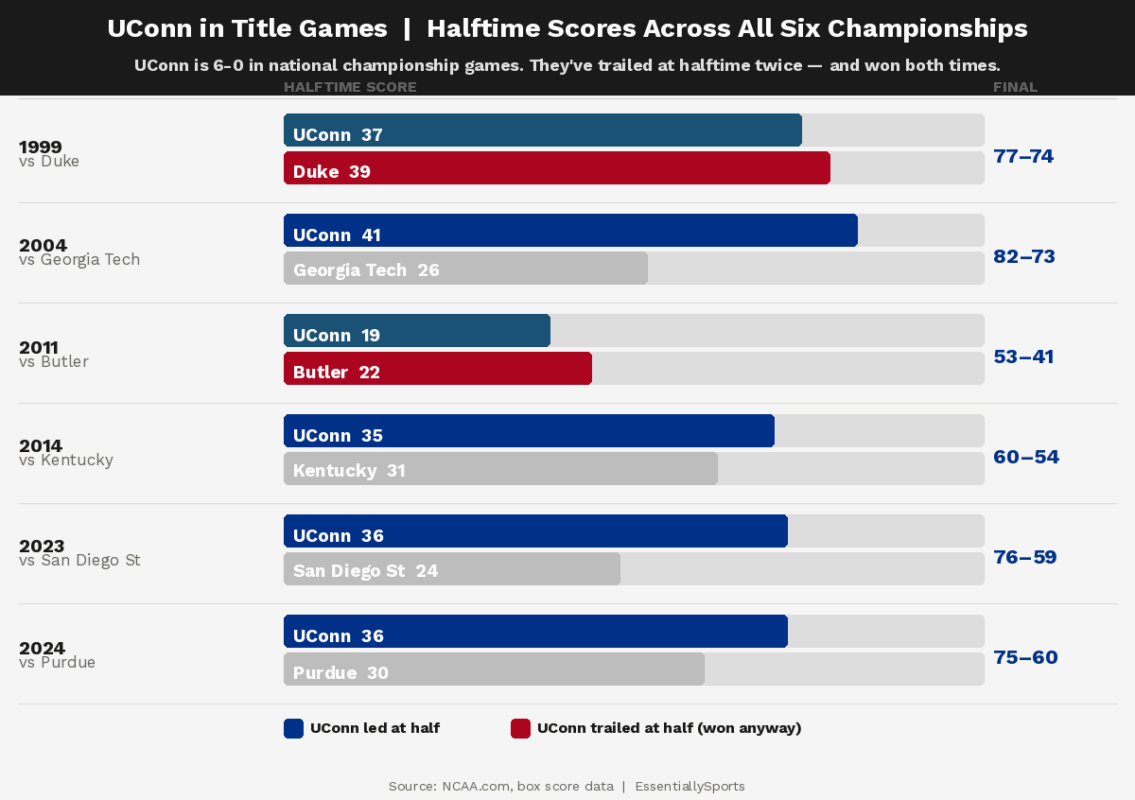
UConn has its own claim to the title of comeback kings. The Huskies have twice trailed at halftime and still won, taking down Duke in 1999 (2-point deficit) and Butler in 2011 (3 points).
Monday will be telling. Michigan builds massive leads, while UConn has never treated any deficit as out of reach.
SETTING THE PACE
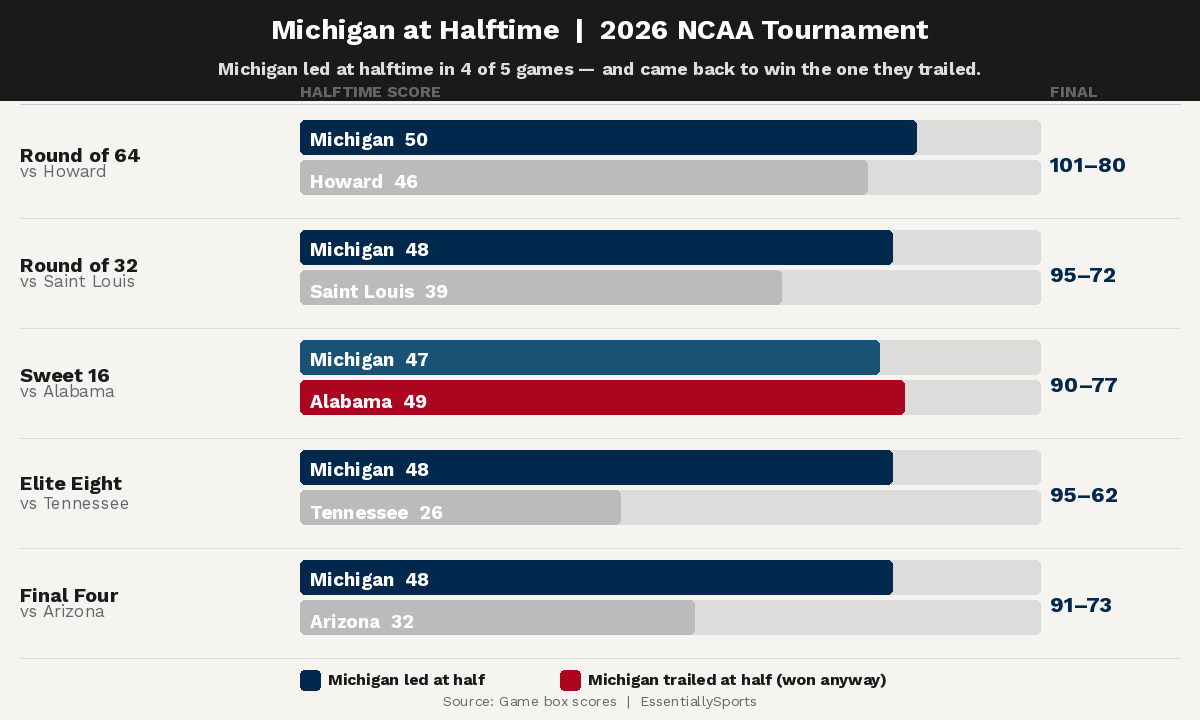
The Wolverines are scoring at a frenetic pace with 90-plus point efforts in each of their first five tournament games. Save for the Alabama Sweet 16 matchup, Michigan has effectively called “game” by halftime in four of its five tournament contests.
Dusty May’s squad is remarkably consistent, scoring 50, 48, 47, 48 and 48 points in the opening half of those games. Even more telling, the deeper the Wolverines have advanced, the larger their halftime leads have grown, posting first-half advantages of 22 and 16 points over Tennessee and Arizona in the Elite Eight and Final Four, respectively.
All of this has come with the limited availability of injured star forward Yaxel Lendeborg.
THE TEMPO
So how is this battle between a blistering force and an immovable object going to play out?
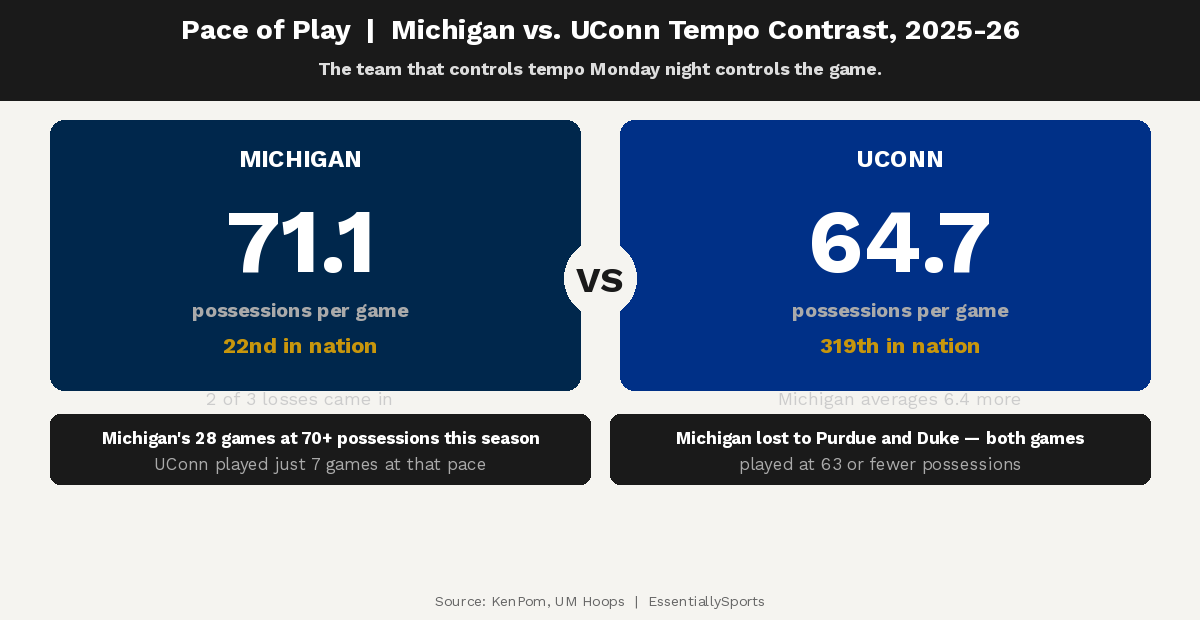
The Wolverines average 71.1 offensive possessions per game, while UConn sits at 64.7. That gap creates a clear stylistic clash, with Michigan ranking No. 22 nationally in pace and the Huskies ranking No. 319.
Duke and Purdue held the Wolverines to 63 possessions, both resulting in Michigan losses. Translation: The Wolverines are vulnerable if they get their claws stuck in the mud.
The blueprint is clear. UConn reached the Finals after holding Illinois, one of the highest-scoring offenses in the country, to 33.9 percent shooting over 64 possessions in a 71-62 Final Four win.
The team that fails to establish its own style early risks falling behind by halftime. Then it will be fighting both its opponent and history.
CHAMPIONSHIP UCONN DNA
But March Madness rarely follows the script, and Dan Hurley’s UConn squad has one thing most programs, including Michigan, lack: a proven championship track record.
The Huskies are 6-0 all-time in NCAA title games. In fact, UConn has never lost a game after the Sweet 16.
Since the 2023 tournament, UConn has played from behind for a total of fewer than 14 of the possible 200 minutes in all of their Final Four and Championship games. Simply put, Hurley’s Huskies know what to do when they get here.
That small percentage of teams that rally from halftime deficits often relies on composure and experience, two traits UConn has consistently shown. Meanwhile, a healthy Michigan has been nearly unbeatable with a 36-3 record.
THE LANDING
Michigan wants to not only impose its will with its big men, but to also establish a tempo that the Huskies can’t keep pace with. The idea is to get to halftime with a sizable lead and never take the foot off the pedal.
That’s the goal for UConn: survive the first half. They do that by slowing the pace and disrupting any rhythm in Michigan’s offense. From there, you can never discount UConn’s March Madness pedigree.