




































At the Masters Tournament, few stretches define the toughness of the championship like the Amen Corner. It’s the collection of three holes that tend to dictate who wins and who loses the game on Sundays. As the players get ready to tee it off, let’s see what makes Amen Corner so special and iconic.
What Is Amen Corner, and Which Holes Does It Include?
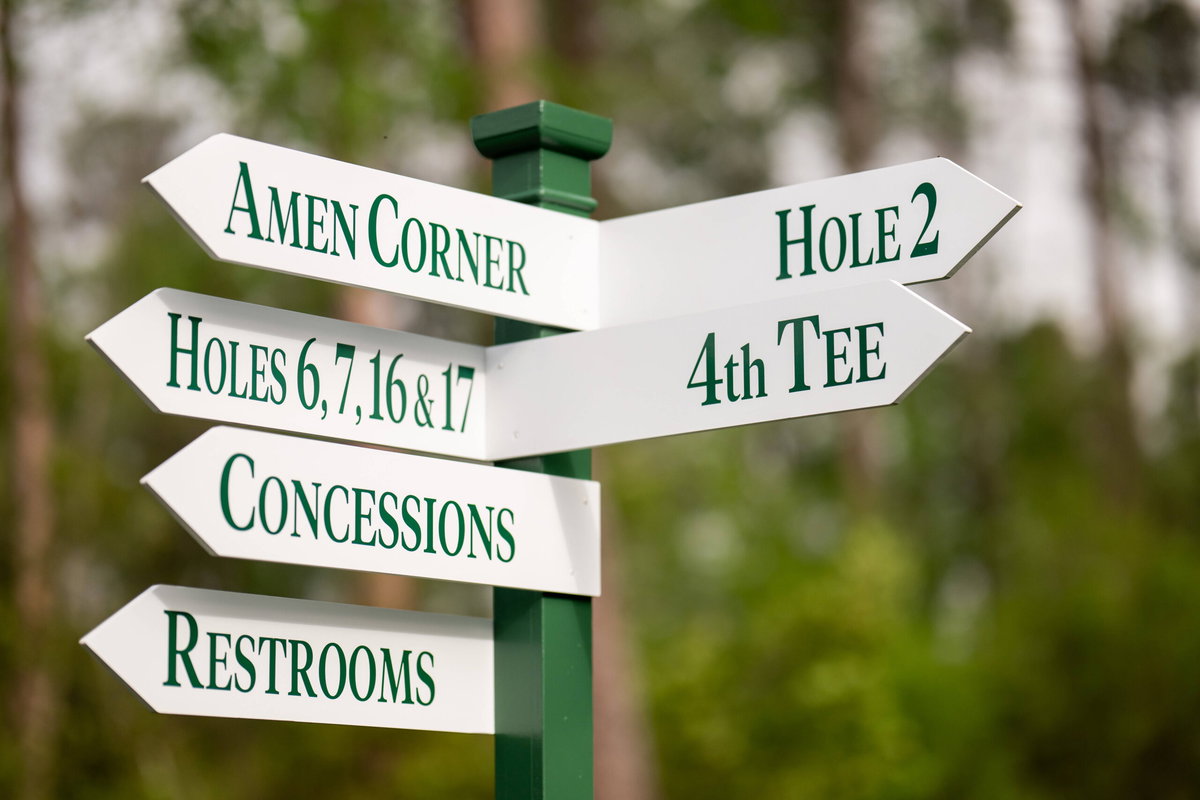
At Augusta National, few stretches carry as much weight as the Amen Corner. It specifically refers to the second shot at White Dogwood (520 yards par-4 11th), the entirety of Golden Bell (155 yards par-3 12th), and the tee shot at Azalea (545 yards par-5 13th). This three-hole stretch marks the turning point of the round, where contenders separate from the field, and leaders can quickly unravel.
But why is it called Amen Corner? Do golfers really get down on their knees and pray to cover this stretch?
Where Did the Name “Amen Corner” Come From and Who Invented It?
The extract from Wind’s write-up read, “On the afternoon before the start of the recent Masters golf tournament, a wonderfully evocative ceremony took place at the farthest reach of the Augusta National course – down in the Amen Corner where Rae’s Creek intersects the 13th fairway near the tee, then parallels the front edge of the green on the short 12th and finally swirls alongside the 11th green.”
But why are these three holes the most feared in the world?
Why Do White Dogwood, Golden Bell, and Azalea Make Amen Corner the Most Feared Three Holes in Golf?
Statistically, White Dogwood is one of the toughest holes at Augusta National. It has a scoring average of only around 4.303. While it gains its name from the beautiful white flowering trees along the fairway, this is a long and challenging hole with a pond located right next to the green. The fairway slopes downhill towards the green. But golfers must be careful, as the ball is more likely to roll into the pond the closer they get to the green. On top of that, there are a few mounds near the green that can bounce the ball into the pond.
In contrast to White Dogwood, Golden Bell is a narrow hole over Rae’s Creek. It being the shortest hole on the course doesn’t mean it’s the easiest. It’s about 12 yards wide, and the green is guarded by bunkers beyond it. If a golfer hits the ball a bit too softly, it lands in Rae’s Creek and results in a penalty. Even landing near the green usually sends the ball rolling down into the water because of the steep decline. And a shot a bit too hard might send it straight to the two bunkers.
Meanwhile, Azalea is a risk-reward par 5, where players must decide whether to go for the green in two, with a tributary of Rae’s Creek guarding the front of the green and the left side of the fairway. The success of the shot heavily relies on the tee shot. Hitting it close to the left sets up the best chance to make par. That’s because the fairway curves and rolls towards the left. But staying close to the water is a bit risky. If a golfer opts for a safer approach and directs the tee shot to the right, they will probably need to take a layover shot near the trees. Even after making it to the green, players may have to putt through a steep downhill slope that goes straight towards the water.
What Are the Two Famous Bridges at Amen Corner, and Who Are They Named After?
Two historic bridges on the Amen Corner give a shoutout to two iconic winners at Augusta National. First up is the Hogan Bridge that stands beside the Golden Bell, right in the heart of the stretch. This bridge is dedicated to Ben Hogan’s record score of four rounds of 274 back in 1953. Hogan hit the rounds of 70, 69, 66, and 69. And these will forever remain the finest accomplishments on the course.
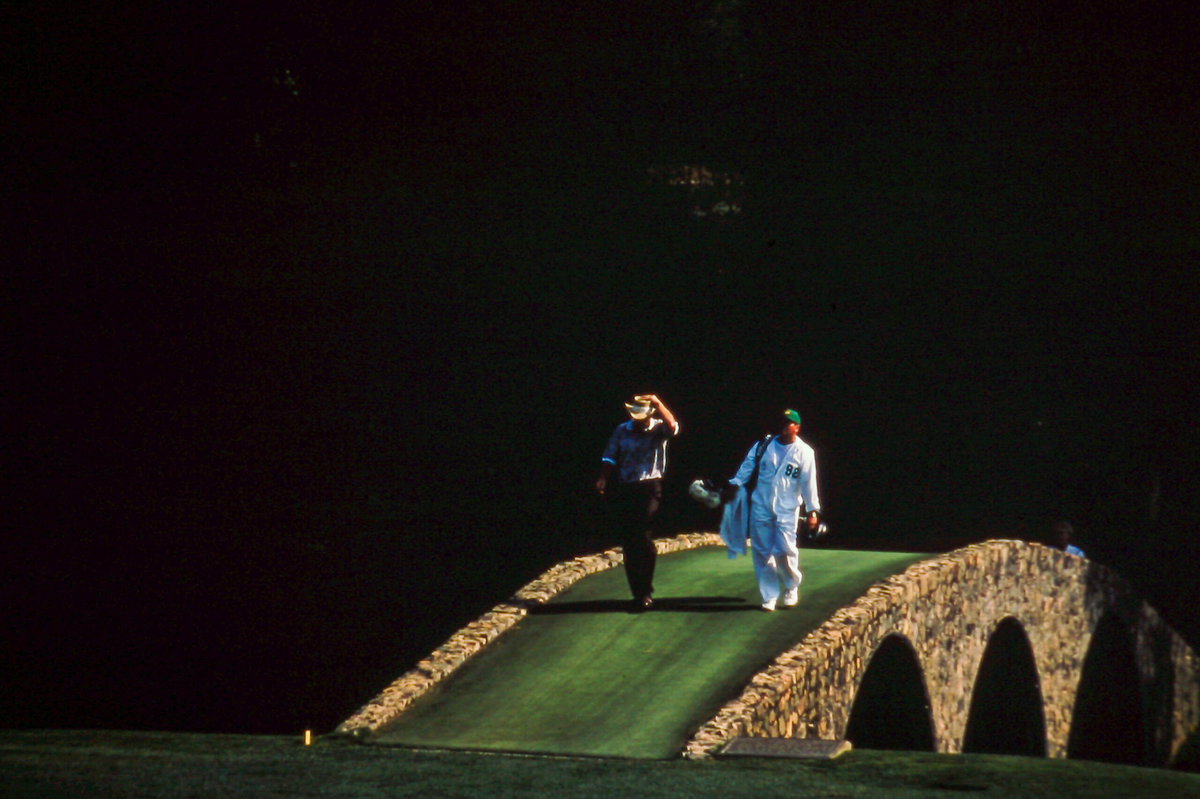
Next up is the Nelson Bridge that serves as a gateway to Azalea. It’s dedicated to Byron Nelson for covering the 12th and 13th holes in two and three shots respectively. That pushed him six shots ahead of Ralph Guldahl to win the 1937 Masters Tournament. Two years later, Guldahl won the tournament after scoring an eagle in three shots at Azalea.
Why Does the Masters Begin and End at Amen Corner on Sunday?
While the front nine often sets the stage, it is holes 11, 12, and 13 at Augusta National Golf Club where momentum shifts dramatically. This stretch combines the course’s most demanding approach (11), its most unpredictable par 3 (12), and a high-risk, high-reward scoring opportunity (13), forcing contenders to make critical decisions under maximum pressure.
This stretch determines who goes into the lead and who falls back. One small mistake, and players can tumble down from the lead to way low on the leaderboard. Take Jordan Spieth’s 2016 Masters run, for example. He was sporting a five-shot lead on the back nine but made a quadruple bogey 7 on the 12th.
Even Rory McIlroy had to face a triple bogey at White Dogwood back in 2011. His four-shot lead and the chances of victory vanished as a result. Additionally, Greg Norman’s 1996 run witnessed three straight bogeys from 9th through 11th. And a water ball at Rae’s Creek left him without a win. But many others have tumbled because of Amen Corner.
In essence, Amen Corner isn’t just part of the course. It’s where the Masters becomes the tournament it is!