






























It was in Madrid’s Palacio de Cibeles back in 2024 where Michael Johnson spelled out to me a brave new world for athletics with his Grand Slam Track (GST) venture.
His two-decade-long frustration with the sport beyond the Olympic and World Championship years poured out. “Outside of that, it falls flat and doesn’t really have much of a presence at all,” he decried. “But there’s a real opportunity to change that.”
He looked away from athletics for his new creation as he signed up leading figures from other sports in order to make what he called “the track and field of Formula 1, NFL, UFC, tennis or golf”. He talked a good game and it was hard not to buy into what he was selling. At that point, he reportedly had £22.5million in backing plus athletes were supposedly queuing up to sign up.
Now, many of those same athletes are still waiting to be paid: Team GB’s two-time 1500m Olympic medallist Josh Kerr to the tune of £125,000, fellow Paris 2024 silver recipient Matt Hudson-Smith £110,000, and many of its American stars much more according to legal documents in a court in Delaware in the United States after GST filed for chapter 11 bankruptcy. In all, GST reportedly owes some 200 creditors between £7.5m and £37m.
So what went wrong? In short, GST ran out of money and fast. In March last year, Eldridge Industries, a private equity firm founded by Chelsea owner Todd Boehly, had pledged £22m to the venture but withdrew that offer shortly after the opening event in Kingston, Jamaica.
The empty stands for what Johnson had called “a fan-driven product” in a city and country usually in rapture to its athletes was not a good look and, crucially, Eldridge got cold feet.
The subsequent Miami event coincided with the same weekend as the Formula 1 Grand Prix there. With just five miles between the two venues, that weekend it felt like the sport-mad city was living and breathing F1 with billboards all over while there wasn’t even a glimmer of recognition for GST. Instead, its biggest story that weekend was the arrest of one its athletes, Fred Kerley, following an alleged altercation with an ex-girlfriend.
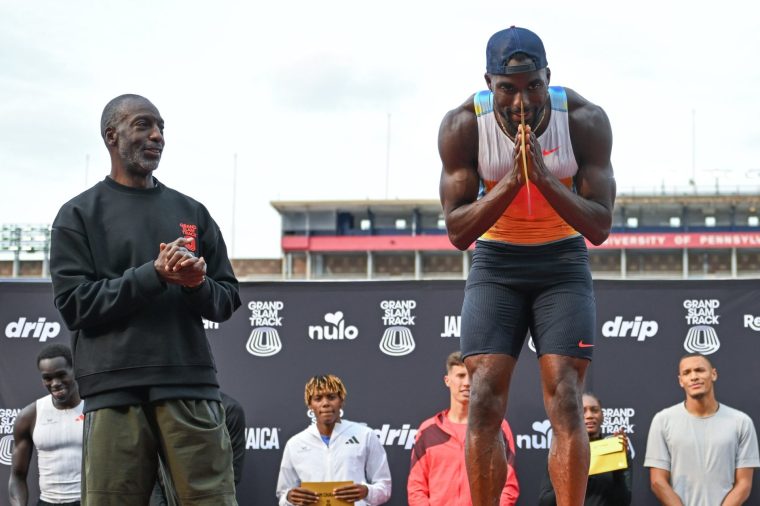
Event three in Philadelphia was better supported but, by then, the financial reserves had run dry, and the fourth and final meeting on the inaugural calendar, Los Angeles, was axed.
The men’s side at Pre is nothing short of 𝙀𝙇𝙄𝙏𝙀

We took a look at the top matchups and the biggest moments to come.
Who’s walking out of Pre with more momentum?
pic.twitter.com/nASw8z444Z
— Grand Slam Track (@GrandSlamTrack) July 4, 2025
While Johnson managed to lure some big names to GST, there were notable absentees, the biggest arguably Paris 100m champion Noah Lyles and pole vault GOAT Mondo Duplantis for very different reasons.
Lyles effectively said it wasn’t relevant and he wouldn’t be competing while Duplantis, many times over the world record holder, wasn’t even given the chance with Johnson overlooking all field events for the venture. He was promising to “save track” but the absence of “save field” jarred for many, notably Duplantis who had a dig at GST when receiving his award for World Athletics male athlete of the year in December.
And for what was supposed to be a global event, it proved way too US-centric. Three of the four events where on American soil and major athletics hubs across the planet, including London, were notably absent.
It has left the reputation of the voice of athletics in the UK in tatters with the BBC not planning to use him for their athletics coverage this season. And his representatives were last week forced to hit back at claims he had paid himself $500,000 (around £375,000) days before the project collapsed as “unfounded and false”. Those representatives did not respond to questions from The i Paper.
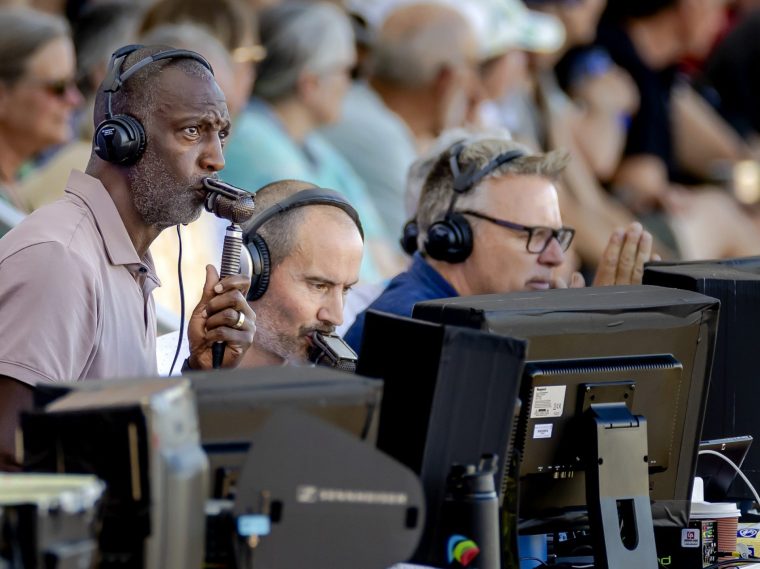
Johnson is still clinging to the hope of bringing GST back to life but athletes will be wary of involvement with any rebirth.
One agent told The i Paper: “A lot of athletes followed him down this path and are chasing what they’re owed. I doubt many will want to get involved again. But saying that, some even only being partially paid have earned more money than they could have ordinarily dreamed of in a season.”
Johnson’s venture was clearly well intentioned and it shows how hard it is to start a sporting venture from scratch without having near bottomless pockets. Even something like Saudi-backed LIV Golf has struggled despite its apparent riches. Now, Johnson faces a huge rebuild both personally and in his quest to bring GST back to life.