

















The crown jewel of NASCAR racing, the birthplace of NASCAR, the Daytona International Speedway, has delivered some of the sport’s greatest moments. But it has also reminded the racing world of its dangers. The tragic loss of Dale Earnhardt in 2001 at the superspeedway remains a sobering example of how unforgiving the track can be. And for one veteran, the scars of a Daytona NASCAR crash haven’t faded with time and have forced him into surgery decades later.
A Daytona NASCAR crash that never truly healed
“Please pray for Dave today as he undergoes surgery to remove the hardware in his leg. This was placed in there many years ago after a wreck at Daytona. This is the first step towards him being able to get that knee replaced at a later date.”
That update from Dave Marcis’s Facebook account brings back a moment of a NASCAR crash that many may have surely forgotten. But his body never did. The injury traces all the way back to July 6, 1990, during practice for the Pepsi 400 at Daytona International Speedway. In a terrifying chain-reaction crash in the tri-oval, Marcis slammed into a stalled car driven by Darrell Waltrip after a multi-car pileup.
While Waltrip’s injuries were severe, Marcis also suffered a fractured left leg. Now, this injury, at the time, seemed manageable enough for him to be treated and released. But as this latest development shows, some damage doesn’t just go away. Marcis’ career itself is a testament to toughness.
Widely regarded as one of NASCAR’s last true independent drivers, he didn’t just race. He owned, prepared, and drove his own cars in an era increasingly dominated by big teams. Over 35 years in the NASCAR Cup Series, he made 883 starts, finishing second on the all-time list behind Richard Petty.
He also spent time driving for championship-winning owners like Nord Krauskopf and Rod Osterlund, further cementing his place in the sport’s history. Now, decades later, that Daytona NASCAR crash is still part of his story.
And as Marcis begins this next step toward recovery, it’s a powerful reminder that some races don’t end when the car stops.
Daytona’s darkest moments that changed NASCAR forever
No track in NASCAR carries a legacy quite like Daytona International Speedway, and with that legacy comes some of the sport’s most harrowing NASCAR crashes. The most defining moment came in 2001, when Dale Earnhardt lost his life on the final lap of the Daytona 500. A crash that initially didn’t look catastrophic changed the sport forever, leading to a complete overhaul of safety standards across NASCAR.
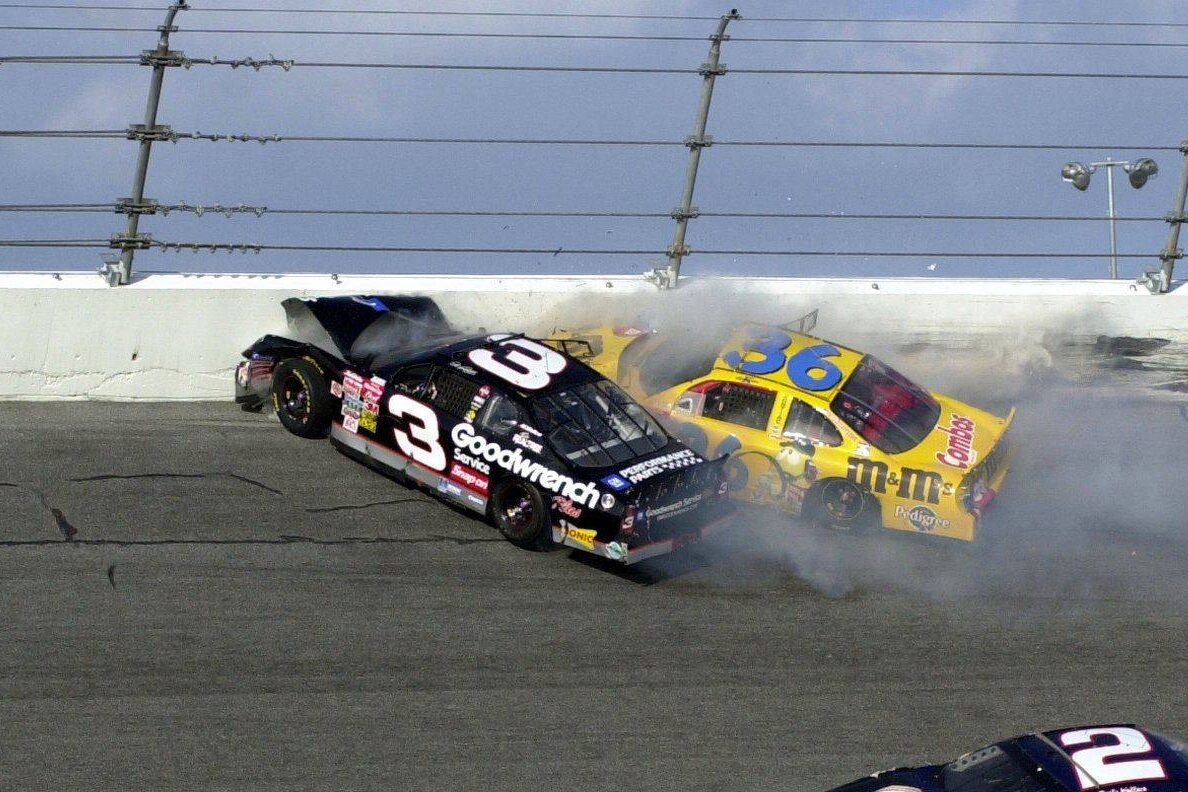
Just two years later, Ryan Newman experienced a terrifying wreck in the 2003 Daytona 500. After contact from Ken Schrader, Newman’s car slammed into the wall, went airborne, and flipped multiple times before landing on its roof. The car was destroyed, but remarkably, Newman walked away without major injuries, highlighting just how quickly safety measures were improving.
Then came 2013, when Kyle Larson was sent flying into the catch fence during the closing laps of a race. The impact was violent enough to tear the car apart, even launching the engine toward the grandstands. While a major tragedy was avoided, debris still injured several fans, raising fresh concerns about spectator safety.
And those are just a few examples. Daytona has seen countless NASCAR crashes over the years. But the key difference today lies in what NASCAR learned from those moments. The introduction of SAFER barriers, the HANS device, improved seat designs, and stronger catch fencing have all played critical roles in reducing serious injuries and fatalities.
Still, as much as safety has evolved, Daytona remains unpredictable. Because no matter how advanced the technology gets, the risks of racing at 200 mph never fully disappear. And for drivers like Dave Marcis, those risks can echo for a lifetime.