




































Less than two hours into day three at the Monte Carlo Masters, organizers were already scrambling. The day began with Roberto Bautista Agut retiring just 23 minutes into the opening match on Court Rainier III. Then came another blow: Czech rising star Jakub Mensik, ranked inside the top 30, pulled out of his first-round meeting with Fabian Marozsan barely an hour before play.
The 20-year-old withdrew from his first-round match while Grigor Dimitrov and Tomas Etcheverry were still battling it out on Court des Princes. Damir Dzumhur was drafted in as a last-minute lucky loser, with Etcheverry’s extended three-set win giving him just enough time to prepare before stepping in. No specific reason has been given for Mensik’s withdrawal, though the Monte Carlo draw sheet listed the cause simply as “toe.”
OFFICIEL ! Alors qu’il devait entrer sur le court face à Fabian Marozsan, Jakub Mensik déclare finalement forfait pour le Masters 1000 de Monte Carlo.
Damir Dzumhur prend sa place dans le tableau.
pic.twitter.com/ffcyQZqbjp
— Avantage Tennis
(@AvantageTennis_) April 7, 2026


This was not the first time Mensik had withdrawn from the tournament this year. Earlier, at the Australian Open, he had reached the R16, which is his career-best Grand Slam performance. But before facing the 24-time Grand Slam champion, Novak Djokovic, in the fourth round, he had to withdraw because of an abdominal injury.
He started 2026 with his second ATP title at the Auckland ATP 250 and beat Sebastian Baez in the final. After recovering from the injury in Melbourne, he conquered world No. 2 Jannik Sinner in Doha, further cementing his place as an actual threat to the elites in the sport.
All of that accumulated form took him to a career-high ranking of world No. 12 in March. Now, a month late, he has dropped to world No. 26. The 2025 Miami Open champion did not have a great Sunshine Double, getting eliminated in R32s on both occasions, explaining the fall in ranking. This shows how quickly the ranking position shifts when results dry up, even for one or two tournaments.
Additionally, this withdrawal will affect his ranking even more if players around his ranking are able to reach the later stages of the tournament. He will not be docked any points or receive any penalties, as Monte-Carlo is the only masters tournament that is not mandatory.
Due to this, Mensik had skipped the tournament last year as well after winning the dreamy Miami Open. The slots were out before Miami got over, and he was placed in the qualifying rounds; therefore decided to withdraw from Monte-Carlo and prepare for the rest of the clay swing.
Many top players have decided to skip the first clay Masters, and some have been withdrawing after participating, a trend seen for a non-mandated masters tournament.
Monte Carlo’s growing withdrawal list
The late withdrawal of Jakub Mensik serves only to compound an already stormy build-up to the tournament. Two-time Monte Carlo champion Novak Djokovic had officially withdrawn for the first time since 2011. World No. 9 Taylor Fritz is out with a chronic knee problem, and British No. 1 Jack Draper is out since his Indian Wells run. Sebastian Korda, who dramatically upset Carlos Alcaraz in Miami, is sidelined with a back injury. The list of major absences had gathered even before a ball was hit in the main draw.
Additionally, players like Frances Tiafoe, Giovanni Mpetshi Perricard, and Kamil Majchrzak also pulled out of the tournament after the draws were out. Even lucky losers like Agut are retiring mid-match due to injury.
What is unique about the withdrawal situation in Monte Carlo is that it is the only one of the nine Masters 1000 events that is not a mandatory event for players on the ATP Tour. That distinction matters enormously.
Failure to play an obligatory Masters 1000 without a legitimate medical excuse is a punishable offense for the top 30 players in the world. Ranking penalties are ranked with a zero-point score that cannot be substituted by a superior result on a lower-level event in a 52-week term.
Four Grand Slams and eight mandatory Masters 1000 events have to be among the 19 best results of a player, whether he or she participated in them or not. To top it all, any absenteeism from a compulsory event can cause the share of a bonus pool to halve. The pool is over $21 million, which is no small figure. Moreover, tardy withdrawals like that of Mensik may invite fines of 20,000 dollars per offence, with repeat offences leading to a suspension in the event where the highest amount of points was accrued in the last 12 months.
Monte Carlo does not have any of those implications. It does not have ranking penalties in case of missing it, no compulsory zeros, and no bonus pool deductions. Players are free to skip Monaco, and most do so, especially those whose hard-court swing had been gruelling, or who are bringing niggles into the clay season.
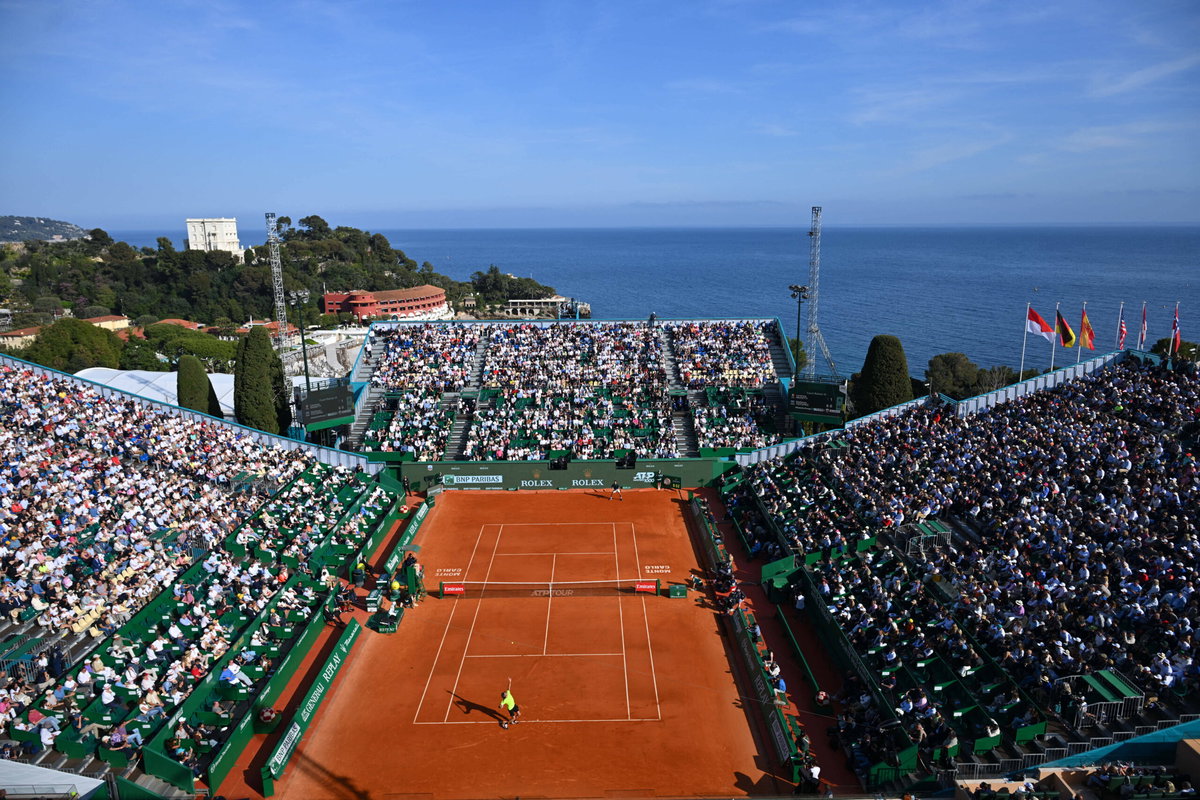
Freedom is the attraction and the challenge of the tournament. One of the most beautiful tennis sceneries is the red clay at the Monte Carlo Country Club. However, unless it has the obligatory tag, it is constantly exposed to the type of withdrawal wave that has struck it once again this year.
The top two tennis players, Alcaraz and Sinner, stay ahead, gradually widening the already huge gap, ensuring world-class tennis at the 2026 edition.