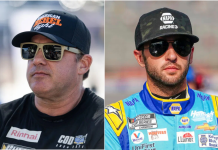
























Mark Martin sizes up Cleetus McFarland’s Rockingham outing
On Door Bumper Clear, Mark “the Kid” Martin laid out quite an understandable and measured opinion of Cleetus McFarland’s run at Rockingham Speedway.
“He didn’t exceed my expectations. I expected him to run about like he ran,” said the former NASCAR driver.
Martin limited his praise while also acknowledging the lack of pre-race experience that McFarland had. He did not even make the mistake of ignoring the vastly different and far more complex racing conditions that McFarland was operating in, something he wasn’t accustomed to.
“This place is a lot harder than Daytona, you don’t have any idea what it takes to run in the middle or the latter part of the pack,” said Martin, echoing the same sentiment he did in a tweet after the race.
Martin then went on to his more specific analysis of the race. “He got over his skis multiple times; many other drivers would have wiped that car out,” he added.
McFarland enjoyed good control of the car, which he also proved under extreme pressure.
This was also acknowledged by Freddie Kraft, who said, “he knows how to drive, he just needs to learn how to race,” a line that Martin immediately backed up with a simple “yeah.”
With Rockingham proving to be a great experience, McFarland has an approval decision waiting for him on Tuesday. If he succeeds there, NASCAR could soon see the YouTuber racing once again with RCR at another prestigious track.
Clearance pending as NASCAR reviews Cleetus McFarland’s Rockingham run
Cleetus McFarland’s next step within NASCAR is not driven purely by his performance but is directly based on approval mechanisms, with NASCAR set to decide by Tuesday whether he will be cleared to compete at Talladega Superspeedway. Unlike standard entries at other racetracks, Talladega requires a form of special, track-specific authorization, especially for drivers such as McFarland who have limited racing experience.
His outing at Rockingham in the No. 33 Chevrolet for Richard Childress Racing would function as a de facto evaluation. And the evaluation is not just based on results, where Cleetus was deep towards the end, but rather on quite narrow characteristics: ability to maintain control in traffic, avoid incident escalation, and operate within the flow of race conditions over a full distance.
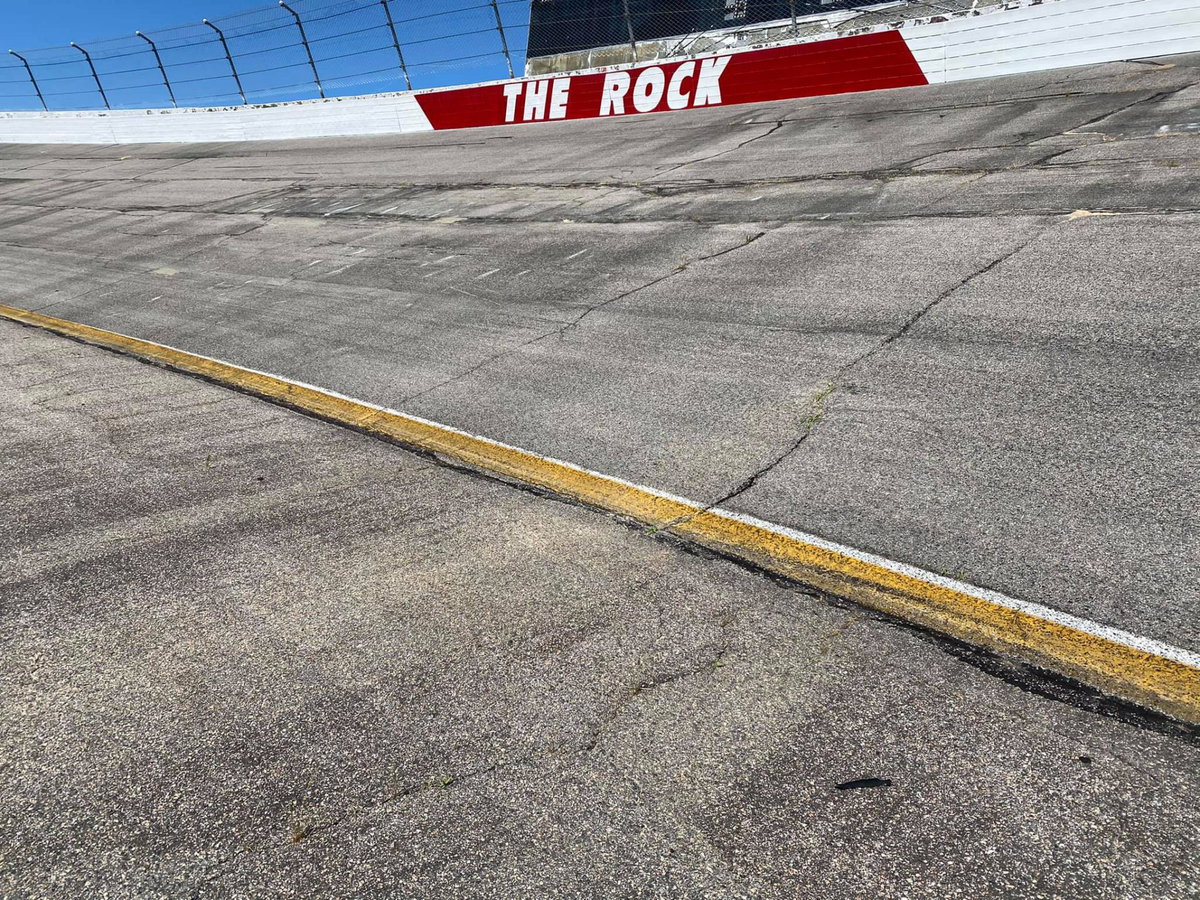
The reason for the same is the structure of the track. As a 2.66-mile superspeedway that has been historically defined by sustained pack racing, with closing speeds exceeding 190 mph and minimal margin for error, while placing immense weight on spatial awareness. McFarland’s novice racing experience could prove costly.
The final call thereafter cannot be solely procedural but instead is discretionary, where NASCAR has to decide, in a matter of hours now, whether his demonstrated control translates to the highest-risk format on the schedule.