
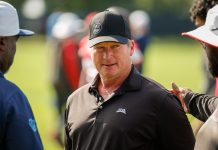
















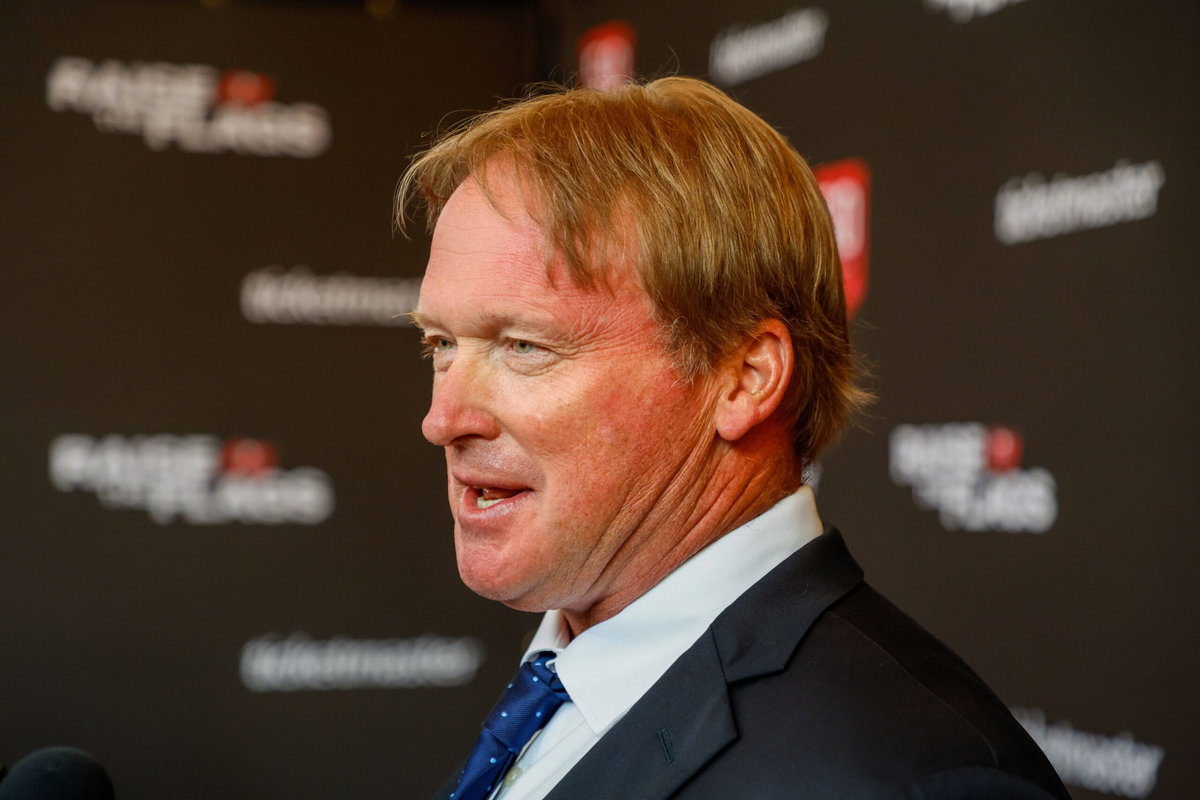
The Las Vegas Raiders have been in this position before. A new head coach, optimism tied to the upcoming NFL Draft, and expectations that the franchise is about to turn a corner. A similar wave existed in 2018 when Mark Davis brought Jon Gruden back to lead the organization (first two years in Oakland before moving to Las Vegas in 2020). What followed, however, did not match that expectation.
The reasons were layered, including roster decisions like moving on from key veterans. But one of the more critical issues was the draft process under Gruden. This week, Zak Keefer of The Athletic reported that Gruden relied on what staffers described as “kill tapes” for prospects he did not favor.
“Gruden strolled through the doors in Oakland in 2018 with undisputed authority, and if he wasn’t in on a prospect, former staffers remember, he’d have one of his assistants compile a short video cut-up of the player’s worst snaps, then show it to all the scouts,” Keefer wrote. ‘”It wasn’t reflecting of all the work you did…You can make a player look any way you want. You can make Tom Brady look like a bum.’”
The broader implication is straightforward. Gruden operated with a top-down approach, often prioritizing his own evaluation over the scouting department’s work. According to the report, if a prospect did not align with his preference, existing scouting reports were effectively disregarded.
That dynamic created an imbalance internally. Scouts invested significant time in evaluations, but those efforts carried limited weight if they conflicted with Gruden’s view. Meanwhile, Gruden would isolate poor plays and errors from draft prospects’ tape and present those clips to the organization to shape the evaluation. Younger scouts rarely challenged the process, and even experienced voices had limited influence.
Part of that structure stemmed from front office changes, where Reggie McKenzie was replaced by Mike Mayock, who, as described, was not positioned to counter Gruden’s authority.
The outcomes reflected those structural issues. Gruden oversaw four drafts during his second tenure, with the 2019 and 2020 classes standing out for underperformance.
In 2019, the Raiders held three first-round picks, but the returns did not align with expectations. The decision to draft Clelin Ferrell fourth overall came despite internal pushback. According to Keefer, the initial plan involved trading back and selecting Ferrell later, but the team adjusted on the clock.
In hindsight, Ferrell has not delivered at that draft position and has since moved across multiple teams, including two stints with the San Francisco 49ers.
Similarly, Johnathan Abram, selected 27th overall, produced a peak season with 116 tackles in 2021. However, the Raiders declined his fifth-year option, and he has since struggled to establish long-term stability. The broader was clear that high draft investments did not translate into retained core players.
That contrast becomes sharper when considering later-round success. Maxx Crosby, selected in the fourth round of the same draft, has developed into not just a more productive player than Ferrell, but one of the league’s top edge rushers.
The trend carried into the 2020 draft. Addressing a need at cornerback, the Raiders selected Damon Arnette in the first round. The pick did not yield results, and later reporting from Hondo Carpenter indicated that the decision leaned more toward Gruden’s preference than Mayock’s evaluation.
“I know of, I’m going to guess close to 10 teams in which Damon Arnette was not even on their board,” Carpenter said. “Mayock was not a big Arnette guy, but Gruden wanted him.”
As these decisions accumulated, the broader impact became visible. The Raiders cycled through roster changes, including trading players like Khalil Mack and Amari Cooper, while struggling to offset those moves through free agency and the draft. By 2021, the internal strain had escalated to the point where the organization was effectively divided heading into the draft.
When the coaching staff and scouts worked separately during Jon Gruden’s tenure
The Raiders might not be in their current rebuilding phase if the internal structure during Jon Gruden’s second stint had been more aligned. During that period, Gruden held 51 percent control, while Mike Mayock operated with 49 percent.
That balance began to break down approaching the 2021 draft, when both sides developed separate draft boards. Gruden and the coaching staff operated independently from Mayock and the scouting department, and the two boards reflected entirely different evaluations.
“By 2021, the building started to splinter. The Raiders were now in a sparkling new facility in Las Vegas, where the coaches worked on one side of the building, the scouts another,” Keefer added. “An old Al Davis maxim designed to prevent them from ‘buddying up,’ one former staffer said. The result was two separate draft boards, one stacked by Gruden and the coaches, the second by Mayock and the scouts. Confusion reigned.”
That lack of alignment translated directly into outcomes. Mark Davis had committed significant resources to Gruden, including a 10-year, $100 million contract, expecting long-term stability. Instead, the team went 22-31 during his tenure, finishing fourth, third, and second in the AFC West over his first three seasons before his resignation in 2021.
In the years since, the Raiders have struggled to establish consistency. However, the current setup introduces a different framework. Tom Brady is now involved as a minority owner, the franchise is evaluating national champion Fernando Mendoza in the draft, and Kirk Cousins has been brought in as a veteran presence.
Additionally, Klint Kubiak steps in as head coach following a Super Bowl run as a coordinator. Structurally, the expectations mirror those from 2018. The difference now lies in whether the organization can translate that setup into sustained results.