






























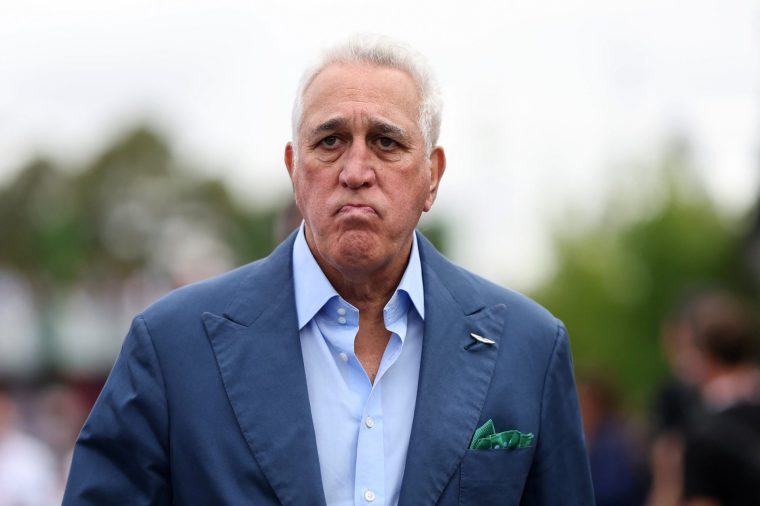
The alarm bells first began to sound in Tokyo in November as Aston Martin owner Lawrence Stroll, technical boss Adrian Newey and then-team principal Andy Cowell gathered to hear from Honda’s top brass.
There, it was laid bare to them in no uncertain terms that the team’s new engine supplier was not going to even get close to hitting its target power for race one in Australia.
It was immaterial what Newey, universally accepted as the world’s greatest F1 designer, created with the AMR26. The emergence of the chassis he had been working on since May was hotly anticipated up and down the grid; at that point came the realisation it wasn’t going to be competitive.
Since then, things have gone from bad to worse. Testing on the power unit did not show the vibrations which became apparent as soon as the car hit the track. They were so seismic that they damaged the battery as well as the two drivers piloting the car. Newey even warned of permanent nerve damage to its pilots.
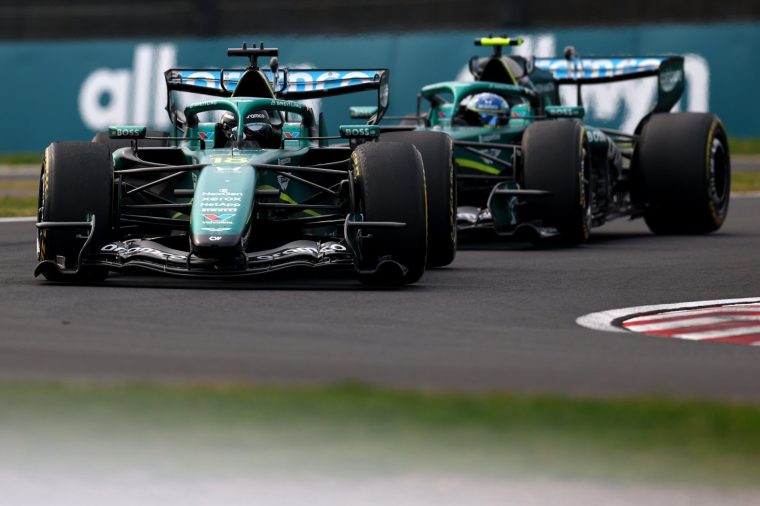
On the return to Japan last weekend, the two Aston Martins qualified at the back of the grid, and Lance Stroll failed to complete Sunday’s race; he is still yet to finish a full grand prix in 2026. Only 12 months previously, they were celebrating an unlikely victory with Max Verstappen and Red Bull.
To understand where it went so wrong is to go back to October 2020 when Honda announced it would leave F1 at the end of the 2021 season in order to focus predominantly on its electric vehicle operation.
As a result, more than two-thirds of its workforce was either redeployed or left the organisation, and effectively 18 months of downtime followed. There was a partial U-turn as Honda agreed to remain a power unit partner to Red Bull but the operation had been dialled down.
When plans emerged of a power unit overhaul leading more heavily on electric power for 2026, that aligned better with Honda’s vision. By then, Red Bull had already committed to its own in-house creation so Lawrence Stroll stepped in to sign a deal with Honda for 2026 and beyond, investing further in a project that has so far cost the Yew Tree Consortium around £500m.
The timeline, however, left Honda on the back foot to rebuild its core team and tackle entirely new regulations. As Newey pointed out, just 30 per cent of staff who had worked on Verstappen’s dominant Red Bull from 2021 remained.
Newey’s extraordinary pre-Australian Grand Prix press conference laid the blame for a woeful winter testing firmly at the door of Honda but his chassis is not entirely faultless either. His ultra-stiff creation aimed at enabling the new active aerodynamics to work at their best further exacerbated the level of vibration on the car.
Now, those vibrations have improved… at least partially. Fernando Alonso suggested they had gone on the Friday of practice in Suzuka only to reappear in qualifying before diminishing in the race. No one at Honda nor Aston Martin has entirely got to grips with why that is so.
Speaking in Suzuka, Honda Racing Corporation president Koji Watanabe said: “Our primary focus has been on reducing the impact of vibrations on the battery. Going forward, we will also work on mitigating vibrations affecting the driver. However, that will take more time. As we have not yet fully identified the root cause, the only approach is to proceed step by step.”
Limited running at the Barcelona and Bahrain tests, not to mention a lack of laps at races this season to date, equates to limited data to understand all the issues fully. And while a five-week gap is helpful in order to solve problems away from the spotlight, Aston still desperately needs running time as it is at track, not the factory, where new issues are more readily encountered.
Alonso has warned there won’t be a sudden upturn in fortunes after F1’s war-enforced hiatus, saying that “the next 10 races will be difficult” before any great change. But Honda’s cause will be aided after race six by regulations that allow teams down on power to get additional upgrades.
The one other positive perhaps in all this is that Alonso does not want to end his career on a sour note and, with few signs of things improving any time soon, looks likely to put pen to paper on a contract extension. It would welcome good news at Aston Martin after months of bad, and perhaps a tiny uptick in the fortunes of Stroll’s half-a-billion-pound project.