










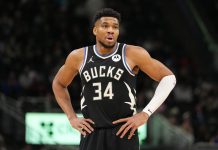














The fallout between Giannis Antetokounmpo and the Milwaukee Bucks has officially crossed a new line. It is no longer just about medical disagreements or internal tension. This situation has now hit the Greek Freak where it matters most. His bank account.
A decision by the Bucks to shut Antetokounmpo down has already cost him a significant bonus tied to his Nike endorsement contract, while simultaneously triggering an NBA investigation into how the franchise handled his availability. That is why this story matters now. Because what looked like a routine injury shutdown is being questioned at the league level. And for Giannis, the consequences are already real.
BREAKING: The NBA is investigating the Milwaukee Bucks for their handling of the player participating policy & potential inconsistent statements regarding the health of Giannis Antetokounmpo, per @ShamsCharania.
The league has interviewed Antetokounmpo’s side, the Bucks and… pic.twitter.com/2AE1tDNTeX
— Yahoo Sports (@YahooSports) April 4, 2026
The league’s involvement did not happen in a vacuum. According to reports, the NBA began investigating after conflicting accounts emerged from both sides regarding Antetokounmpo’s health and availability. While the Bucks maintained that he was not fully cleared following his knee injury, the two-time MVP insisted he was healthy enough to return.
That gap only widened once the details surfaced. Milwaukee told league officials they scheduled Antetokounmpo for three-on-three scrimmages during the week of March 23 as part of his return-to-play process. However, he declined to participate. His camp, meanwhile, claimed he was never properly informed or cleared despite repeated attempts to get back on the floor.
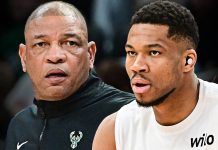
As a result, the NBA stepped in. At the same time, another layer made the situation even more complicated. Head coach Doc Rivers reportedly told veterans like Kyle Kuzma and Myles Turner that they would not be allowed to sit during the final stretch of the season without legitimate injuries.
That directive did not apply to Antetokounmpo. And that inconsistency is now central to the investigation. The financial impact is where the tension turns personal. Multiple reports confirmed that Antetokounmpo needed to appear in at least 41 games this season to trigger a major bonus in his Nike deal. He finished with just 36.
That gap was not by accident. The Bucks shut him down after he suffered a knee hyperextension and bone bruise on March 15. Despite pushing for a return during the following road trip, he never received clearance. Because of that decision, the bonus disappeared.
And while the exact figure remains undisclosed, the implication is clear. This was not a minor incentive. It was a significant earnings trigger tied directly to availability. That context explains why the situation escalated as quickly as it did.
This type of conflict is not new to the league. The situation mirrors the well-documented fallout between Kawhi Leonard and the San Antonio Spurs, where disagreements over injury diagnosis and return protocols eventually fractured the relationship beyond repair.
At the same time, the NBA has already cracked down on similar cases this season. Teams like the Cleveland Cavaliers, Utah Jazz, and Indiana Pacers have all faced fines under the league’s player participation policy for sitting healthy players.
That broader context matters. Because this is not just about Giannis versus Milwaukee. It is part of a league-wide effort to control how teams manage star availability.
Trade Talks Add Fuel to an Already Volatile Giannis’ Situation
What makes the situation even more striking is how productive Antetokounmpo remained. In just 36 games, he averaged 27.6 points, 9.8 rebounds, and 5.4 assists while shooting 62.4% from the field. Those are elite numbers by any standard.
However, availability changed everything. Multiple injuries earlier in the season had already limited his rhythm. Then the March knee injury ended any realistic chance of reaching the 41-game threshold. As a result, one of the most efficient seasons of his career still ended as his shortest. And now, it carries financial consequences.
The timing of all this is not ideal for Milwaukee. The Bucks seriously explored trade options involving Antetokounmpo at the deadline. More than a dozen teams expressed interest, but only a few met the asking price.
The Minnesota Timberwolves, Golden State Warriors, and Miami Heat emerged as the most serious contenders. Among them, Miami came closest. The Heat constructed a package centered around Tyler Herro, Kel’el Ware, additional players, and multiple draft picks. Milwaukee strongly considered accepting that offer around early February.
Ultimately, ownership decided to wait. The belief was simple. The offseason would bring better value.
Now, that decision looks far more complicated. Antetokounmpo still has the 2026-27 season guaranteed, along with a player option in 2027. He also becomes eligible for a four-year, $275 million extension starting October 1, or six months after any trade.
That puts the Bucks at a crossroads. They can extend him and repair the relationship. Or they can move him and reset the franchise. However, the investigation, the financial loss, and the public disagreement have already shifted the tone.
This is no longer a quiet internal issue. It is a public standoff with real consequences. And unless something changes quickly, the question is no longer if Giannis leaves Milwaukee. It is when.