



















A complaint about remote racing coverage should have just ended as another passing jab, but it didn’t. Instead, it dragged Kenny Wallace into a late-night spiral where a single tweet by the veteran commentator triggered a chain of replies, insults, and a pointed argument on how the aforementioned engagement would turn into money.
Kenny Wallace’s late-night rant turns fan backlash into a money debate
It all started on X with friendly banter that soon turned harsh when longtime NASCAR voice and ex-Fox Sports broadcaster Kenny Wallace decided to take on a full-blown argument over attention and money with the host of the Hot Pass Podcast, Eric.
The background, well, Wallace tweeted out his discontent against a post by RaceDay Report mocking their ability to “announce” the race from their living room while not actually being on track. This prompted a strong reply, and in turn, Eric mocked Wallace for his novice take on the issue.
And that’s when it all went down.
Wallace first lit the fuse with the line, “You just paid me money. Thank you.”
You just paid me money. Thank you.
https://t.co/pPrWfnDbAS
— Kenny Wallace (@Kenny_Wallace) April 6, 2026
It was the kind of taunt that is built to provoke, and it did exactly that. Replies flooded in, to which Wallace comically mocked, saying, “True. I set the bait and these d***a**** comment on every little thing I say. Then he further pushed his point by stating the four words that changed it all, “they’re paying me money.”
This is when the argument stopped being just another social media jab and turned into a confrontation.
Eric then stepped in with, “You can tell Kenny just found out how social media payouts work when you’re a creator.”
Wallace did not seem to retreat; he added, “Eric was taught a lesson today,” and then doubled down again: “I tell them they are paying me and they still engage.”
By this point, both commentators seemed invested in this exchange. Wallace repeated his core point by stating, “You paid me.” To which Eric responded, “Kenny, I asked to show you I don’t physically pay you anything, haha. You said ‘you paid me’. Didn’t pay you anything lol. Might wanna reword your responses.”
Wallace, by now, didn’t want to argue technicalities. He amusingly framed his final tweet in such a manner, putting up the entire exchange as proof that his bait had worked. He tweeted out, “Eric is upset now that I handed him his own a**. And he’s talking to me on my platform. I kicked his ass so bad.”
Now, even though this comical exchange can be reduced to banter between two commentators, the underlying issue still does not seem to be addressed. Is there actual ground for fans and commentators like Wallace to feel discontent about such distant broadcasting?
Remote booths and the changing nature of NASCAR coverage
The backlash around the Rockingham race is not to be seen in isolation but must be viewed through the broader framework of how NASCAR is now produced. Under the current agreement, The CW Network carries the broadcasting rights for the entire Xfinity Series, yet production is largely handled by NASCAR’s in-house ecosystem, increasingly centred around a purpose-built facility in Concord, North Carolina.
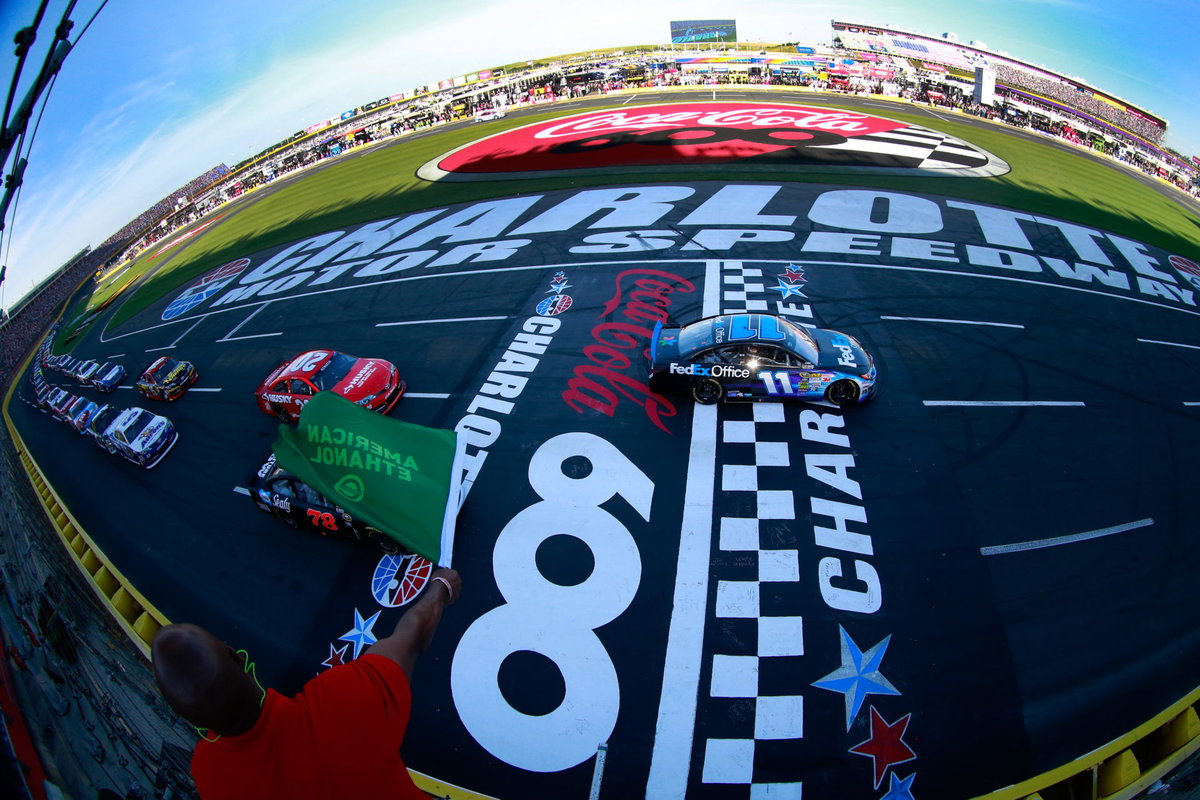
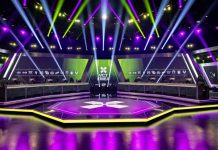
The facility was primarily designed for remote broadcasting, allowing commentators to call races without being physically present at the track. In 2025, The CW began to use this model, placing commentators in high-tech studios for select races while pit reporters remained on track.
The justification is operational in nature. Remote booths give broadcasters access to more data, camera feeds, and real-time analytics than a traditional trackside setup would, leading to an exponential rise in broadcast capability. Parallel to this, it also reduces logistical costs tied to travel, equipment movement, and full on-site crew deployment, aligning with a broader industry trend across sports media.
Yet, we should not completely ignore the reactions of commentators like Wallace. They are not reacting to technical quality but rather to perceived effort and authenticity. When a race is called remotely despite there being geographic proximity to the studio, take, for example, Charlotte to Rockingham, this begins to seem less like innovation and more like detachment. Add to this the fact that trackside commentators are central to NASCAR culture, and their absence feels like a loss to the fan experience.
The result, however, is that this tension can no longer be avoided. On one side, there is an efficiency-driven system built on cutting-edge technology. On the other hand, there is a passionate fan base who want to relive the nostalgia of in-person commentary.