

































Gender-based discrimination in esports is often framed as a problem the industry is slowly outgrowing, and, in some ways, that is true. The scene is more diverse than it once was, and more people are willing to speak up when faced with discrimination.
Yet situations like the one recently shared by Ève “Colomblbl” Monvoisin and Maya “Caltys” Henckel from the League of Legends scene show that the industry is far from being inclusive.
In March, Colomblbl explained that she had been rejected from a team because she is a woman. Shortly after, Caltys shared a similar story from earlier in her career, in which she had been considered the best option for a role, yet was turned away for the same reason. Their stories quickly spread throughout the community, and many others added their own experiences.
Once again, the pattern that has existed for years is made evident for all to see.
The reaction around these stories also says something important. There is more pushback now, with more people questioning these decisions rather than accepting them as part of the system. And that shift also matters.
However, it also highlights how often the responsibility to speak up still falls on individuals already targets of harassment and discrimination publicly — not to mention the possibly countless ignorant takes in private conversations.
When Someone Else’s Behavior Matters More Than Your Skills
In both Colomblbl’s and Caltys’ cases, the reason for exclusion was not performance, but the idea that a woman could “distract” the team. However, this kind of reasoning says more about the environment than the player as it suggests a lack of professionalism from the entire team — staff included.
Yet the consequence falls on the person being excluded.
Skill becomes secondary to assumptions about someone else’s behavior, and “not a good fit” becomes a way to justify the real reasons behind the decision, which, of course, would be harder to defend openly.
This kind of logic has shaped esports for a long time. It does not always appear as direct discrimination. More often, it shows up in quieter ways, through informal veto power, unspoken discomfort, or the idea that some players simply “would not work” in a team.
Yet the outcome is the same, and opportunities are not distributed based on merit alone.
And still, there are signs of change. Reactions to these stories show that many people within the scene no longer accept these explanations without question, and what once passed quietly now sparks discussion.
That does not solve the issue on its own, but it shows that the culture is being challenged.
Boys Will Be Gamers: The Weight of Social Expectations
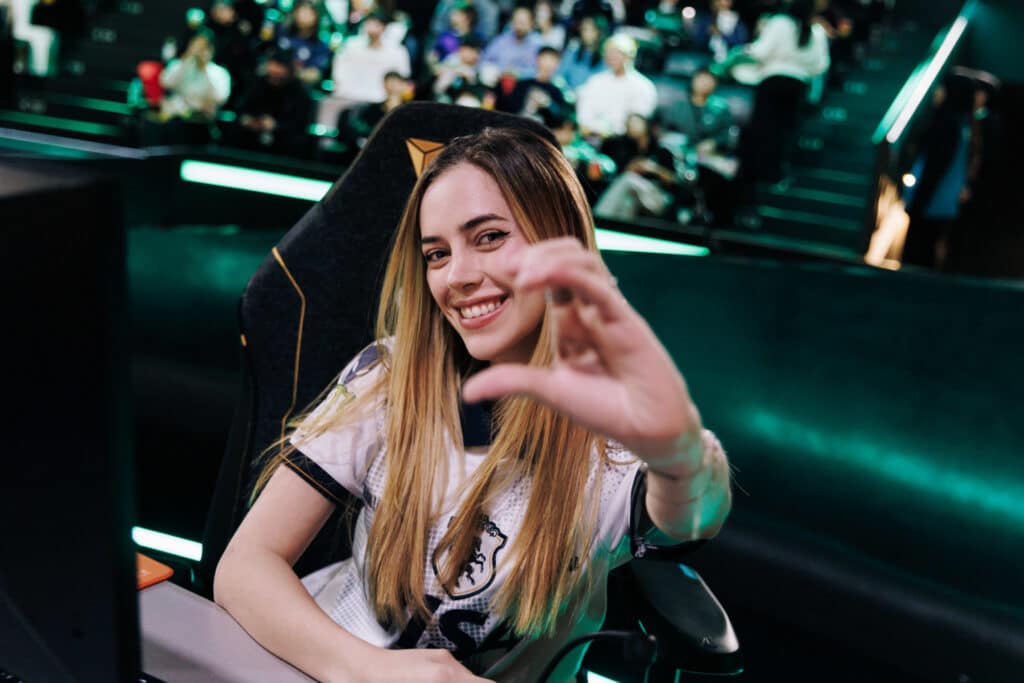
According to the 2025 Global Power of Play report from the Entertainment Software Association, women now make up 48% of the global player base — but this is not a recent evolution.
Research from the Pew Research Center more than a decade ago already showed that 48% of women played video games, but what has been different is recognition. In that same study, 15% of men who played games identified as gamers, compared with only 6% of women. A few numbers to reflect just how much and for how long women didn’t feel legitimate in the space, or even feeling guilt to be in it.
But these dynamics often start much earlier, long before competitive gaming becomes a possibility. For many girls, access to gaming has historically been shaped by different social expectations than those for boys. While this is not universal, it is still common to see boys being given more time, space, and even resources to play video games, whether that means owning a console, spending hours online, or simply being encouraged to treat gaming as a legitimate hobby.
On the other hand, girls are often expected to balance their time differently, helping more at home, focusing on school in a more “serious” way, or being guided toward more traditional paths such as stable careers or starting a family. These are not always explicit limitations, yet they influence how much time and confidence someone can invest in gaming from an early age.
That difference does not disappear over time, but it builds into something larger. By the time entry into esports or the wider gaming industry becomes an option, many women are already starting from a different position, often with less experience, fewer connections, and less encouragement to pursue it seriously.
At the same time, male-dominated spaces tend to reinforce themselves, as visibility plays a huge role in shaping who feels like they belong. If most professional players, coaches, or decision-makers are men, it becomes harder for women to imagine themselves in those roles, and harder still to be accepted once they try to enter. Women and other marginalized genders do play video games, but more often than not stay out of communal places for more than a reason.
However, this is also where change is slowly happening, as more women push into these spaces and challenge those expectations. Yet the influence of those early social and cultural norms remains visible and continues to shape not only who participates, but also who is given the opportunity to succeed.
Esports Is Stuck Between Challenge and Change
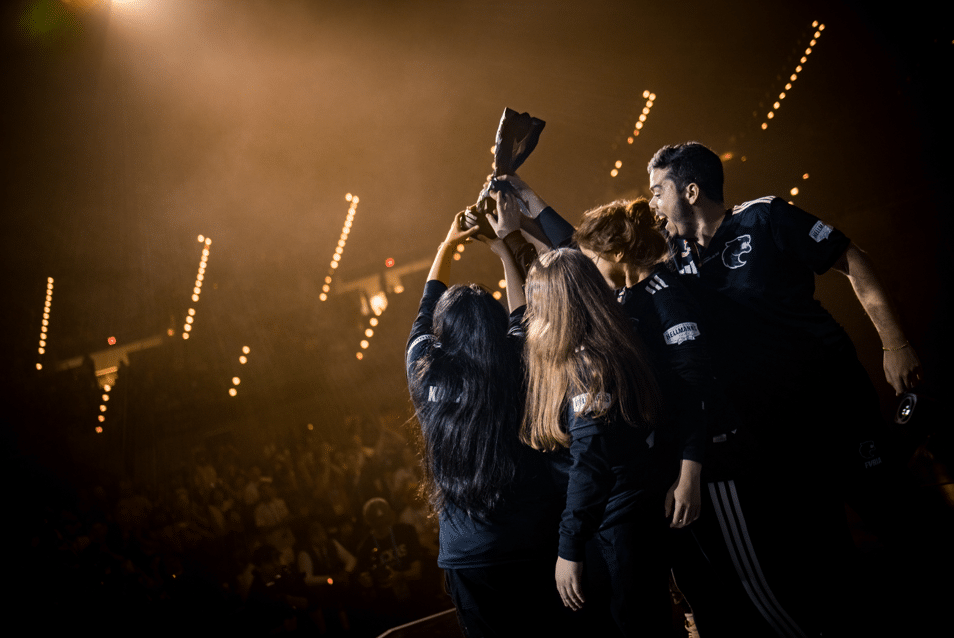
I have encountered discrimination since 2019, when I entered the scene, both in and out of the game. However, I feel my experience has been mild compared to what many others have faced in the same timeframe. But the fact that these “usual” insults, dismissive comments, and discriminatory situations were viewed to me as “mild” does show how normalized these instances are for women in esports.
When I first joined a media publication, I was the only woman on the team. When I worked as a referee for a large international tournament organizer, I was the only woman in my group for two years. And during that time, I was often described in conflicting ways: kind, yet too bossy; too outspoken, but not chatty enough. I often found myself calling out sexism, which would further define how I was viewed by co-workers. These labels were not always meant to exclude, yet they shaped how I was perceived by everyone in the same environment. My work was not always the first thing that shaped how others described me.
As my career progressed, I have worked with colleagues who value what I do rather than focus on my gender, but that is not the standard experience. Many women and marginalized genders in esports still face stronger barriers, fewer opportunities, and more pressure to constantly prove themselves.
There are real efforts to improve the situation. Some organizations invest in programs, mixed rosters, and competitions to support marginalized genders. These initiatives create space, visibility, and a starting point that the main ecosystem often does not.
Yet the need for these spaces also shows the limits of current progress. As long as marginalized genders’ players can still be excluded for reasons unrelated to their performance, the system itself remains incomplete. As long as girls help set the table instead of playing a round of Mario Kart like their brothers, the ecosystem is losing potential world champions.
The esports industry today exists in that tension. Stories gain attention, discussions follow, and for a moment, it feels like change is within reach — however, the cycle is familiar.
Attention fades, the conversation moves on, and the same issues are pushed aside to make space for the next one. Change is happening, but not at the same pace everywhere, and not always in ways that last. Until these moments lead to consistent action rather than temporary reactions, the scene will continue to move forward, yet never quite as far as it could.