





















The final roster spot didn’t just go to the best player. It went to the right fit.
And in the process, the door quietly shut on Drew Timme, a teammate of Bronny James who had been building his own case all season with the South Bay Lakers. Because when the Los Angeles Lakers made their last move before the playoffs, they made a choice. And it came down to one decision.
With the postseason just days away and injuries stacking up in the backcourt, the Lakers acted quickly on Sunday. They converted Nick Smith Jr. from a two-way deal into a standard two-year NBA contract, making him playoff-eligible at the exact moment they needed it most.
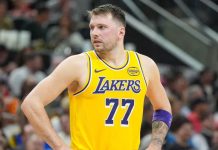
The Los Angeles Lakers are signing two-way guard Nick Smith Jr. on a new two-year contract, Lucas Newton of Klutch Sports tells ESPN. With Luka Doncic and Austin Reaves sidelined, the Lakers add guard depth for the playoffs. Smith has averaged 6 points and 40% from 3 this season. pic.twitter.com/DTY3TtnsIn
— Shams Charania (@ShamsCharania) April 12, 2026
On paper, this is a depth move. In reality, it’s a signal. Because two-way players cannot play in the playoffs, the Lakers didn’t just reward Smith. They prioritized role, fit, and immediate need over everything else. That need is obvious.
With Luka Doncic and Austin Reaves sidelined, the Lakers are suddenly thin at guard. They needed ball handling, shooting, and someone who could step into minutes right away. Smith checks those boxes. He has appeared in 29 games this season, averaging 6.0 points while shooting 40 percent from three. That efficiency matters more now than ever.
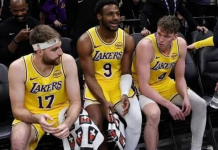
What makes this move more than just a basketball decision is the human angle. Timme and Bronny have been part of the same South Bay Lakers rotation throughout the season. They’ve shared the floor. They’ve produced together. They’ve been part of a G League group that pushed into the postseason.
And for a moment, both had a path upward. But that path narrowed fast. Because when the Lakers had to choose one player to elevate, they didn’t go with size or interior presence. They went with perimeter creation. And that left Timme on the outside looking in.
Nick Smith Jr. Already Proved His Worth Before the Lakers Locked Him In
This wasn’t a blind bet. Smith had been building toward this opportunity all season. Back in November, he dropped 25 points in a road win over Portland, shooting 10-of-15 from the field and 5-of-6 from deep, while also adding six assists. Then in December, he followed it up with 21 points in a win over Sacramento, knocking down five more threes.
Those weren’t empty performances. They showed exactly what the Lakers needed. Shot creation. Spacing. Instant offense. That’s what separated him in the final decision. Head coach JJ Redick had already hinted at Smith’s value earlier this season. “Our roster, frankly, has a lot of guys that do a lot of one thing really well.”
“The balance of finding that offense-defense balance has got to be there for a guy like Nick to play meaningful minutes.” That balance became the deciding factor. Because heading into the playoffs, the Lakers don’t just need specialists. They need playable pieces.
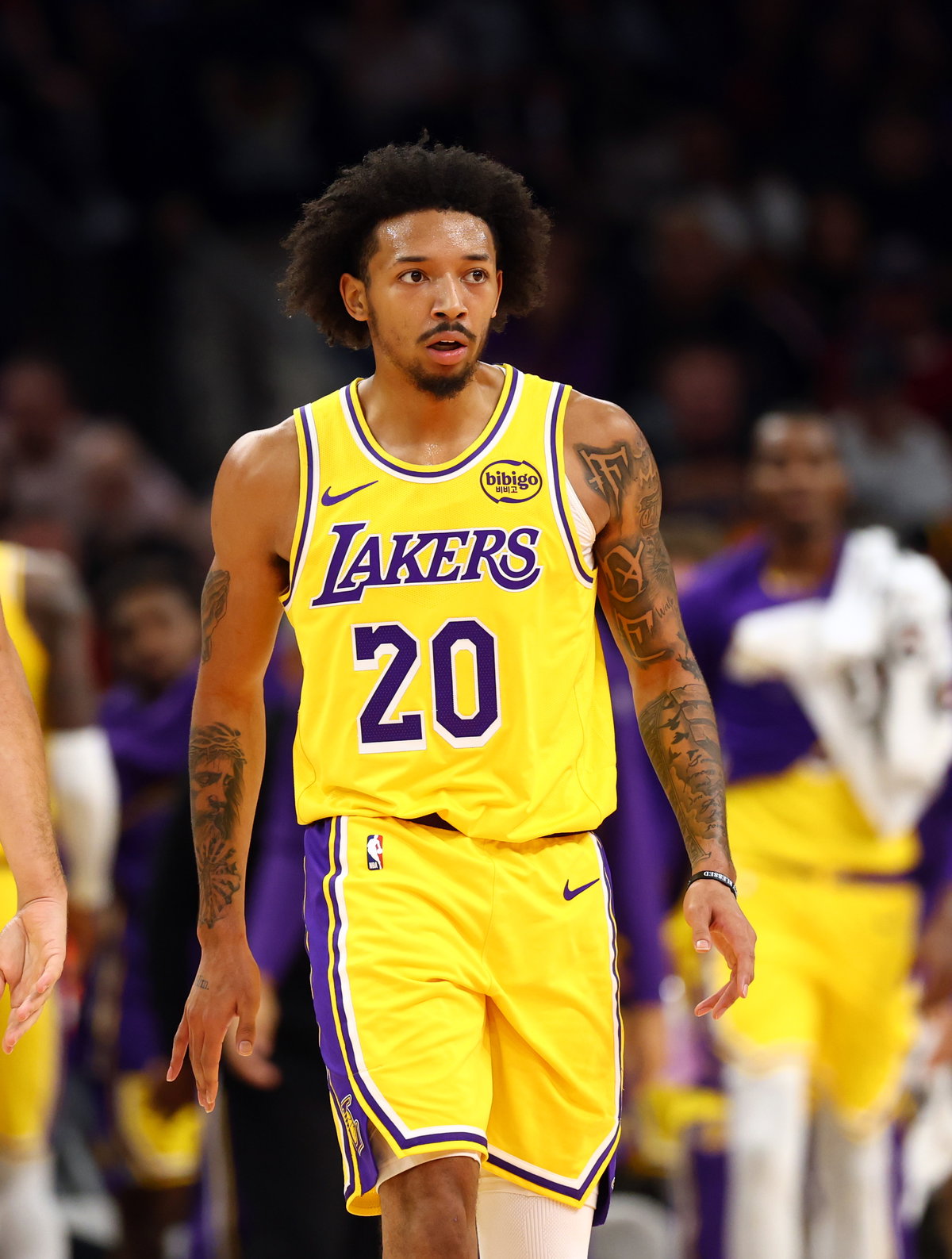
At the same time, this wasn’t just about April. It was about the offseason too. Smith was set to become an unrestricted free agent, an unusual situation for a two-way player. If the Lakers waited, they risked losing him for nothing. Instead, they locked him in. Two years. Controlled contract. Playoff eligibility. One move solved two problems.
The Lakers enter their final regular-season game against the Utah Jazz sitting fourth in the Western Conference. A win, combined with help elsewhere, could push them higher. But the bigger story is the rotation. Without Doncic and Reaves, minutes are available. And now, Smith is eligible to take them. Meanwhile, Timme stays on the outside of that equation, despite doing enough to be part of the conversation.
This type of move isn’t new for the organization. The Lakers have consistently looked within, elevating players who prove they can contribute when the moment arrives. That philosophy is playing out again. Except this time, the stakes are immediate. Because this isn’t about development anymore. It’s about survival in the playoffs.
Now the question shifts from roster decisions to execution. Smith has the contract. He has the role. And he has the opportunity created by injuries. The Lakers made their choice. And in doing so, they didn’t just add a player. They defined how they plan to survive the postseason. Whether that decision holds up will be answered soon enough. But one thing is already clear. Only one door opened. And another one closed.