
























Though he won, the result seemingly didn’t satisfy Deontay Wilder. Repeated shots to the back of the head, he believes, shaped the split decision he scored over Derek Chisora at the O2 Arena. He would have been much happier if the referee had acted more attentively and fairly, penalizing Chisora for those illegal blows.
That frustration is easier to understand in the context of how the fight unfolded. The two heavyweights headlined the Queensberry-Misfits Boxing card. Though a non-title bout, it delivered 12 rounds that kept spectators and fans engaged throughout. While it lacked technical finesse, it still produced a physical, back-and-forth contest that went the distance. During the post-fight media interaction, Deontay Wilder was direct, insisting the fight would have ended much earlier if the match official had done his job properly.
“That’s crazy. I mean, you’re looking at if the ref was fair; you’re looking at a third-round stoppage,” Wilder told a reporter. “So many things went on. I got hit in the back of the head like at least 10 to 12 different times. And then you want to, (and) when I finally want to retaliate and hit back, you point fingers at me.”
He didn’t stop there, doubling down on the impact those shots had on him.
“I’m like, man, this man keeps hitting me in the back of the head. I’m getting dizzy at times, but I’m bouncing back. I’m getting dizzy, but I’m bouncing back. You know how many fighters got hit in the head and don’t wake up tomorrow?”
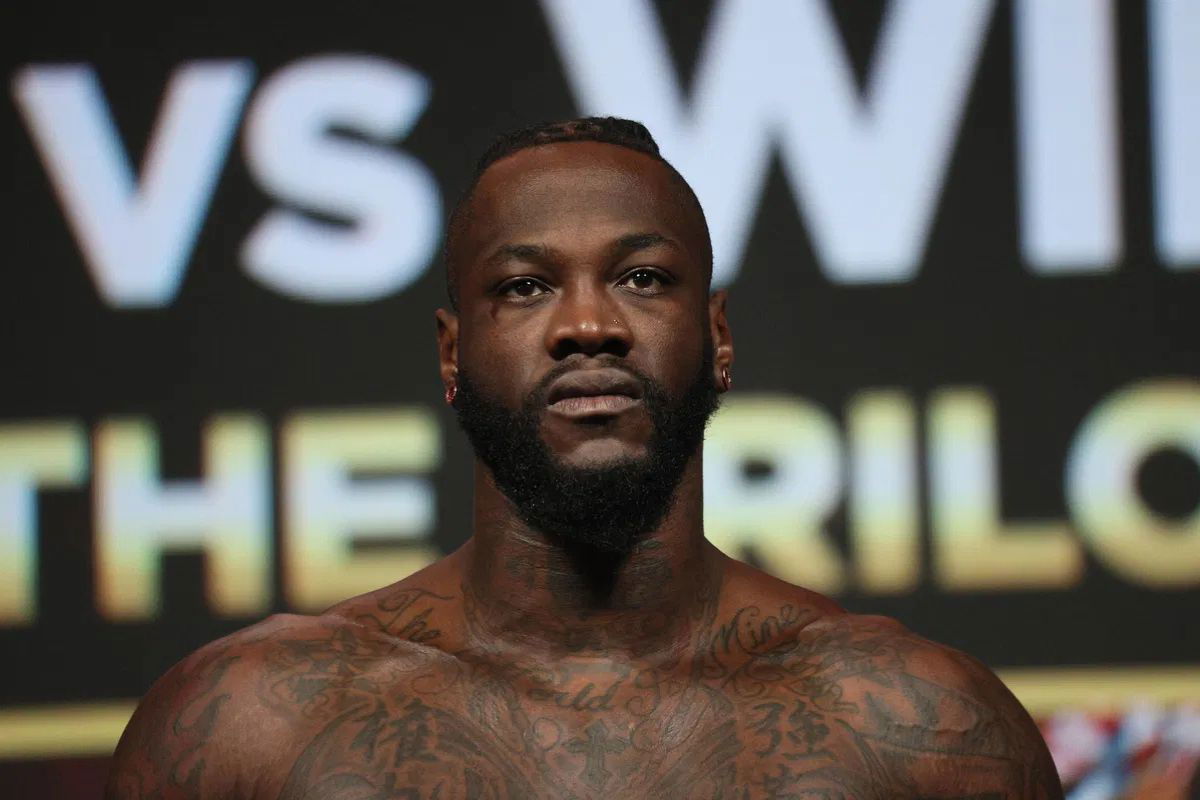
The potential long-term damage worried him. He also argued the referee unfairly warned him when he tried to fight back. He further pointed out that Chisora’s team entering the ring should have led to a disqualification.
Referee decisions under scrutiny after the Deontay Wilder- Derek Chisora bout
Those concerns tie directly to how the fight played out in the ring. But not everyone agreed with his version. On social media, many followers pointed out that Wilder also landed shots to the back of Chisora’s head.
“Wilder moaning when all he had done is punch Chisora on the back of the head, pu**y,” one wrote.
The nature of the fight adds context to that debate. From early on, it featured haymakers, holding, and frequent exchanges without much technical control. The referee repeatedly stepped in to separate the fighters as the action became scrappy.
In the second round, he stepped in when Wilder pinned the English heavyweight in a corner and launched a flurry of shots. In the fourth, likely the moment Wilder referenced, he pointed to the back of his head after a shot from Chisora that followed a straight right that appeared to stun him.
That sequence captures the heart of Wilder’s complaint, even if the full picture remains open to debate.
However, the broader concern he raised about fighter safety carries weight. Punches to the back of the head are illegal for a reason, and repeated shots in that area can have serious consequences that fighters cannot always detect immediately.
“I might not even go to sleep tonight,” Wilder said. “Because of the awareness that I (have) of getting hit in the back of the head and you not waking up tomorrow or something happening or something forming. I feel good externally, but internally something may be developing inside of me that I can’t I can’t I can’t see right now because a referee decided to allow something to happen that shouldn’t have happened.”
Beyond Wilder’s concerns, boxing officials need to ensure they conduct fights in a fair and controlled manner. While entertaining crowds remains part of the sport, moments like this show why fighter safety cannot take a back seat, even in fights built on action.