



























If navigating the salary cap were a contest, the San Francisco 49ers would’ve walked away with the trophy.
Back in 1994, their hands were tied with a $34.6 million cap, their options seemingly limited. And yet, somehow, they rebuilt their defense, patched up the offensive line, and climbed all the way to a Super Bowl title. It goes without saying that questions were raised throughout the league. People wondered how it all came together, hinting at financial trickery behind the scenes. But then-team president Carmen Policy shut that talk down.
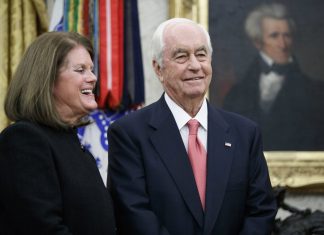
“It’s really why the league is where it is today, with the players being paid what they are because the owners got what they wanted with a salary cap,” Aikman said during an appearance on the Rushmore Podcast. “But the 49ers found a loophole with signing bonuses to be able to circumvent the cap. They signed Richard Dent, Deion Sanders, and Gary Plummer as the signing bonus got amortized over the life of the contract, so it was not as big a hit.”
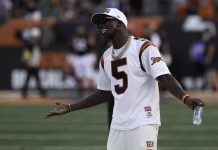
Despite bigger offers on the table from New Orleans, Miami, Detroit, and even a return to the Atlanta Falcons, Sanders chose the 49ers. The decision raised eyebrows across the league, with then-New Orleans Saints owner Tom Benson and Falcons president Taylor Smith openly wondering if San Francisco had bent the numbers to stay within the salary cap.
“So, the owners actually got what they wanted, but then greed, beginning with the 49ers, is what opened the floodgates to these huge signing bonuses,” Aikman added.
Here’s the thing: Sanders signed a one-year deal with San Francisco worth $1.1 million, with incentives that could add another $750,000, plus a team option for the following season. With that stacked roster, the franchise went on to win the Super Bowl, getting their revenge against ‘America’s Team.’ But the salary cap caught up with them, and they couldn’t bring Sanders back, sending him into free agency in 1995. That’s when Cowboys’ Jerry Jones stepped in, using a similar approach to lure ‘Prime Time’ to Dallas.
“The very next year, [Cowboys] did the same thing, and then we signed Deion. But now it’s why it continued, and now the signing bonuses are where they are,” Aikman added.
While many questioned this approach, Jones and the Cowboys were unfazed as they won three Lombardi Trophies in four years to cement themselves as one of the most dominant teams in that era. Interestingly, Jones was initially one of the many who didn’t like the 49ers’ way. He believed San Francisco gave away long-term vision for short-term gain.
Plus, they used a contract restructuring strategy known as the 50% rule, or the “Deion Rule.” This provision states that if the total of a player’s salary and roster bonuses in year two of a multi-year contract is less than 50% of their year one salary and roster bonuses, then the difference between the two is distributed across the entirety of the contract for the salary cap.
Over the ongoing 2026 offseason, the Kansas City Chiefs used this rule to re-sign Travis Kelce to a deal, which won’t adversely affect their cap space if their legendary tight end decides to hang up his boots.
Kansas City uses the Deion Sanders rule to re-sign Kelce
Travis Kelce re-signed with the Kansas City Chiefs for his 14th season, thanks to a rarely used loophole in the NFL-NFL Players Association Collective Bargaining Agreement. The Chiefs retained Kelce on a one-year, $12 million guaranteed deal while ensuring his cap hit in 2026 is very low.
While the reported contract is a three-year extension worth up to $57.7 million, the deal is, in actuality, a one-year, $12 million guaranteed deal for 2026. The contract then has dummy years for 2027 and 2028 included to spread the cap hit.
This structure allows the Chiefs to renegotiate or terminate the contract if Kelce decides to retire or not play in 2027, which helps general manager Brett Veach and Co. avoid using void years (a mechanism they typically avoid) while still gaining the same financial flexibility.
From Deion Sanders and the 49ers to Jerry Jones and the Cowboys, the NFL’s contract landscape has been shaped by teams willing to push the boundaries of the salary cap. Decades later, the ripple effects of those decisions are still being felt. The Kansas City Chiefs are simply the latest team to benefit from a loophole.