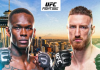








Chris Duncan is riding a streak of four straight wins, and now he has a main event slot opposite Renato Moicano at UFC Vegas 115. All that to say, ‘The Problem’ has quietly built one of the more consistent runs in one of the deepest divisions in the promotion.
But here’s what makes him stand out beyond the numbers: his story doesn’t just show up in fight results. It’s written across his body. And in Duncan’s case, the tattoos aren’t random. They track moments, beliefs, and even friendships that shaped his rise. So before he steps into the Octagon against Moicano, let’s break down what those tattoos actually mean.
Meaning behind Chris Duncan’s Chest tattoo
At the center of his chest lies a heart tattoo, a powerful symbol of passion and dedication. Wrapped around it are the words “Beautiful Addiction,” a phrase that likely represents his love for fighting—the highs and lows, the sacrifices, and the relentless pursuit of greatness. Accompanying this is a set of angel wings, perhaps signifying protection, spirituality, or a tribute to lost loved ones.
His chest is also adorned with stars, which often symbolize guidance, destiny, or personal milestones. These could represent important moments or people who have shaped his journey.
Just above, beneath his throat, another line stands out:
“Every man dies, not every man really lives.”
View this post on Instagram
That quote, often linked to Scottish icon William Wallace, aligns closely with Duncan’s background. Born in Alloa, Scotland, and once worked as a shepherd before transitioning into MMA, his path hasn’t been conventional. This tattoo reads like a reminder to take risks and to live with intent. But the chest tattoos tell only part of the story. The rest of his ink adds more layers.
Other tattoos on Chris Duncan’s body
Moving to his arms, Chris Duncan carries a strong Japanese influence in his ink. His right shoulder features a samurai with a sunrise, symbolizing honor, discipline, and a new beginning.
His right arm sleeve is covered in Japanese-inspired artwork, reinforcing themes of strength, balance, and perseverance. On his left shoulder, a Japanese mask—a common motif in samurai culture—embodies duality, the struggle between fear and bravery, life and death. His left arm sleeve, decorated with floral patterns, brings an artistic contrast, potentially symbolizing growth and beauty amidst the chaos of battle.
His samurai influence extends to his shin and calf, where similar warrior-themed tattoos showcase his deep connection to the spirit of the samurai.
But one tattoo stands out for a completely different reason, and it’s tied to a very specific moment.
Back in 2025, ahead of his fight with Jordan Vucenic in London, Duncan agreed to a side bet. The loser would get the winner’s nickname tattooed on their backside. It was lighthearted, but it added stakes.
Duncan finished the fight with a guillotine choke in the second round. And instead of walking away from the bet entirely, he chose to commemorate the moment differently. After the fight, he got a new tattoo inspired by Dustin Poirier’s well-known phrase:
“Don’t be silly, jump the gilly”
That line connects directly to the finish. Duncan had been working on the guillotine, even picking up tips from Poirier himself. When the opportunity came, he executed and then marked the moment permanently on his thigh.
As Chris Duncan prepares to face Renato Moicano in the UFC Vegas 115 main event, the focus will shift back to performance. But the tattoos stay constant. And if ‘The Problem’s recent run is any indication, there may be more chapters and more ink still to come.