
















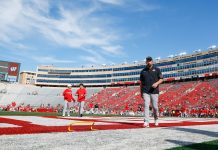







On Friday morning at Aronimink Golf Club, the second round of the 2026 PGA Championship drew attention for something other than birdies. Alex Smalley’s group, leading the tournament, teed off at 8:51 a.m. but needed more than three and a half hours just to reach the 11th hole. The pace was so slow that social media accounts tracking the round in real time called it “brutal” before officials even stepped in. This isn’t about bad weather or a rules delay. It’s another example of a problem golf still hasn’t fixed.
The backup on the course kept growing. Cameron Young, Keegan Bradley, and Justin Thomas teed off at 8:29 a.m., just before Smalley’s group, but soon they were caught in the same slow pace. A rules official drove over to their group, and Thomas was seen talking to the referee. Not long after, the announcement came: Thomas and Bradley were put on the clock.
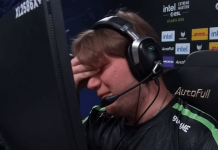
Flushing It’s thread summed up the reaction in four words: “clearly unhappy with” the decision. The Sky Sports broadcast confirmed what viewers could already see. Thomas and Bradley did not look like they agreed with the call. Their frustration, shown by two major champions on a big stage with a rules cart nearby, told the story better than any scoreboard could.
And just like that, JT’s group have been warned pic.twitter.com/Ppx7YhTfkS
— Flushing It (@flushingitgolf) May 15, 2026
Aronimink was always going to be a tough test. The Donald Ross course, set at par 70 and stretching 7,394 yards, saw 127 three-putts from 156 players in the first round, and only 32 players finished under par on Thursday. By Friday morning, wind gusts over 20 mph pushed the scoring average up to 73.1, almost a full shot higher than the already difficult 72.3 from Round 1. The fast, contoured greens require careful thought on every chip and putt. While that does not excuse taking three and a half hours to play eleven holes, it helps explain it. The slow pace was made worse by the course, but the issue has been around long before Aronimink.
The enforcement process is straightforward. Rule 5.6b lays out the steps: an official warning, then individual timing, followed by a one-stroke penalty for a second bad time, two strokes for a third, and disqualification for a fourth. A second bad time also brings a $50,000 fine. Players who average 45 seconds or more per shot over ten tournaments are put on the observation list and watched more closely in future rounds.
A previous report on the Tour’s pace-of-play record showed that the PGA Tour went three years without handing out a single stroke penalty on the main circuit. This leads to the real question: what value does a framework have if it is never enforced?
Thomas had already signaled after Thursday’s round that the day had cost him physically:
“If I had any energy left, I would go to the range and hit some, but I’m absolutely not doing that.”
No penalty was confirmed for Thomas and Bradley beyond the clock itself. The machinery activated. The teeth stayed sheathed, and the pattern held.
Golf’s slow-play problem has a paper trail and a short memory at the PGA Championship
Slow play has been a persistent issue in golf. In 2019, Bryson DeChambeau’s pre-shot routine brought the problem into the spotlight, forcing the PGA Tour to promise tougher enforcement. Four years later, at the 2023 Masters, Patrick Cantlay and Viktor Hovland took almost five hours to finish their final round. Fans voiced their frustration, but once again, the governing bodies did not issue a single penalty.
As a golf outlet that has tracked the sport’s three slowest players on Tour noted, Cantlay’s average shot time sat at 38 seconds during that period, just two ticks below the maximum allowed, and LPGA icon Dottie Pepper said the issue had been “gnawing at me and a lot of people for a while.”
The Tour has tried to address slow play with distance-measuring devices and smaller field sizes. These changes have led to minor improvements—approach shots are a few seconds faster, and rounds are slightly shorter. But the core issue remains. The problem is still there, as seen on the 11th fairway at Aronimink.
Golf has discussed slow play at every major for years. The clock was visible at Aronimink, but the real question is whether anything will change before the next major. So far, the sport has not shown the will to act.