






























The NFL will soon begin negotiating its next round of media deals with broadcasting partners. But pressure around the league has continued building ever since the Department of Justice opened an investigation into the NFL’s media practices. Then, just a month later, Donald Trump publicly criticized the league’s overall broadcasting model. Still, the NFL has continued defending its system. And right now, it does not appear ready to back down anytime soon.
“We love our model. We think we have the most fan-friendly model there is. …We think we’re the most available, broadly distributed of any sports & entertainment,” said NFL EVP Hans Schroeder, per Jori Epstein of YahooSports.
Trump recently criticized NFL streaming model as league diversifies. NFL EVP Hans Schroeder just defended model.
“We love our model. We think we have the most fan-friendly model there is. …We think we’re the most available, broadly distributed of any sports & entertainment.” pic.twitter.com/JqwD7kYkFc
— Jori Epstein (@JoriEpstein) May 15, 2026
Over the past few years, the NFL has steadily split its broadcasting rights between traditional television networks and streaming platforms like Amazon Prime Video and Netflix. As that shift happened, criticism from fans followed almost immediately because of how expensive it has become to watch the entire NFL season across multiple services.
According to reports, an average fan may now need to spend more than $600 across different platforms to follow a full season. That is exactly why Trump criticized the model during an interview with Full Measure.
“You’ve got people that love football, they’re great people, they don’t make enough money to go and pay this, it’s tough,” Trump said, while also adding, “I don’t know, but I don’t like it. They’re making a lot of money, they could make a little bit less and they could let the people see,” when asked whether the government will step it.
Interestingly, Trump’s comments arrived just one month after The Wall Street Journal first reported that the Department of Justice had opened an investigation in April into whether the NFL was engaging in anticompetitive behavior and overcharging consumers through its media-rights structure.
The conversation largely centers around how complicated and expensive it has become for fans to simply watch their favorite teams, especially as leagues continue carving up packages across multiple streaming services. For decades, the NFL primarily relied on traditional broadcast partners such as NBC, CBS, FOX Sports, and ESPN. Now, however, Amazon carries Thursday Night Football, Netflix streams Christmas Day games, Peacock hosts exclusive matchups, and YouTube TV owns Sunday Ticket.
As a result, fans are often forced to subscribe to several different services just to consistently watch the league throughout the season.
Financially, though, the system has been enormously successful for the NFL. The league’s current media-rights agreements are reportedly worth roughly $110 billion overall. Out of that, FOX reportedly pays around $2.2 billion annually, with CBS close behind at $2.1 billion. NBC contributes approximately $2 billion, while Amazon reportedly pays about $1 billion annually for Thursday Night Football rights alone.
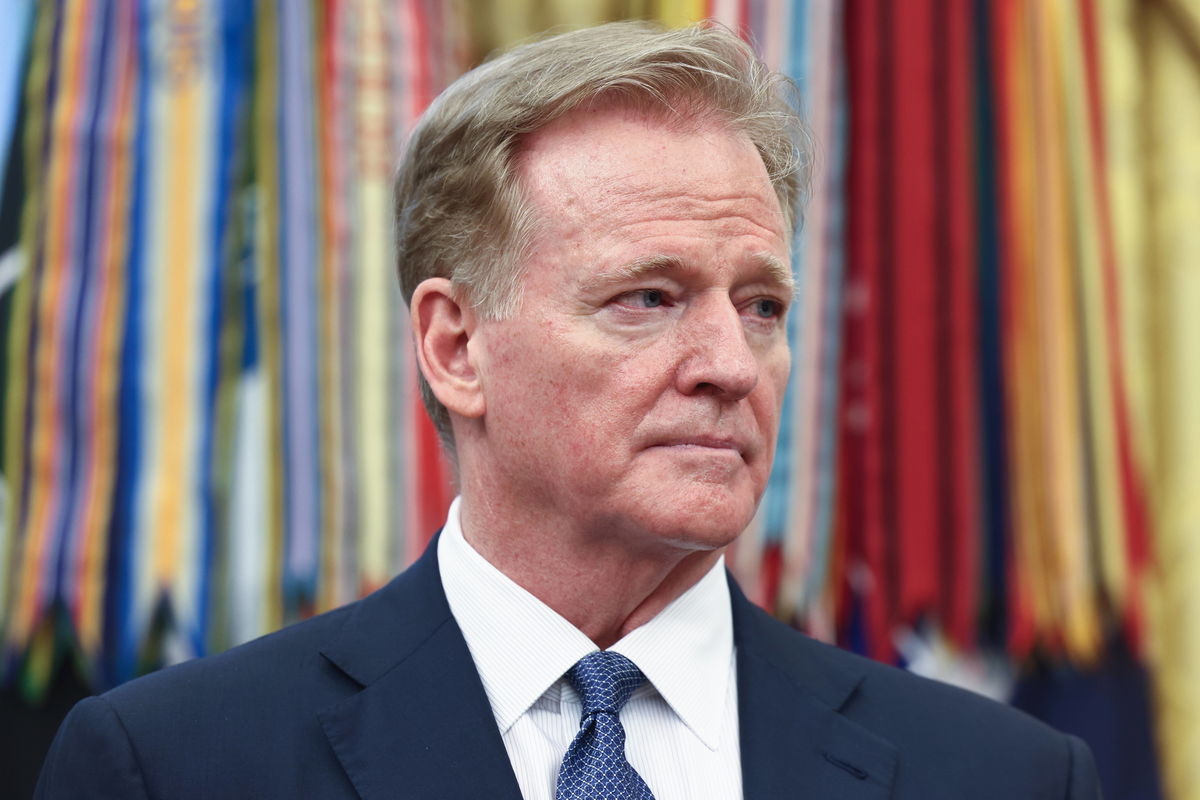
The current agreements, worth around $10 billion annually, are set to run through 2033. But commissioner Roger Goodell is already preparing for the next round of negotiations. And according to reports, the NFL is targeting a future media package worth nearly $15.9 billion annually, which would represent roughly a 58% increase from the current structure.
So when you look at the rising costs for fans, the government investigation, and now Donald Trump publicly criticizing the system, it becomes easier to understand why the NFL’s media model is suddenly under a microscope. At the same time, though, the league has continued standing firmly behind its approach and has repeatedly defended the current system.
Roger Goodell defended the NFL’s streaming model
Even though the Department of Justice has opened an investigation into the NFL’s streaming model, Roger Goodell and the league have continued defending their approach, pointing out that roughly 87% of NFL games are still broadcast on free television. Just last month, the commissioner said:
“It’s the most accessible game out there, and most accessible in any league. Over 87% of our games go on free television, every single one of our games, the two participating teams, it’s in their home market. We go to platforms that are new. We went to ESPN back in the 80s. That has been a great move for our fans and has developed new ways to engage with the NFL, but we’ve been surviving and thriving on the basis of being available to the broadcast audience.”
Still, there is an important nuance in this entire debate. Goodell’s argument mainly focuses on access to local-market games, while the Department of Justice and Donald Trump appear more focused on how accessible the league’s full content ecosystem has become for fans nationwide.
On paper, it is not necessarily wrong for the NFL to move toward streaming platforms either. After all, streaming continues growing as a share of television consumption every single year. Just look at the numbers from this year alone.
According to Nielsen’s February 2026 edition of The Gauge, 48% of all television viewing came through streaming services compared to 21.7% on broadcast television and 20% on cable. Ironically, that same month also featured both the Super Bowl and the Olympics. So from the NFL’s perspective, the league is simply following where viewers already are.
But the larger concern is not necessarily that the NFL is embracing streaming while slowly moving away from traditional television. The bigger issue is how fragmented the viewing experience has become.
Right now, the league has media relationships with Amazon Prime Video, Netflix, and YouTube TV, with games divided across multiple major streaming platforms. And that is where frustration from fans really starts building because keeping up with the entire NFL season now often requires juggling several expensive subscriptions at once.
So while it is fair to argue that the NFL is adapting to modern viewing habits, it is also fair to question whether splitting games across multiple streamers while increasing costs for consumers is ultimately the right direction for the league. While the league believes in it, the others don’t.