







But what about growing the game, taking golf across the world? What about the team format and “this is golf, but different”? Hmmm. Nothing hurts more than a broken dream, especially one sold on a false premise.
Saudi Arabia’s disruption of golf was always hypocrisy, a multi-billion PR move to normalise a theocratic state with a human rights problem. They could not say that of course, so LIV Golf became the great disruptor, challenging the sport’s old order to wake up and recognise the need for change.
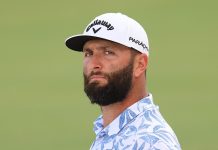
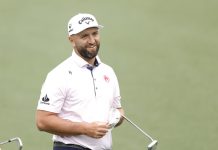
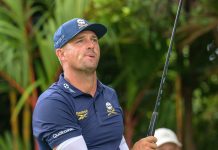
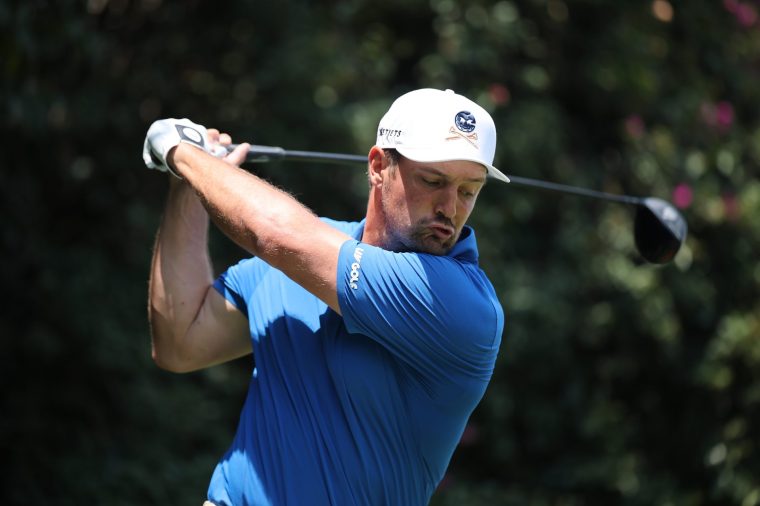
And for a spell it worked. Within a year of the launch in 2021, the dominant PGA Tour was on its knees, signature players like Bryson DeChambeau, Phil Mickelson, Dustin Johnson, Brooks Koepka, Patrick Reed, Jon Rahm and Tyrrell Hatton leaving for money they could not match.
The PGA Tour pushed for a meeting in London. A deal was struck that would lead to some kind of Saudi takeover of the golf ecosystem. Only the finer details needed to be worked through.
Then a shock $3bn (£2.2bn) injection in January 2024 by American investment vehicle the Strategic Sports Group, led by John Henry of Fenway Sports Group, owners of Liverpool, bought the PGA Tour time, allowing them to pump extra prize money into signature events.
And now the war in Iran has forced an emergency reckoning in Riyadh, turning off the money tap and leaving the whole network of sporting properties under threat.
Sport was initially a central plinth in Saudi Arabia’s 2030 Vision to diversify economically, reduce the dependence on oil and present the kingdom as a destination venue for tourism as well as inward capital investment.
What better way to sell that deception than with pictures of world class golfers celebrating victory at Saudi events alongside Cristiano Ronaldo knocking them in in the Saudi Pro League and Tyson Fury knocking them out in Riyadh Season?
It was working. The outrage over human rights abuses, especially the murder of Saudi dissident journalist Jamal Khashoggi in a Turkish consulate, gradually subsided, washed into the background by the blizzard of Saudi sporting content.
Well, that’s not happening any more. LIV Golf will not receive a penny more after the season’s close, if indeed they get that far. The Saudis dropped snooker like a stone after just two iterations of the Saudi Masters.
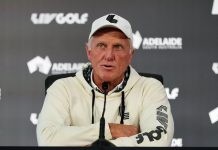
LIV Golf chief executive Scot O’Neill is desperately scratching around for an alternative money supply to keep the league in business. The problem is, with the world in the midst of a global energy crisis as a result of the Iran war, there is nil chance of anyone matching the £3.7m invested since the league’s launch five years ago.
Read more
- Kevin Garside: The great Jose Mourinho delusion
- Kevin Garside: I fear for snooker’s future when Ronnie O’Sullivan finally quits
Koepka and Reed have already left LIV, the former negotiating a return to the PGA Tour with financial penalties, the latter serving a statutory year ban before rejoining. By initiating their exits they escape some of the stigma that will undoubtedly attach to the likes of DeChambeau, Rahm and Hatton, who have been exposed as expensive puppets of a bogus project.
All three have sufficient brand power to return to the mainstream, but not without the reputational cost that comes with LIV’s collapse and associated humiliation. Even without the conflagration in the Middle East, the LIV model was unsustainable on rational economic grounds. That didn’t matter to Saudi backers when changing minds was the priority, not making money.
It matters now. LIV Golf is now at the mercy of the market, as are DeChambeau, Rahm, Hatton, et al, whose value will be determined by the PGA Tour’s willingness, or otherwise, to take them back.