



























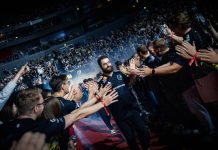




Just a week after finishing thirteen shots behind at Augusta National, Jon Rahm won in Mexico City by six strokes with a 21-under score. It was a dramatic turnaround from one of his toughest major championship weeks. The gap between a birdie-free 78 at Augusta and a final-round 64 at Club de Golf Chapultepec can’t be explained by one simple reason. Instead, it comes down to a conversation on the putting green that almost turned into an argument.
“Adam and I almost got into a heated argument on Saturday on the putting green at Augusta when he was trying to explain something and I didn’t fully get it. Once I understood what he meant and what I needed to work on during that Saturday afternoon range session, things improved a lot. On Sunday at Augusta, I played much better golf, and it’s only gotten a bit easier since then. It’s not always easy to have a swing thought while playing, but this one clearly worked out.”
After his win at LIV Golf Mexico City, Rahm explained what changed for him during Masters week. That Saturday range session led to a final-round 68 at Augusta, four under par, which was his best round of the week. It wasn’t enough to compete for the title, but it gave him something valuable to take into the next tournament.
REPORTER: “Do you feel like something clicked Sunday at Augusta?”
RAHM: “Yeah, yeah. Adam and I nearly got in a heated argument on Saturday on the putting green at Augusta when he was trying to explain something and I wasn’t fully understanding.
Once it clicked what he was… pic.twitter.com/2kEahsWxz4
— LIV Golf (@livgolf_league) April 20, 2026
Rahm entered Augusta leading the LIV Golf individual standings after a win in Hong Kong. He left the tournament with questions about his game. His opening round 78 matched his worst score in a major, previously recorded at Shinnecock in 2018 and Carnoustie the same year. On the par-5 13th, he double-bogeyed after a favorable tee shot, missing a birdie chance that he said could have changed his round by three shots.
Brandel Chamblee criticized Rahm for swinging aggressively on every tee, lacking control and precision. Rahm agreed with this view, admitting he had no feel for his swing and left Augusta focused on what he needed to avoid. After Mexico City, Rahm clarified that the issue was not just preparation. There was a technical miscommunication between him and his caddie, which was only addressed late on Saturday.
Major championship golf has often seen tension between players and caddies. Tiger Woods and Steve Williams worked through well-known disagreements during their 13 major wins, but their partnership succeeded because both stood firm when it counted.
Rory McIlroy’s most significant performance shifts have tracked closely with candid, sometimes uncomfortable conversations with the people carrying his bag.
This background is important in understanding the events that took place on Augusta’s putting green that Saturday.
Jon Rahm and Adam Hayes: A partnership built on productive friction
Hayes has been Rahm’s caddie since September 2016. He is the only caddie Rahm has used as a professional. Their partnership has produced major wins, including the 2021 U.S. Open at Torrey Pines and the 2023 Masters. After the Masters, Rahm made a point to credit Hayes in his victory speech.
“I want to start with the man who spends more time with me than my own wife and kids: my caddie, Adam Hayes.”
Rahm’s acknowledgment shows the level of trust in their working relationship. Hayes has explained his approach: understand the player’s personality and adapt, not interfere. Yet at Augusta, Hayes did not back down from a technical disagreement. He stood firm, created friction, and was ultimately proven right by the end of the tournament.
It is not the first time Hayes has shown that kind of conviction under pressure. During The Open Championship at Royal Portrush in 2025, Hayes got into a heated exchange with a rules official after his playing partner, JJ Spaun, received a slow-play warning, standing his ground on behalf of a player who was not even his own. That competitive instinct, the refusal to let a wrong thing go unchallenged, runs through everything Hayes does on a golf course.
After Mexico City, Rahm reflected on the result with a clear understanding of what had taken place.
“If you had told me last week on Thursday afternoon that I’d be winning by a six-shot margin this week, I would not have believed you because of how bad I played.”
Rahm led by two shots after 54 holes at Chapultepec. On Sunday morning, he went five under in four holes and finished the back nine without a bogey. No one in the field challenged him.
In top-level golf, breakthroughs are not always obvious. Sometimes, they start with a disagreement on the putting green.