










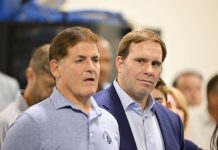










Mark Cuban, telling the Intersections podcast that he regretted who he sold the Dallas Mavericks to, handed Patrick Dumont a grenade with the pin still in. Dumont responded in an interview with Brad Townsend with the first public statement directly addressing Cuban’s remarks. He was careful. He was measured. And between the lines, he made the franchise’s position unmistakable.
Dumont did not fire back. He acknowledged Cuban’s frustration, called him a friend, and then drew four clean lines in the sand.
“Mark is really passionate about the Mavericks, and I think that’s great,” Dumont told Townsend. “I think he’s really, really frustrated about the year that the team has had. And I understand that frustration. I consider Mark a friend. And look, I always appreciate his thoughts. And I appreciate his frustration. But one thing I do want to say, in terms of ownership, I think we’ve been really clear: We’re not moving the team to another city. The team is not for sale. We’re going to continue to invest in this franchise. We’re going to build a new home for the team, and hopefully in the long term we’ll be able to celebrate that success for many years.”
Cuban’s Intersections podcast appearance was not a casual aside. “I don’t regret selling. I regret who I sold to,” he said. “I made a lot of mistakes in the process, and I’ll leave it at that.” That is a billionaire, who owned the franchise for 23 years, publicly attaching his regret to the people currently running it. The comment landed across every NBA outlet within hours, and it immediately reignited speculation about whether Dumont would sell.
Cuban still holds a 27% stake in the Mavericks, and Marc Stein previously reported that local investors had shown interest in teaming up with him to regain majority control. Dumont and the Adelson family shut down that speculation back in February, reiterating their official stance. But Cuban’s latest public comments reignited the conversation and forced Dumont to step out personally and respond, which he did.
The Mavericks’ collapse to 25-56 did not happen in a vacuum. It traces back to the Luka Dončić trade, a move Cuban has repeatedly said he never would have approved. The team brought in Anthony Davis as the centerpiece, but he managed just 29 games before the front office moved him to Washington. The Mavericks then fired Nico Harrison in November, the executive who led that deal, as the season unraveled. The lone bright spot came when Dallas beat 98.2% lottery odds to land Cooper Flagg with the No. 1 pick. Cuban has been blunt about the process, saying Harrison misled him and informed him only after the deal was already done.
The arena pledge is not new. The Mavericks retained CAA Sports earlier this year to lead the commercial strategy for a new facility, with potential sites in downtown Dallas and the Valley View Center area. Dumont bringing it up here served a clear purpose. It is the most tangible proof of long-term commitment he can offer to a fanbase that has watched the franchise unravel over the past two seasons while its former owner publicly questions the people in charge.
Situations like this are not entirely new in American sports. When Washington Commanders transitioned from Dan Snyder to Josh Harris in 2023, the new ownership group immediately had to stabilize fan concerns, promise long-term investment, and distance itself from the previous regime. Dumont’s approach in Dallas follows a similar pattern, even if the tension here is more personal and public.
The Passion That Made Cuban Great Is the Same Quality That Left Him Without a Contract
There is something precise in Dumont’s phrasing. He did not say Cuban is wrong, and he did not claim the franchise is in great shape. What he said was that Mark is “really passionate” and “really, really frustrated.” That framing sounds diplomatic, but it also cuts directly to the root of the situation.
Cuban owned the Mavericks for 23 years, driven largely by passion. When he sold the team in December 2023, he said “nothing really changes except my bank account” and believed he would continue running basketball operations. But there was no contract and no language in the sale agreement that guaranteed that role. ESPN later reported that no other party involved in the deal backed Cuban’s claim that such an arrangement was formally agreed upon. By his own account, he operated on trust and a handshake understanding with his new partners.
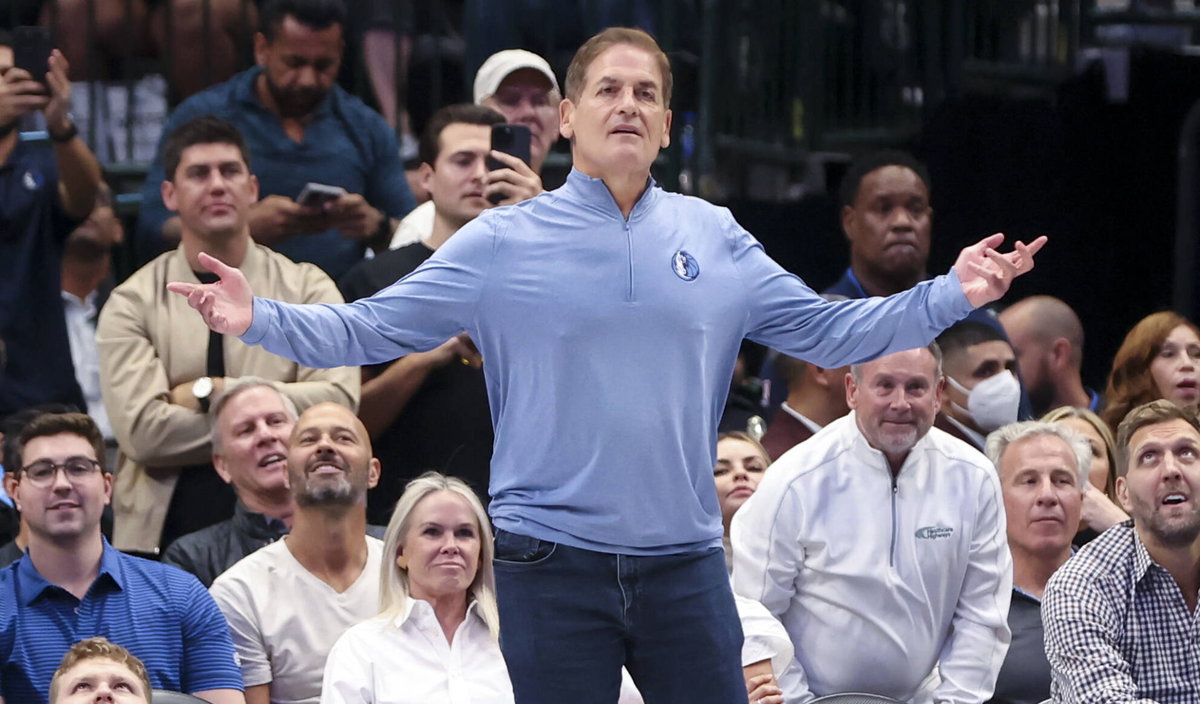
That same relationship-first approach helped build one of the NBA’s most valuable franchises. It also left Cuban without contractual protection in a $3.5 billion transaction. Dumont exercised his authority the moment the sale closed and removed Cuban from basketball operations. Harrison then pushed forward with the trade Cuban later called the worst in sports history. When Cuban objected, he said Harrison told him the deal was already done. “You’re asking me, right? This isn’t done,” Cuban recalled saying. “He was like, No, it’s done.”
Dumont calling Cuban a friend and praising his passion is the correct diplomatic response to a public grenade. It also acknowledges the exact quality that put both of them in this position. The frustration Dumont described is real. It comes from the same competitive fire that helped build the Mavericks into a $3.5 billion franchise, and that Cuban, in his most unguarded moments, channeled more like a fan than a billionaire closing a deal.