


































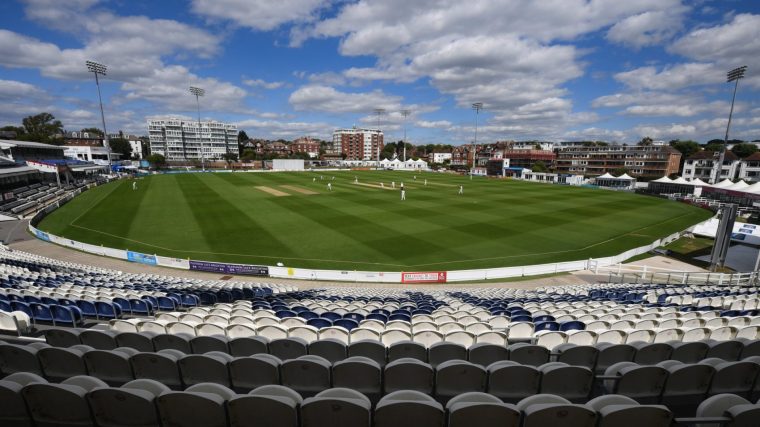
Established in 1839, Sussex are the oldest county cricket club in England. But they will reach a crossroads at the end of the summer when the grim reality of their financial situation will truly bite.
Many at Hove believe the squad built by coach Paul Farbrace can defy the odds and win the County Championship this season.
Yet when the campaign is over the music will stop.
Farbrace, the former England assistant coach, has announced he is leaving at that point. He’s also admitted this season is “now or never” in terms of on-field success because the squad is likely to be broken up at the end of it.
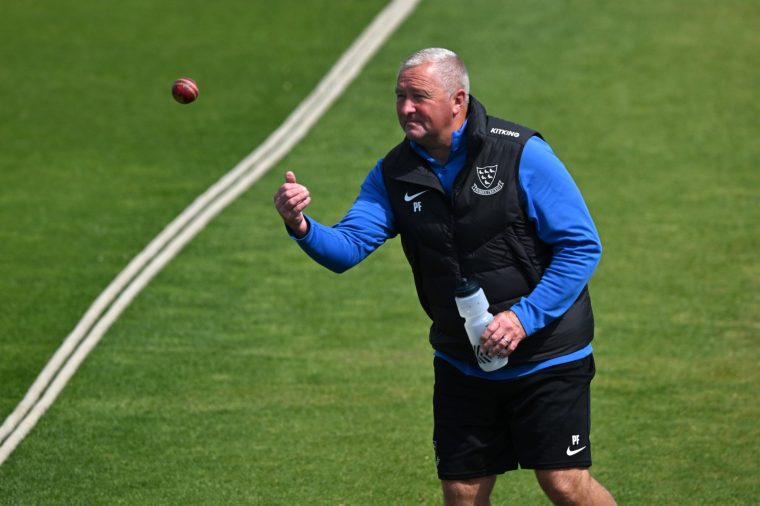
There are 11 players whose contracts will be up in September, with all free to start negotiating with other counties from 1 June. The club’s four best players – James Coles, Jack Carson, Tom Haines and Ollie Robinson – have deals that run until the end of next year. But all will be vulnerable to approaches from other clubs come the autumn given Sussex’s need to cut around £400,000 from their estimated £2m cricketing budget by the start of next season.
This brutal cost-cutting is part of a strict three-year financial plan from the England & Wales Cricket Board (ECB) after the club were put in special measures in January. It followed a £1.3m loss for the last financial year that forced the ECB to step in with an emergency loan.
A warning shot to every county
In short, Sussex overestimated potential revenue and have paid a high price. As well as the strict financial parameters laid out by the ECB, Sussex have been deducted 12 points for this season’s County Championship, plus one each in the T20 Blast and One-Day Cup.
The worrying thing, though, is that Sussex were nowhere near being the most financially vulnerable club before all this. Their story is a warning shot across the whole county game. If it can happen to them, none of the 11 first-class counties who do not host either Test matches or a Hundred franchise are safe.
Chris Nash, a Sussex stalwart who spent 15 years at Hove and won the County Championship in 2006 and 2007, tells The i Paper: “It’s a scary time for us and any non-Hundred club. It’s sometimes easy to think of cricket as different to the real world but ultimately costs have gone up so lots of businesses are struggling.
“The Hundred clubs are all getting masses of revenue and the smaller clubs, their costs have gone up but they haven’t really got a capacity to claw that back. It feels like that inequality is going to grow and grow. The smaller clubs are working on very small margins.”
English cricket depends on the domestic game
Yet for the health of the English game, it is essential that those clubs survive. Nash throws up the example of Coles, whose £390,000 price tag made him the most expensive player at last month’s Hundred auction. “He’s come from Oxfordshire cricket and that’s a pathway Sussex have,” says Nash. “He highlights the value of smaller clubs. He’s come through minor counties cricket and a non-Hundred club.
“The ECB need to make sure they never forget that players come from all parts of the country, not just those Hundred clubs. That’s the danger. They don’t just appear at London Spirit for £390,000. They go through a process to get there.”
The £520m brought into the English game last year from private investment in the eight Hundred teams was seen as the saviour for the 18-team county system. Each club is due around £20m but few have yet to see any of it. The guardrails put in place by the ECB on spending that money are necessary to try and forge a sustainable future. But it doesn’t help those struggling in the here and now.
Dr Dan Plumley, a sports business expert at Sheffield Hallam University, says: “The warning signs have been there for a few years now, especially for those counties not attached to a Hundred franchise.
“The Hundred money is primarily there to support long-term growth projects and cannot be used to cover operating losses so it will be a warning sign to other counties they cannot base their hopes solely on this money solving the problem.”
The Hundred is creating a two-tier system
That’s an issue when you consider that according to the 2025 Cricket Finance report carried out by Leonard Curtis, a firm who specialise in corporate restructuring and insolvency, there was £338.6m of debt across the 18 counties by the end of 2023.
In that year, only four clubs – Hampshire, Lancashire, Surrey and Warwickshire – turned a profit. All host a Hundred team.
The disparity between Hundred-hosting clubs and the others was starkly illustrated in the report by how reliant so many are on the annual £4m payment – made up mainly from broadcast revenue – each receives from the ECB.
For Surrey, the county with the biggest turnover, that payment accounted for just 6 per cent of their 2023 revenue.
That figure was 56 per cent for Derbyshire, 67 per cent for Leicestershire and a whopping 71 per cent for Northamptonshire.
Alarmingly for the rest, that ECB payment accounted for just under 8 per cent of Sussex’s 2023 revenue, a healthy-looking figure. If they can be burnt so badly, what about the rest?
As well as the financial measures imposed by the ECB, there has been much upheaval off the field too for Sussex. In February, an open letter signed by several prominent former players, including Chris Adams and Matt Prior, called on the entire board to resign.
In the aftermath, chair Jon Filby and three board members stood down. Since then things seem to have calmed down.
Mark West, the interim CEO who filled the void left by the departure of his predecessor, Peter Fitzboydon, has been in post since October, and appears to be steadying the ship.
“They’ve made changes,” says Nash. “They’ve been honest with what’s gone wrong and you’ve got two choices: you can either continue to kick them or actually support them and be positive because you care about the club and want them to be successful.”
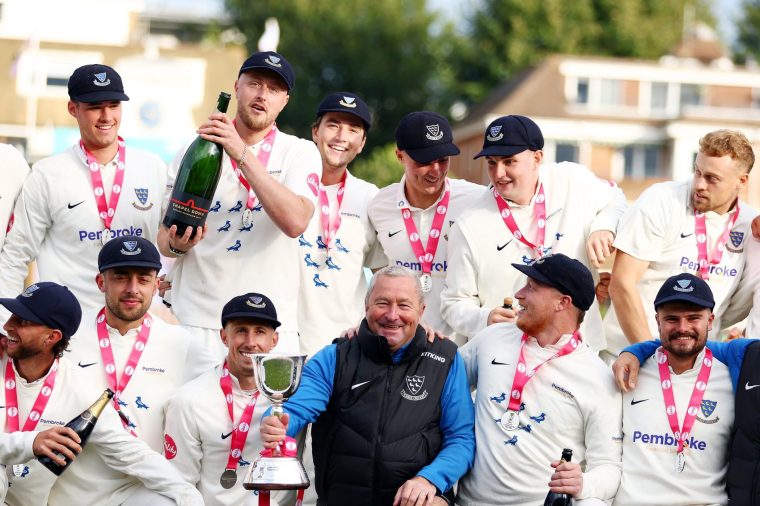
On that front, Sussex, who finished fourth last season, wiped out their County Championship points deduction with a win in their first game at Leicestershire. On a practical level, the players will largely be protected from the cost-cutting this summer. “We’ve tried to keep everything exactly the same in terms of our hotels, kit, travel and all that sort of stuff,” says Farbrace. “We don’t want to give the players any excuses.”
Tymal Mills, Sussex’s T20 captain, adds: “One of our main questions was, ‘Okay, what’s this going to look like? Are we going to be scrimping and saving? Driving to games instead of a bus? Are only the XI going to be allowed to eat lunch?’. Those type of things that as players we know can happen.
“It is important because while those things don’t directly affect your performance it does affect the culture and the little tangible things around it. So credit to Farby, he’s fought our corner to make sure we’re protected in that regard this year.”
Farby & Friends | Part 1
Go behind the scenes with Head Coach, Paul Farbrace, for our opening match of the campaign at Leicestershire!
Full Video: https://t.co/OfMZG6xchP pic.twitter.com/yCeWr7uycP
— Sussex Cricket (@SussexCCC) April 8, 2026

The season’s inflection point will come at the start of June when those 11 out-of-contract players can talk to other clubs. “That could start to affect on-field performance,” admits Farbrace.
“That’s why we’re lucky we have a tight-knit group and if we’re doing well then we can focus on that. If we’re not having a great time on the field come 1st of June that could be a tricky spell to manage to be honest.”
Club captain John Simpson has been through this all before at Middlesex, who were put into special measures by the ECB in 2023.
Yet the 37-year-old, who moved to Hove at the end of that year, is dreaming of winning the County Championship. “It would be an amazing story,” he says. “It would be really special for us as a group. We don’t really know what 2027 looks like. Having gone through this experience at Middlesex, we’ve got to make sure there’s no distractions. We have to be incredibly focused.”
Nash adds: “It’s a tough time but you never know. When your back’s up against the wall sometimes it galvanises a club. They might just come together in adversity. They’re probably a bit wounded at the moment but I think they might come out fighting which would be quite exciting.”