


































The NBA’s play-in tournament was supposed to fix tanking and make April matter, but now, voices around the league are starting to question whether it’s actually working. When Adam Silver introduced the idea, the goal was simple: make the end of the regular season meaningful instead of something teams and fans tuned out. Before that, the top eight teams in each conference made the playoffs, while the rest often leaned toward losing games for better lottery odds. Silver’s solution was the play-in tournament.
The league first tested it in the 2020 NBA Bubble before officially implementing it in the 2020-21 season. Suddenly, teams seeded No. 7 through No. 10 had a shot at the final two playoff spots through high-stakes, win-or-go-home games.
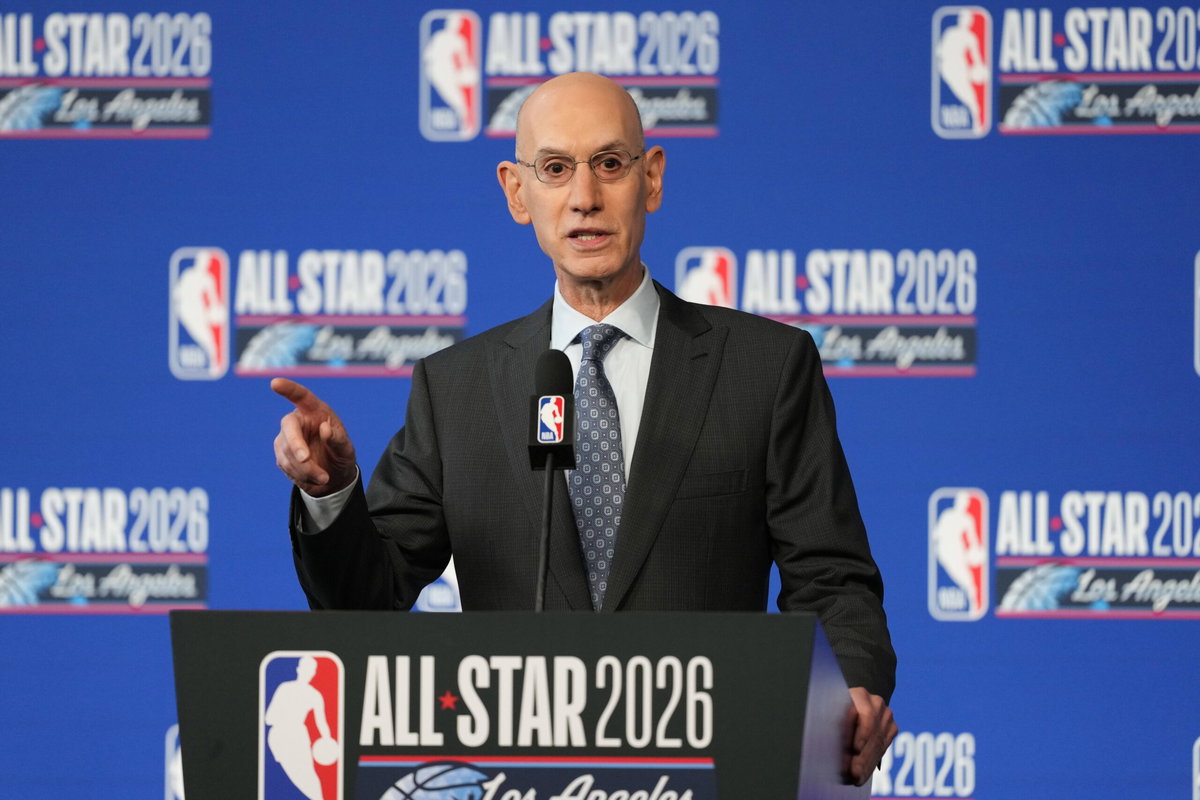
On paper, it worked; more teams stayed competitive deeper into the season, and more fan bases had something to root for in April. Early returns backed that up, with increased viewership and fringe teams getting a taste of postseason basketball.
But now, players who’ve actually gone through it are starting to push back, and Draymond Green is leading that charge.
Draymond Green says the play-in “ain’t working”
Ever since the play-in tournament became a thing, teams like the Miami Heat will be making their fourth consecutive play-in appearance, the most by any team. Only the Atlanta Hawks have the same number of appearances.
Fans have dubbed the Miami Heat the “play-in Heat,” stuck in that middle ground—not good enough for a guaranteed playoff spot, but not bad enough to miss out entirely. That reality has frustrated Bam Adebayo, who has pointed out the extra games teams must play before the actual playoffs even begin.
One of the players who has played in multiple play-in games is Golden State Warriors star Draymond Green.
The Warriors have played four games in the play-in tournament and are 1-3 in those games, including losing two games in 2021 after a No. 8 seed finish. This year, they are locked in the No. 10 seed, the most unfavorable play-in spot, and Green isn’t feeling the idea of the tournament anymore.
“I think it worked initially,” Green said during a post-game presser. “But to have a team stuck in 10th, it ain’t working. We could have lost our last 15 games and still get stuck in 10th. It ain’t working.”
Green’s frustration isn’t new; he voiced similar concerns last month on his podcast. “You appreciate the opportunity to make the playoffs,” he said. “Except when you’re seventh or eighth, it kind of sucks because you’d be in the playoffs. We’ve got screwed by that a couple of times, or at least once … it is what it is.”
To be fair, the play-in wasn’t built for struggling contenders or injured rosters. Silver designed it to keep more teams and more fans engaged. The bigger question now is whether fans are watching meaningful basketball or just an extension of the regular season.
The play-in tournament is not sustainable
Silver’s big idea looks good on paper and from the initial eye test. However, the reality is that making the playoffs open to more teams is not the big plan to stop tanking in the league.
Ticket sales and hope for the playoffs are the biggest catch of the whole play-in tournament; any other is just a big spin around the facts. Green believes that the original mission of the tournament has not been actualized.
“I think the play-in was made for teams to not tank, that’s the part everybody forgets,” he said. “I saw a team tonight foul Seth Curry with three minutes to go in the game for no reason in the penalty. It ain’t working.”
Everyone welcomed the play-in tournament at first, but after the shiny new toy syndrome died down, the format now looks unnecessary because of the extra hurdle after an 82-game season.
While other teams get a week off to rest and be mentally organized for the playoffs, the teams in the play-in struggle feel like the regular season has not yet ended for them. Those that make it out then jump straight into the playoffs against higher-seeded, better, and well-rested teams.
The chances of making it out at that point are very slim, and what it turns out to be is a very long, regular-like season for them at the end.
At the end of the day, it mostly feels like an easy path to the second round for the top two seeds who earned their positioning to face the teams from the play-in.
Since 2021:
- No. 10 seeds have made it to the playoffs proper just once, when the Heat pulled it off last year. They entered as the 10th seed in the East, winning two straight play-in games over the Chicago Bulls and the Hawks to claim the No. 8 seed. But that run ended swiftly in the first round following a sweep by the top-seeded Cleveland Cavaliers.
- No. 9 seeds have advanced three times, with the Memphis Grizzlies in 2021 and the Hawks and Pelicans in 2022, and all three were eliminated in the first round.
- No. 8 seeds have made the playoffs proper six out of 10 tries, claiming the No. 7 seed spot on just two occasions. Most runs end in the first round.
- No. 7 seeds have advanced 100% of the time but, on two occasions, have been forced to play an extra play-in game to get the last playoff seed. In one of those instances in 2023, Miami was involved, and they reached the NBA Finals as the No. 8 seed, although that Cinderella run did not result in a ring.
The Heat’s run in 2023 was the biggest selling point to the play-in tournament. But holding onto hope that there will be more of these playoff upsets is a big facade, as 90% of the time, the teams from the play-in last only as far as the first round.
In hindsight, the tournament is just a decorated way of adding more regular-season games for those who fall into that category. Two games for the losers of the play-in between No. 7 and No. 8 and two games for the winner of the No. 9 and No. 10 matchup.
The reward for surviving the play-in is a matchup against a top seed—with no home-court advantage and little margin for error. It may keep more teams involved, but whether it truly improves competition is the debate that isn’t going away anytime soon.