
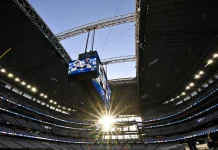

















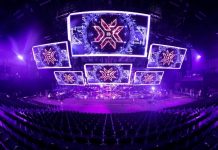
Unless tickets start flying out soon, Tyson Fury will be begging his estranged father John to watch him fight. Saturday’s heavyweight date with Arslanbek Makhmudov is doing the anti-boxing lobby’s work for them, the seat map at the Tottenham Hotspur Stadium a sea of empty blue.
There are any number of reasons why this might be, but ultimately the market decides, and just days from Fury’s latest comeback, the portents aren’t good. Perhaps Wednesday’s appearance on Good Morning Britain might help boost interest. Richard Madeley rang the obvious bell, probing the rupture with Big John, who proclaimed last month that his relationship with his son is “destroyed”.
The absence of Fury Snr at ringside is arguably one of the few gains this weekend. That said, U-turns are one of the rare consistencies in the Fury landscape, so don’t rule out the return of the father alongside that of the son.
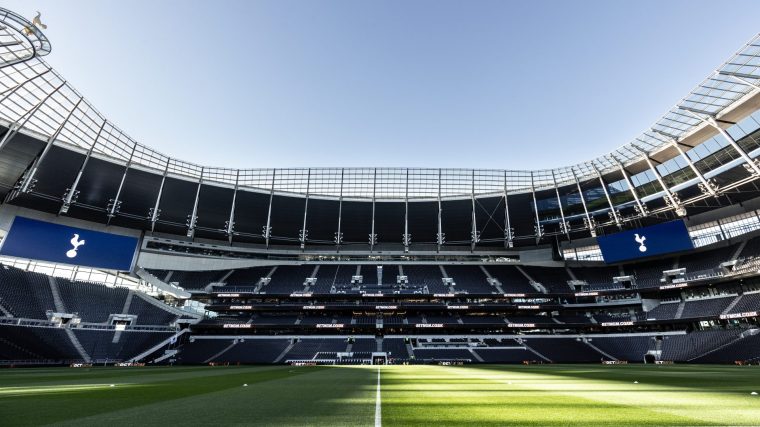
Fury cannot, of course, be blamed for the decision to hire a 60,000 stadium for a contest that is more suited to York Hall. Whatever accomplishments Makhmudov might boast, few outside the cognoscenti are familiar with them.
His victory over Dave Allen in Sheffield last October cleared him for lift-off here. Allen had already lost seven times, so don’t get excited. Moreover, the only fighter of real pedigree Makhmudov has fought, Agit Kabayel, dismissed him in four rounds, by which time he had climbed off the carpet three times.
Fury is sold as boxing’s golden ticket, the most marketable heavyweight in the game. The truth of that is also on the canvas. The Fury brand is largely a triumph of Frank Warren’s deep experience in placing fighters who might otherwise fail to glow closer to the centre of the universe.
The problem here is Britain’s most successful promoter, though still managing Fury’s career, is not at the wheel on Saturday night. That privilege falls to boxing’s new monarch, the Saudi entertainment king Turki Alalshikh, who is running the show under his own “Ring” banner in association with Netflix.
Unlike Warren, Alalshikh is not in boxing to make money necessarily but to buy goodwill and burnish the global reputation of the Kingdom of Saudi Arabia. Besides, rows of empty seats are easily veiled by a crack Netflix enterprise premised on reframing reality as fantasy.
Usyk has identified a trilogy bout with Fury as his sign-off should he beat the winner of Fabio Wardley and Daniel Dubois. There is also the decade-long tango between Fury and Anthony Joshua to conclude, should the planets finally align.
Fury’s status as one of the great heavyweights of any era has always been a fragile claim, relying on his many trumpet solos and the choir assembled by Warren, who used the patina of menace surrounding Deontay Wilder to brilliant effect.
The Wilder trilogy was thrilling stuff in the way low scoring cricket matches often are, the dynamic tension maintained by the tumble of wickets. Wilder’s power, whilst absolute against lesser beings, was beautifully dismantled by Fury in their second fight, the best night of Fury’s career since the victory over a tiring Wladimir Klitschko five years earlier.
Read more
- Steve Bunce: Making sense of Tyson Fury’s comeback
- Kevin Garside: Tyson Fury’s dad is a nauseating buffoon
Similarly Fury found his level against Usyk, a man three stones lighter and four inches shorter. He was also embarrassed by Francis Ngannou, a mixed martial artist who had never boxed but had Fury over and lost only on a split decision.
It is fair to assume we are approaching the last act of the Fury story. The appetite for comebacks is disturbingly low against this standard of opposition. There is, however, a ghoulish sense of theatre that attaches to Fury and keeps at least some coming back for more.
Since demand is light, the organisers might even reward the media with ringside seats instead of the gods, if only to make the place look busy.