






























When the fans said that the ABS was going to expose a lot of MLB umpires, they were not lying. We have a lot of umpires like Ron Kulpa and CB Bucknor has terrible games. But this also begs the question: Are the fans being too harsh on the other umpires for even the slightest of misses? The umpires certainly think so.
But MLB’s senior vice president of on-field operations, Michael Hill, said, “Major League umpires hold themselves to the highest standard and deeply care about getting calls right… We commend the umpires for being the most accurate as a group in history… We are also pleased that on the closest of pitches, those being challenged, umpires have been correct nearly half of the time (46.2 percent).”
The MLB umpires have raised major concerns, saying that ABS is being too strict on them. They say that calls even within a one-sixth-inch margin are regularly getting overturned, and the umpires have no buffer. They fear that the fans are judging them too quickly, even for calls that are just 0.2 inches off.
Former umpires have also called out the ABS for being extra precise in calls and making umpires look bad. Veteran umpire Gary Darling said calls are flipped for pitches missing by one tenth inch. Joe West argued ABS accuracy remains unproven despite the league’s confidence in system numbers.
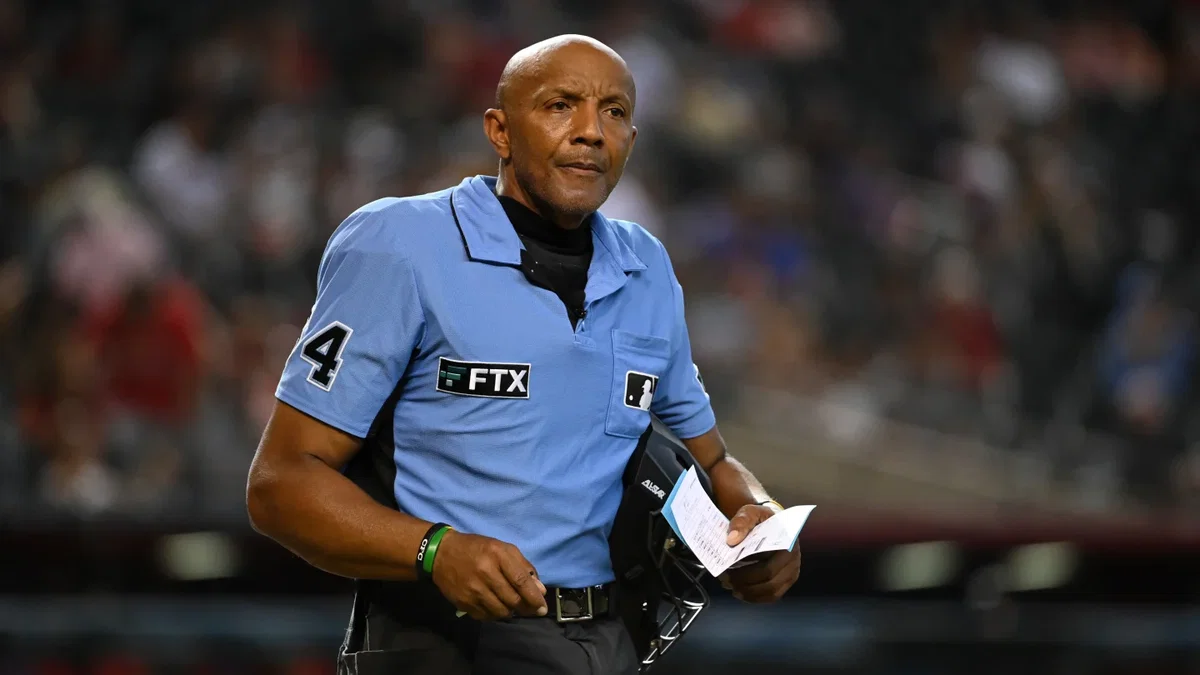
Umpire Dale Scott said that the umpires are now making calls to avoid public backlash.
But the league put this to rest by showing up with numbers as arguments. They reported that the accuracy is at 93.5% accuracy, up from 92.7% last season. Officials also state 46.2% of challenged close pitches were still called correctly by umpires.
This statement by the MLB shut down any concerns of the umpires having problems. But rather show that they have improved than last season, thanks to the ABS.
But the umpires can’t really blame the fans for being critical, too. Umpires like CB Bucknor seem to have made it a habit to make bad calls. In one Reds game, six of eight calls against C.B. Bucknor were overturned. Bucknor has an accuracy rate of 91.33%, which is well below the league average of 93%.
Added to this, in the Brewers-Rays game, Bucknor made a bad call at 1st base that would put a blind man to shame. He called Jake Bauers out on a tag, saying that he didn’t touch 1st base. But the replay showed that Bauers clearly stepped on the middle of the base, but Bucknor wasn’t even looking at him. This made the team’s managers laugh at Bucknor.
Fans also noted that 54% of 585 challenges were overturned within two weeks. Although the umpires argue that ABS is not helping their image, umpires like CB Bucknor aren’t helping it either. And with the MLB stating numbers that tell that the umpires are doing well, it is up to the umpires to take some accountability for making bad calls.
Is it good that the ABS is taking over umpiring in MLB?
During the game on 28th March between the Red Sox and the Reds, umpire CB Bucknor had 6 overturned calls. Eugenio Suárez challenged two straight strike calls, which were overturned, and avoided a strikeout, giving the momentum back to the Reds in that game.
That night was the perfect show of human error and why baseball needs ABS more than anything.
Within one week, ABS moved from the trial stage to exposing umpires in real-time. Players stopped arguing with umpires about decisions, and on-field arguments between umpires and players or managers went down.
When we compare this to another piece of tech that the MLB introduced, the pitch clock, the ABS impacts the game directly. But the problem is that MLB allows only 3 failed challenges.
That caution showed when Cal Raleigh skipped a challenge in the eighth inning of a 5-4 game. Seattle lost after that strikeout, and Raleigh later admitted he misjudged the pitch. Meanwhile, Bucknor missed fourteen more calls unchallenged, showing a lack of accuracy.
During the same Red Sox-Reds game, Bucknor had about 80 borderline pitches and got 20 calls wrong. That means 25% of his calls were overturned, meaning every one out of every four tough calls that night was incorrect.
ABS offers consistent calls, and many see automation behind the plate as a likely future step. But what would make it better is adding a 3rd challenge. It would help the players act sooner in the game and improve the accuracy of the umpires over time.
Let’s be clear, calling balls and strikes is difficult, and there will be some missed calls. But the number of calls the umpires are getting wrong is the problem, and that is exactly what the ABS is solving.