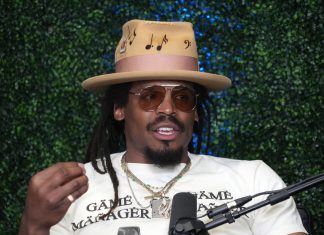

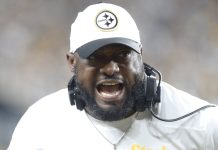































When NFL fans debate which team had the best defense in the modern era, the 2008 Pittsburgh Steelers often come out at the top. It was the year that former head coach Mike Tomlin led the Steelers to their second Super Bowl victory of the decade. But why was the defense so highly praised? Well, the former defensive coordinator of the Steelers had the perfect answer for it. He recently appeared on the Deebo & Joe podcast, sharing his view. While many might think it to be a bold claim, former linebacker James Harrison absolutely loved it.
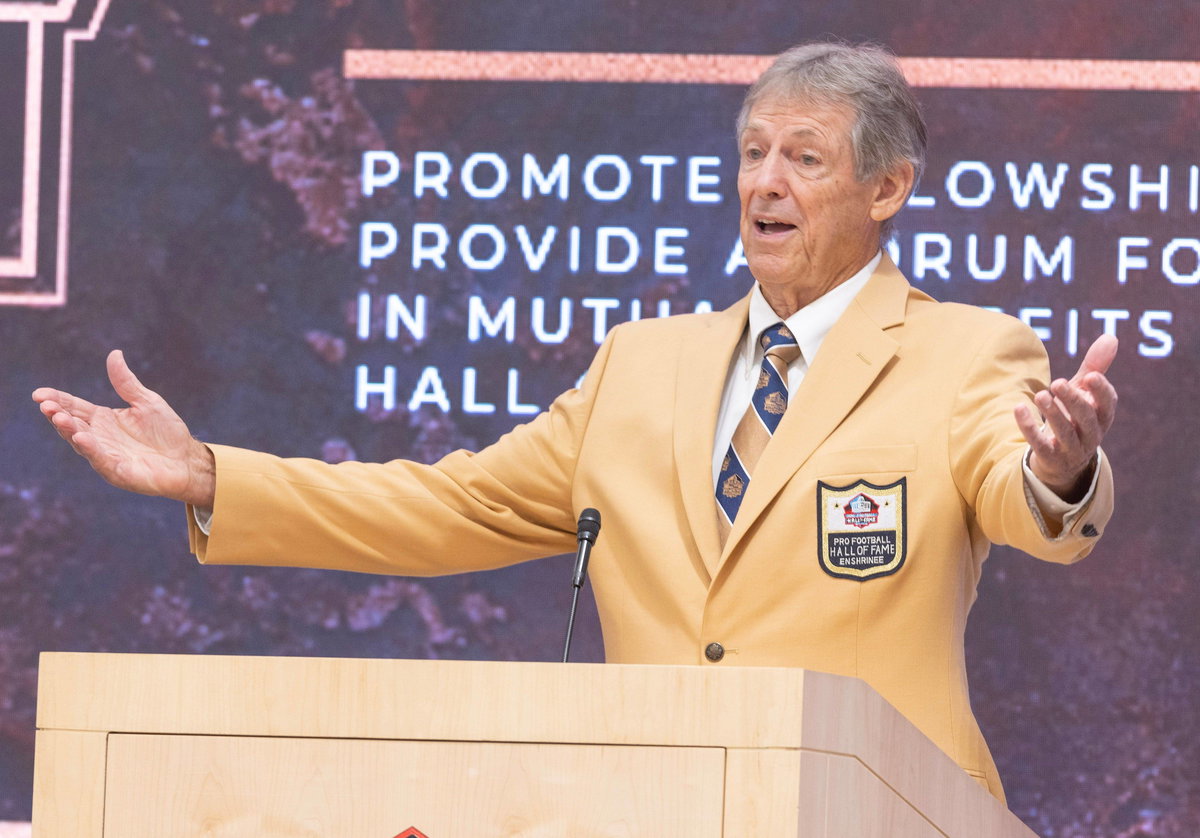
“Nobody’s going to have as good a defense as we had with you guys,” said Dick LeBeau on the Deebo & Joe podcast via YouTube. “It’s in my book. Pick up the book and look at the stats, collectively and individually. Let’s put it this way. If I go to a high school game… they’re running zone blitzes… The difference is they don’t know what the hell they are doing in behind.”
Dick LeBeau served as the Steelers’ defensive coordinator from 2004 to the 2014 season. During that time, he won two Super Bowls (XL, XLIII). But when it came to rating the best defense, the 2008 team stands atop all the others. According to the Steelers legend, the defense was in its best shape individually and collectively.
Individually, Harrison was named NFL Defensive Player of the Year, with 16 sacks and 7 forced fumbles. He even had a 100-yard interception return in the Super Bowl. Troy Polamalu’s 73 tackles, 17 pass deflections, and 7 interceptions earned him a First-Team All-Pro selection. Now, coming to the collective performance, the team had top rankings in almost every defensive category.
Tomlin’s defense only allowed 13.9 points per game, 237.2 yards per game, and 156.9 yards passing per game, leading the league in all three. They finished the season with 29 forced turnovers and recorded 51 sacks. The defense was so impenetrable that in 11 of 16 games, there was no or only one touchdown allowed.
But at the center of all was LeBeau’s “fire zone” strategy. He strategized a defense to use intense quarterback pressure by blitzing 5 defenders. These mainly included defensive backs and linebackers. To cover the open spaces, the defensive linemen would drop into zone coverage. With such an intense system and elite class players, the Steelers went on to win Super Bowl XLIII.
The notice, with his latest statement, to all 32 teams is not just about the 2008 defense’s success, but also a warning that attempting to replicate its high-risk ‘fire zone’ strategy without the same caliber of Hall of Fame-level personnel is a recipe for disaster, as many modern teams have discovered.
The fire zone had its disadvantages
The “fire zone” was based on zone blitzes. It was a deadly strategy, but only if it was executed with utmost perfection. But even a small mistake could have cost the defense greatly. Failing to cover the empty zones would give the opponent’s wideouts open spaces to exploit. Even Dick LeBeau agreed.
“One of my famous statements is ‘there’s nothing so ugly as a fire zone gone wrong, pal,” said Dick LeBeau.
Despite helping Mike Tomlin’s 2008 Steelers win the Super Bowl, it was not something that every defense could use. The defense needed to be extremely cautious about who they were facing. Each team has a different strategy, and based on that, the fire zone was to be improved. If a quarterback got hold of the strategy, it could signal the wideouts to take a different approach.
In the last two to three seasons, the strategy had been countered numerous times. Teams like the Cleveland Browns, Indianapolis Colts, and Houston Texans were successful in using fast, accurate quarterbacks and play-calling to identify the direction from which the blitz was coming. It allowed them to exploit gaps in the secondary.
In 2023, the Steelers’ defense, in the first half of games, was 27th in EPA. However, their defense was ranked the fourth-best during the second half.
This defense earned the Steelers the nickname “Blitzburgh,” but not everyone can perfect it. The strategy is very risky. So, any attempt by a franchise to recreate Dick LeBeau’s success could go one of two ways—total success or total failure.