




















The debate around NASCAR broadcasts took another sharp turn when fans, initiated by RaceDay Report, called out what they labeled “inexcusable” laziness, pointing to The CW’s decision to call the Rockingham O’Reilly race from a remote studio instead of the track. For some, it crossed the line. But not everyone agreed. Former FOX broadcaster jumped into the conversation with a blunt response, flipping the narrative and sparking an entirely different kind of reaction.
Kenny Wallace fires back as NASCAR broadcast debate heats up
“Respectfully, your life should not be like this. It should NOT even be a registered thought in your brain. Just watch the race and announce it yourself from your living room.


 ”
”
That was Kenny Wallace’s blunt response to the growing criticism around remote NASCAR race broadcasts and it immediately split opinion. Because here’s the part many fans are missing: it’s not the broadcaster making that call. It’s NASCAR. In fact, the entire shift toward remote production is part of a much bigger investment.
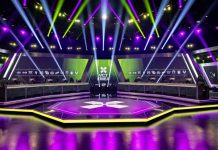
NASCAR’s $53 million, 58,000-square-foot production facility in Concord, North Carolina, which became operational in 2024, has completely changed how races are covered. The complex now houses NASCAR Productions, NASCAR Studios, and MRN Radio under one roof, with around 140 employees working across multiple live broadcasts.
Respectfully, your life should not be like this. It should NOT even be a registered thought in your brain. Just watch the race and announce it yourself from your living room.
https://t.co/9uXF60gBB3
— Kenny Wallace (@Kenny_Wallace) April 6, 2026


The setup is no joke either. Eight control rooms, three studios, and a dozen edit suites powered by 10-Gbps connectivity allow NASCAR to handle large-scale remote productions seamlessly. Two of those control rooms are specifically designed for major race broadcasts, while others manage international feeds, in-venue screens, OTT platforms, and studio shows.
In short, this isn’t about cutting corners, rather about evolving NASCAR production. With this kind of infrastructure, there’s simply no longer a requirement for broadcasters to be physically present at the track. And importantly, during the Rockingham race, there were no noticeable issues with broadcast quality that would suggest otherwise.
Still, not everyone was convinced. The original poster, RaceDay Report, doubled down, saying: “Kenny Wallace, a former co-host of NASCAR Trackside — a pre-race show that went from track to track every week — says we shouldn’t care about things like broadcasters being at the track.”
And that’s really where the divide sits. For some, it’s about tradition. For others, it’s about results. And right now, NASCAR seems firmly committed to the latter.
Wallace’s eye-opening Europe trip
“With all my heart, I can promise you. When I made this simple post, I never dreamed it would get well over 500,000 views. I was just sharing what I was up to,” Wallace wrote.
That post came after Kenny Wallace experienced one of the most intimidating tracks in the world: the Nürburgring. Known as the “Green Hell,” the legendary circuit lived up to its reputation. Wallace revealed he paid $2,500 for just six laps, and even then, it left a lasting impression.
But the trip wasn’t just about driving. It also highlighted something bigger. That’s NASCAR’s growing footprint beyond the United States. During his travels, Wallace visited the National Auto Museum in Germany, home to an impressive private collection that included race cars driven by Dale Earnhardt and Jeff Gordon.
Curious about how those cars ended up there, Wallace reached out to Ray Evernham, who confirmed he had sold them to the museum, which added an unexpected but telling connection. It’s a small detail, but it speaks volumes. Because while debates rage on about how NASCAR presents itself at home, moments like this show the sport quietly expanding its influence abroad and reaching new audiences in places many wouldn’t expect.